
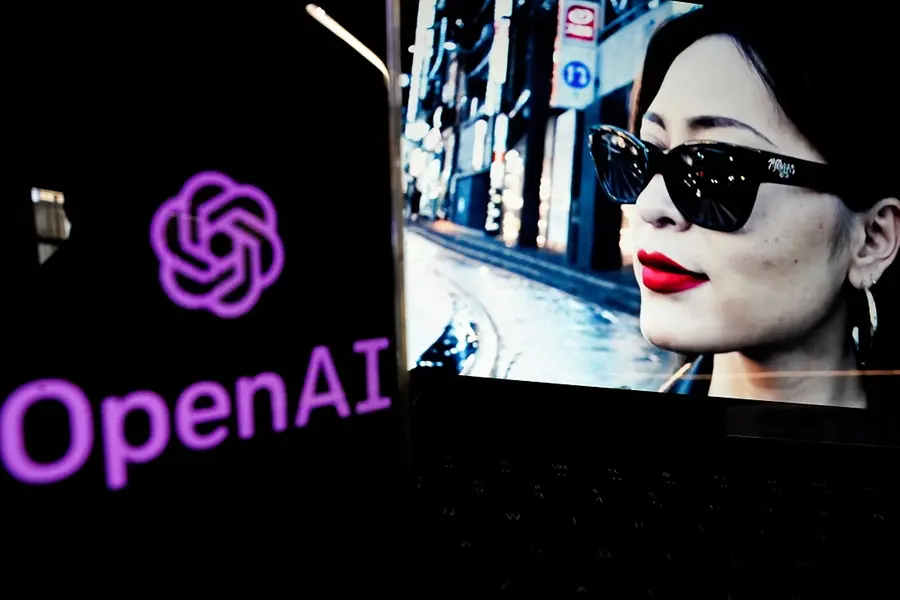
New York: OpenAI, the maker of ChatGPT, has introduced Sora.
Sora is a text-to-video generator and it uses generative AI to instantly create short videos based on commands given by the user. The tool is one of many to demonstrate this kind of technology. But its USP that has taken the AI industry by storm is the high-quality videos displayed so far. With the release of Sora, OpenAI and the field of text-to-video generation in general have made tremendous strides forward.
However, these technologies also give rise to concerns about potential ethical and societal ramifications, as is the case with anything in the quickly expanding field of AI today.
What is Sora? From where can you access it?
Sora is a text-to-video generator that uses generative AI to produce clips up to 60 seconds long in response to textual prompts. Sora also uses still images to create a video.
One area of AI that may produce original content is called generative AI. Examples include high-quality image generators like DALL-E and Midjourney, as well as chatbots like OpenAI's ChatGPT. Although it is more recent and difficult, using an AI system to produce films still uses some of the same technologies.
Sora has not yet been released for public use, as OpenAI says it's engaging with policymakers and artists before officially releasing the tool. But since its announcement on Thursday, the company has shared a handful of examples of Sora-generated videos to show off what it can do.
Additionally, OpenAI CEO Sam Altman asked social media users to submit prompt ideas on X, the site that was once known as Twitter. He later shared realistically detailed videos that responded to prompts like “two golden retrievers podcasting on top of a mountain " and "a bicycle race on the ocean with different animals as athletes riding the bicycles with drone camera view."
While Sora-generated videos can depict complex, incredibly detailed scenes, OpenAI notes that there are still some weaknesses — including some spatial and cause-and-effect elements. For example, OpenAI adds on its website, “A person might take a bite out of a cookie, but afterwards, the cookie may not have a bite mark.”
Are there other AI-based video-generating tools?
OpenAI’s Sora isn’t the first of its kind. Google, Meta, and the startup Runway ML are among the companies that have demonstrated similar technology.
Nevertheless, industry analysts highlight the length and seeming quality of the Sora films released thus far. According to Fred Havemeyer, head of Macquarie's U.S. software and AI research, the introduction of Sora represents a significant advancement for the sector.
“Not only can you do longer videos, I understand up to 60 seconds, but also the videos being created look more normal and seem to respect physics and the real world more,” Havemeyer said. “You’re not getting as many ‘uncanny valley’ videos or fragments on the video feeds that look ... unnatural."
While there has been “tremendous progress” in AI-generated video over the last year — including Stable Video Diffusion's introduction last November — Forrester senior analyst Rowan Curran said such videos have required more “stitching together” for character and scene consistency.
However, the consistency and length of Sora's videos represent "new opportunities for creatives to incorporate elements of AI-generated video into more traditional content, and now even to generate full-blown narrative videos from one or a few prompts," Curran told The Associated Press via email Friday.
Since its premiere on Thursday, Sora's abilities have amazed observers, but concerns about the moral and cultural ramifications of using AI-generated film still exist.
Havemeyer points to the substantial risks in 2024's potentially fraught election cycle, for example. Having a “potentially magical” way to generate videos that may look and sound realistic presents several issues within politics and beyond, he added — pointing to fraud, propaganda, and misinformation concerns.
“The negative externalities of generative AI will be a critical topic for debate in 2024,” Havemeyer said. “It’s a substantial issue that every business and every person will need to face this year.”
Governments worldwide are still lagging when it comes to regulating AI and its hazards; tech corporations continue to set the agenda. The world's first comprehensive AI regulations were agreed upon by the European Union in December, but the act won't go into force for another two years after it is approved.
OpenAI said on Thursday that it was implementing significant safety measures before to releasing Sora to the public.
“We are working with red teamers — domain experts in areas like misinformation, hateful content, and bias — who will be adversarially testing the model,” the company wrote. “We’re also building tools to help detect misleading content such as a detection classifier that can tell when a video was generated by Sora.”
OpenAI’s Vice President of Global Affairs Anna Makanju reiterated this when speaking Friday at the Munich Security Conference, where OpenAI and 19 other technology companies pledged to voluntarily work together to combat AI-generated election deepfakes. She noted the company was releasing Sora “in a manner that is quite cautious.”
Simultaneously, OpenAI has revealed some limited insights into the architecture of Sora. What images and video sources were used to train Sora was not disclosed in OpenAI's technical paper, and the firm did not immediately reply to a request for further information on Friday.
The Sora release also occurs against the backdrop of complaints filed by The New York Times and some writers against OpenAI and its commercial partner Microsoft for using copyrighted literary works to train ChatGPT. OpenAI licences the AP's text news archive for an unknown cost.
Tool worries media creators
Thomas Bellenger, founder and art director of Cutback Productions, has been carefully watching the evolution of generative AI image generation.
"There were those who felt that it was an unstoppable groundswell that was progressing at an astonishing rate, and those who just didn't want to see it," said Bellenger, whose France-based company has created large scale visual effects for such touring musicians as Stromae and Justice.
He said the development of generative AI has "created a lot of debate internally" at the company and "a lot of sometimes visceral reactions".
Bellenger noted that Sora has yet to be released, so its capabilities have yet to be tested by the public.
"What is certain is that no one expected such a technological leap forward in just a few weeks," Bellenger said. "It's unheard of."
He said whatever the future holds, they'll "find ways to create differently".
Video game creators are equally likely to be impacted by the new invention, with reaction among the sector divided between those open to embracing a new tool and those fearing it might replace them.
French video game giant Ubisoft hailed the OpenAI announcement as a "quantum leap forward" with the potential to let players and development teams express their imaginations.
"We've been exploring this potential for a long time," a Ubisoft spokesperson told AFP.
Alain Puget, chief of Nantes-based studio Alkemi, said he won't replace any artists with AI tools, which "only reproduce things done by humans".
Nevertheless, Puget noted, this "visually impressive" tool could be used by small studios to produce more professionally rendered images.
While video "cut scenes" that play out occasionally to advance game storylines are different from player-controlled action, Puget expects tools like Sora to eventually be able to replace "the way we do things."
Basile Simon, a former journalist and current Stanford University researcher, thinks there has been "a terrifying leap forward in the last year" when it comes to generative AI allowing realistic-looking fabrications to be rapidly produced.
He dreads the idea of how such tools will be abused during elections and fears the public will "no longer know what to believe".
Julien Pain of French TV channel FranceInfo's fact-checking program "Vrai ou Faux" (True or False) says he's also worried about abuse of AI tools.
"Until now, it was easy enough to spot fake images, for example by noticing the repetitive faces in the background," Pain said.
"What this new software does seems to be on another level."
While OpenAI and US tech titans may promote safety tools, such as industry-wide watermarks that reveal AI-created imagery, "what about tomorrow's competitors in China and Russia?", he posited.
The Fred & Farid agency, which has collaborated with the Longchamp and Budweiser brands and where a studio dedicated to AI was opened in early January, anticipates that "80 percent of brand content will be generated by artificial intelligence".
"Creative genius" will no longer be limited by production skills thanks to generative AI tools, one enthusiast contended.
Stephanie Laporte, chief executive and founder of the OTTA advertising and influencer agency, believes the technology will "force the industry to evolve".
She also anticipates ad companies with lean budgets will resort to AI tools to save money on workers.
A possible exception, she believes, is the luxury segment, where brands are "very sensitive to authenticity" and "will probably use AI sparingly".
AP, AFP
Published: 18 Feb 2024, 03:13 pm IST
Disclaimer: Kindly avoid objectionable, derogatory, unlawful and lewd comments, while responding to reports. Such comments are punishable under cyber laws. Please keep away from personal attacks. The opinions expressed here are the personal opinions of readers and not that of Mathrubhumi.
