
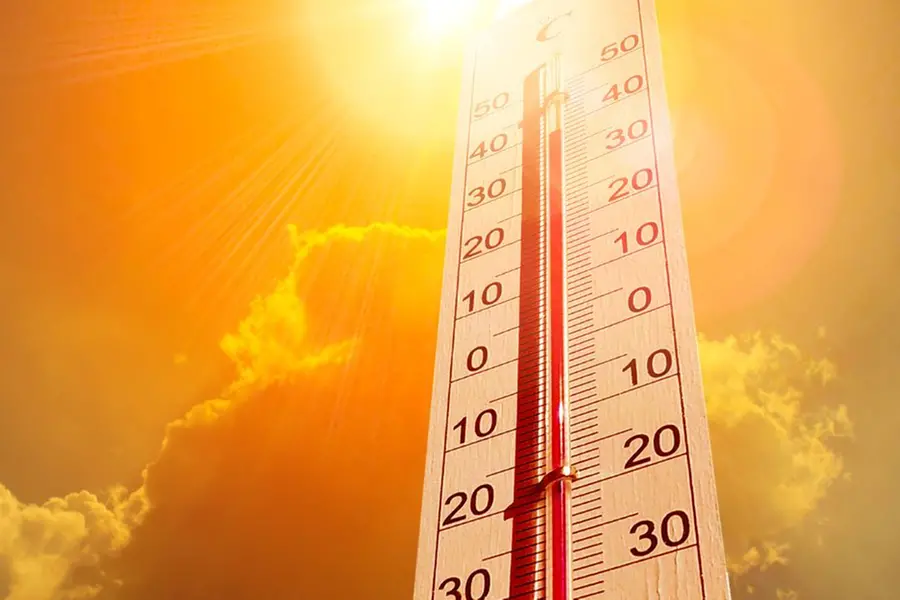
Washington: The world reached another record-high temperature in January 2025, surpassing the previous hottest January of 2024. According to Copernicus, the European climate service, January was 0.09°C warmer than last year and 1.75°C hotter than pre-industrial times, marking the 18th month of the past 19 where global temperatures exceeded the internationally agreed-upon limit of 1.5°C above pre-industrial levels.
This shocking heat record comes despite the influence of La Niña, a natural cooling phase of the equatorial Pacific Ocean, and an unusually chilly United States. While La Niña typically dampens global warming effects, January's temperatures defied expectations. "Even though the equatorial Pacific isn’t creating conditions that are warming for our global climate, we’re still seeing record temperatures," said Samantha Burgess, the strategic lead for climate at Copernicus. The key driver for the continued warming, according to experts, remains the accumulation of greenhouse gases from burning fossil fuels like coal, oil, and natural gas.
Also Read

January also saw unseasonably mild temperatures in the Arctic, with parts of the Canadian Arctic experiencing temperatures 30°C warmer than average. This warmth caused sea ice to melt in some areas, contributing to the Arctic's record-low sea ice levels. Copernicus tied the Arctic’s sea ice record to the lowest levels ever seen for January.
While El Niño tends to spike global temperatures, La Niña usually has the opposite effect, reducing the warming trend. However, despite La Niña's influence, the world has continued to experience record heat. "We’ve not seen the typical cooling after an El Niño, which is unusual," Burgess explained, pointing to the persistent warming of oceans around the globe.
Is global warming accelerating? Experts disagree
A new study by climate science expert James Hansen, former top NASA scientist, and others suggests that global warming is accelerating, sparking debate within the scientific community. Hansen’s study highlights that the last 15 years have seen a warming rate twice as fast as the previous 40 years, with 2024 and 2025 competing for the title of the hottest year on record. "I'm confident that this higher rate will continue for at least several years," Hansen said. However, some experts, like Princeton’s Gabe Vecchi and Michael Mann from the University of Pennsylvania, argue there isn't enough data to confirm acceleration, suggesting that temperature rises remain within forecasted ranges.
University of Michigan’s Jonathan Overpeck described the persistent warmth through 2023, 2024, and early 2025 as "jarring" and emphasized that it signals an acceleration in global warming and climate change impacts.
Agency
Published: 06 Feb 2025, 10:00 am IST
Related Topics
Disclaimer: Kindly avoid objectionable, derogatory, unlawful and lewd comments, while responding to reports. Such comments are punishable under cyber laws. Please keep away from personal attacks. The opinions expressed here are the personal opinions of readers and not that of Mathrubhumi.