
Scientists are using human brain cell organoids for biocomputing, offering energy-efficient alternatives to silicon chips
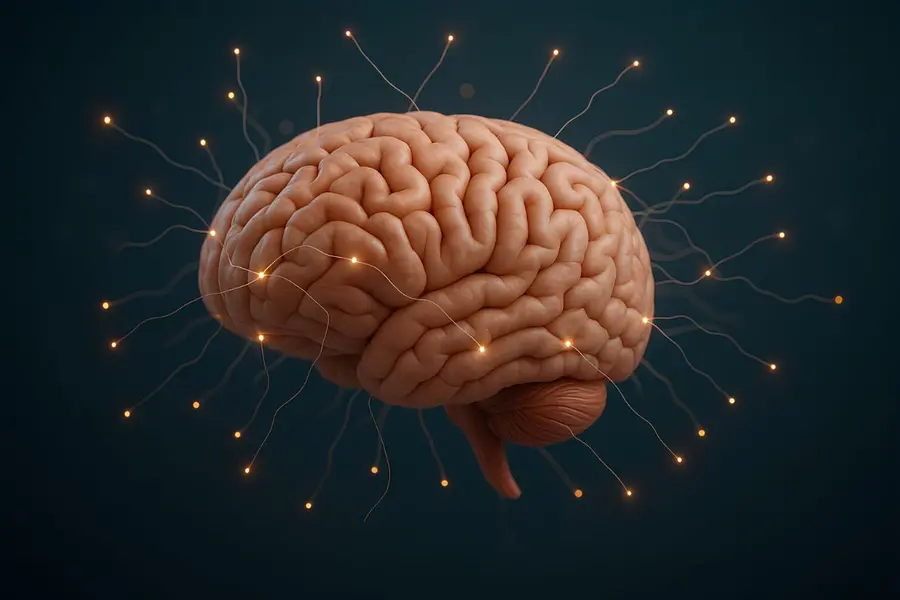
Vevey, Switzerland: In a lab in the scenic Swiss town of Vevey, scientists are giving tiny clumps of human brain cells the nutrients they need to stay alive, not for medical research alone, but to act as rudimentary computer processors.
Unlike traditional laptops, these “mini-brains” cannot be rebooted once they die. This emerging field, known as biocomputing or “wetware,” aims to harness the natural computing power of the human brain.
During a tour of Swiss start-up FinalSpark, co-founder Fred Jordan said, “Instead of trying to mimic, let's use the real thing.” He believes processors built from brain cells could one day replace the silicon chips that currently power the artificial intelligence boom.
The supercomputers running AI tools like ChatGPT rely on silicon semiconductors to simulate neural networks. Biocomputing, however, could offer a major advantage in energy efficiency. “Biological neurons are one million times more energy efficient than artificial neurons,” Jordan said. They can also be endlessly reproduced in the lab, unlike high-demand AI chips made by companies such as Nvidia.
For now, though, wetware remains far from competing with conventional hardware. Researchers also grapple with ethical and philosophical questions, including whether these mini-brains could ever become conscious.
How it works
FinalSpark starts with stem cells, originally human skin cells from anonymous donors, which are turned into neurons and formed into millimetre-wide clumps called brain organoids, roughly the size of a fruit fly larva’s brain. Electrodes attached to the organoids allow scientists to “spy on their internal discussion,” and they can stimulate them with small electric currents. The neural spikes produced are roughly equivalent to the ones and zeroes of traditional computing.
Ten universities worldwide are experimenting with FinalSpark’s organoids. At the University of Bristol, researcher Benjamin Ward-Cherrier used one organoid as the brain of a simple robot capable of distinguishing different Braille letters.
At Johns Hopkins University, researcher Lena Smirnova is using similar organoids to study conditions like autism and Alzheimer’s, hoping to uncover new treatments. While biocomputing as a computing tool remains “pie in the sky,” she said its biomedical applications are more immediate.
Consciousness concerns
All scientists AFP spoke to dismissed fears that these organoids could develop consciousness. Jordan acknowledged, “This is at the edge of philosophy,” and noted that FinalSpark collaborates with ethicists. The organoids have only around 10,000 neurons, compared with 100 billion in the human brain, and lack pain receptors.
Ward-Cherrier hopes that beyond computing, biocomputing could ultimately provide insights into how human brains function.
Back in the lab, Jordan opened a fridge containing 16 brain organoids tangled in tubes. Lines on the monitor spiked suddenly, indicating significant neural activity. “We still don't understand how they detect the opening of the door,” he admitted.
Published: 17 Oct 2025, 09:13 am IST
Related Topics
Disclaimer: Kindly avoid objectionable, derogatory, unlawful and lewd comments, while responding to reports. Such comments are punishable under cyber laws. Please keep away from personal attacks. The opinions expressed here are the personal opinions of readers and not that of Mathrubhumi.
