
MIT researchers discovered circling brain waves in the prefrontal cortex that help us regain focus after distractions
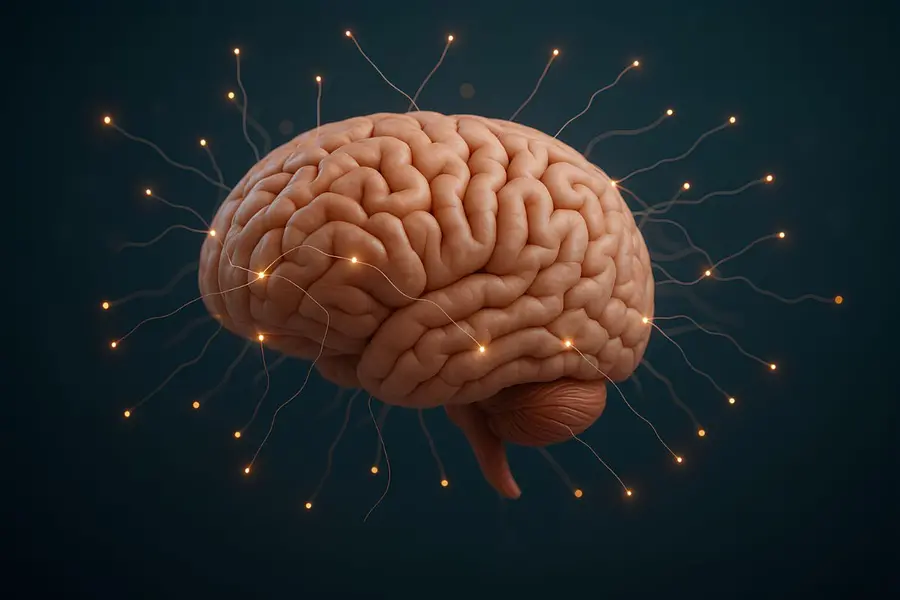
A new study by researchers from the Massachusetts Institute of Technology (MIT) has described a fascinating brain process involving rotating waves of neuron activity in the prefrontal cortex that help individuals regain focus after being distracted.
The findings, published in the Journal of Cognitive Neuroscience, reveal that these circular waves of electrical activity are crucial in helping the brain return to the task at hand once attention has drifted.
What did the researchers discover?
The research team analysed electrical signals in the prefrontal cortex of monkeys the region of the brain associated with high-level cognitive functions, including attention. They discovered a rotating wave of activity that appeared to be closely coordinated by neurons in the cortex to guide thoughts back on track.
“The rotating waves act like herders that steer the cortex back to the correct computational path,” explained senior author Earl K. Miller, professor at MIT’s Picower Institute and the Department of Brain and Cognitive Sciences.
Miller added that this circling activity seemed to represent how the monkeys’ brains recovered their activity state after being distracted.
How was the study conducted?
In the study, monkeys were trained to perform a visual task where they had to remember an object they saw. During the task, they were occasionally exposed to one of two types of distractions. These interruptions affected their ability to perform, either by increasing errors or slowing their reaction times when they needed to act on the task.
The researchers noted a distinct difference between cases where the monkeys successfully stayed on track and those where they faltered.
“When the animals did not make a mistake while distracted, we observed a complete circle, indicating the recovery was complete,” the team said.
However, in instances where errors occurred, the circular brain wave failed to make a full rotation.
“The path of the circling brain wave fell short of making a full circle by an angle of 30 degrees on average,” the researchers added.
They also found that during these error trials, the wave moved at a slower speed, which may explain why the brain was unable to fully recover from distraction.
Why is time important for refocusing?
The study further observed that the monkeys were better able to regain focus if there was a longer gap between the start of the distraction and the point when they attempted to return to the task.
According to the researchers, the brain needs this time to “come full circle mathematically” and get back on track behaviourally.
The team wrote, “Cortical activity shows the ability to recover from distractions. We analysed neural activity from the pFC (prefrontal cortex) of monkeys performing working memory tasks with mid-memory delay distractions (a cued gaze shift or an irrelevant visual input).”
They further explained, “After a distraction, there were state-space rotational dynamics that returned spiking to population patterns similar to those predisruption. Rotations were fuller when the task was performed correctly versus when errors were made.”
What does the study mean?
The research provides new insight into how the brain restores focus after interruptions, a process that is vital in daily life. The findings suggest that attention recovery is not just a psychological effort but also a measurable, physical pattern within the brain’s electrical activity.
PTI inputs
Published: 03 Nov 2025, 06:44 pm IST
Disclaimer: Kindly avoid objectionable, derogatory, unlawful and lewd comments, while responding to reports. Such comments are punishable under cyber laws. Please keep away from personal attacks. The opinions expressed here are the personal opinions of readers and not that of Mathrubhumi.
