
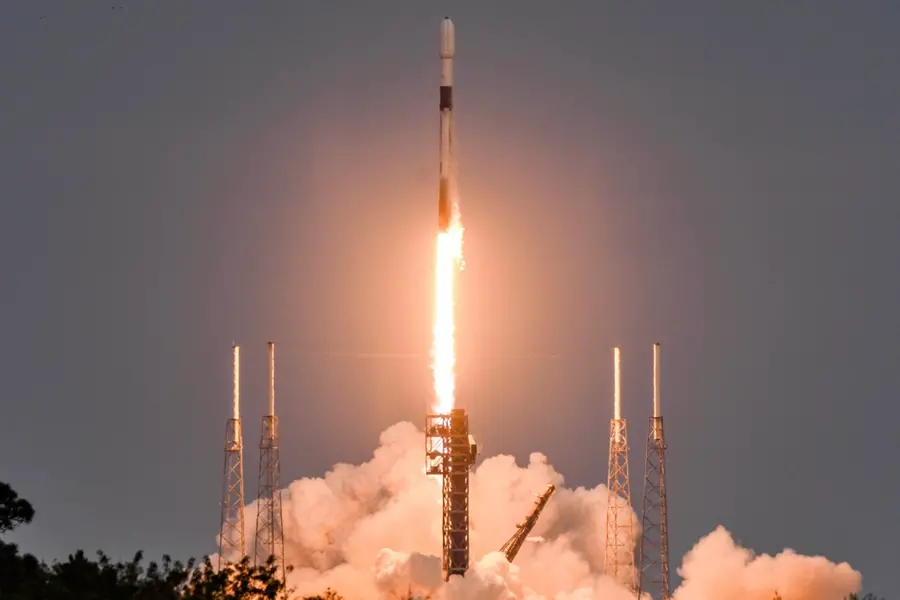
India is gearing up for a proud moment as Group Captain Shubhanshu Shukla, an Indian Air Force test pilot, prepares to become the first Indian to visit the International Space Station (ISS) on Axiom Mission 4 (Ax-4), launching on June 10, 2025, from NASA's Kennedy Space Centre.
This historic mission, a joint effort by Axiom Space, NASA, and the Indian Space Research Organisation (ISRO), marks a big leap for India’s space ambitions. With India investing over $60 million, Shukla will carry out seven key experiments in agriculture, food, and human biology, boosting ISRO's plans for the Gaganyaan program and a future Indian space station.
But a recent clash between US President Donald Trump and SpaceX CEO Elon Musk has raised eyebrows, making people wonder if political drama could affect this milestone. While the mission is on track, this episode shows how India's space journey relies on global teamwork and why building our own space capability is crucial.
The Trump-Musk spat began on June 5, 2025, when Musk openly criticized Trump’s economic policies. Trump hit back, threatening to cancel SpaceX's government contracts, which worried many since SpaceX's Crew Dragon and Falcon 9 are set to launch Ax-4. Musk then shocked everyone by announcing on X that SpaceX might retire the Dragon spacecraft, a move that could have delayed Shukla's mission. Thankfully, Musk changed his mind within hours after public backlash, confirming that the Dragon would stay active. NASA and Axiom Space quickly reassured everyone that Ax-4 is still set for June 10 at 8:22 am EDT. This close call shows how even a short-lived argument can create uncertainty for missions like Ax-4, which are vital for India's space goals.
What makes Shukla's mission special is its role in inspiring India's youth and advancing our space technology. His experiments, like studying crop seeds in zero gravity, could help farmers grow better crops, while others will improve how humans work with machines in space.
These efforts will directly support Gaganyaan, India's first manned space mission, where Shukla's ISS experience will be invaluable. Beyond science, his journey will motivate millions of young Indians to dream big, just like Rakesh Sharma did in 1984.
For a country with a growing space program, Shukla's success will prove that India can compete on the global stage, even as we depend on partners like SpaceX for now.
The Trump-Musk drama also highlights why India needs to speed up its own space projects. SpaceX's reliable technology is a boon, but relying too much on foreign companies leaves us vulnerable to their problems.
ISRO is already working on homegrown solutions, like the Gaganyaan spacecraft and plans for an Indian space station by 2035. Investing in our own rockets, capsules, and training programs will give India more control over its space future.
The Ax-4 mission, with its diverse crew from India, Poland, and Hungary, shows how countries can work together. But to avoid being caught in political storms like the Trump-Musk feud, India must aim for self-reliance while strengthening global ties.
In the end, Shukla's Axiom-4 mission is set to be a shining moment for India, with the launch proceeding as planned despite the brief scare. This episode is a reminder that space exploration is a team effort, but it also pushes India to build its own path to the stars.
On June 10, as Shukla blasts off to the ISS, he will carry the hopes of a nation ready to make its mark in space. By focusing on innovation, training, and partnerships, India can ensure that no earthly disputes dim its cosmic dreams.
The author is an award-winning science communicator and a defence, aerospace & geopolitical analyst
Published: 06 Jun 2025, 03:55 pm IST
Related Topics
Disclaimer: Kindly avoid objectionable, derogatory, unlawful and lewd comments, while responding to reports. Such comments are punishable under cyber laws. Please keep away from personal attacks. The opinions expressed here are the personal opinions of readers and not that of Mathrubhumi.
