
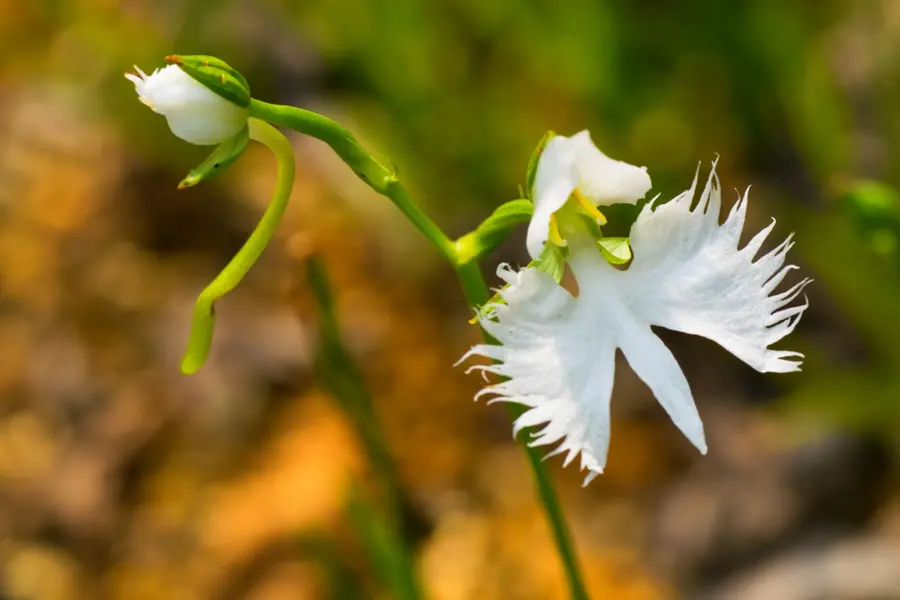
Bismarck: A rare and elusive flower, the western prairie fringed orchid, thrives on a few patches of tallgrass prairie in North Dakota. This unique orchid is protected under the federal Endangered Species Act and remains a mystery for scientists trying to understand its role in the ecosystem and its reproductive processes.
The western prairie fringed orchid faces serious threats due to the loss of its natural habitat. About 60% of native orchids in the U.S. and Canada are rapidly declining due to climate change, habitat loss, and a decrease in pollinators. Julianne McGuinness, program development coordinator at the North American Orchid Conservation Center, highlights that these beautiful plants can signal broader environmental issues.
Also Read

“They’re sort of like the canary in the coal mine for the rest of our ecosystems,” McGuinness said.
Graduate students from North Dakota State University (NDSU) in Fargo are leading the research on this rare orchid. Their work involves tracking the orchids' locations using GPS at 20 sites across Minnesota, North Dakota, and Manitoba, Canada. They are also collecting genetic samples from insects that interact with the orchids and using blacklights to attract pollinating moths at night.
Steve Travers, an associate professor at NDSU, is intrigued by the orchid's role in understanding its nearly extinct tallgrass prairie habitat — “these big, beautiful, 2-foot tall, ginormous, gorgeous things that were pollinated at night.”
“I have a hell of a hard time finding it sometimes,” he said. “And when people see it the first time, there's like almost this rapid intake of breath. I mean, it's so big and it's just spectacular.” The orchid’s only known pollinators are hawkmoths, which are perfectly suited to reach the nectar in the orchid’s long spur.
The orchid is mainly found in protected areas like the Sheyenne National Grassland in North Dakota and the Manitoba Tall Grass Prairie Preserve. Its peak blooming period is around mid-July. Populations can range from just one plant to several hundred.
Graduate student Josie Pickar is investigating factors affecting the orchid’s reproductive success, such as soil nutrients and pollinator activity. She visits various sites to collect soil samples, measure plant conditions, and monitor the orchids with trail cameras. In September, she plans to check for seed capsules, which are difficult to find.
Finding these orchids involves navigating rough terrain and dealing with ticks, beaver dams, and bear tracks. “It's been pretty wild,” Pickar said. Pickar and her team often work long hours, wearing protective gear to shield themselves from insects. She called the orchid “almost alien like when you see it out on the prairie.”
Graduate student Trinity Atkins is examining the orchid’s pollination networks, focusing on the pollinators' interactions with the orchids and other plants. She collects moths and uses a technique called eDNA metabarcoding to analyse genetic material left by pollinators.
Travers emphasises the importance of this research for biodiversity, as rare species like the western prairie fringed orchid play a crucial role in their ecosystems. While orchids are found globally, this particular species is specially adapted to the tallgrass prairie environment.
“I kind of find that really interesting that you get all this variety in the genus and then, boom, it comes here and it turns into this huge, nocturnally pollinated thing, and I'd love to know why. Why did that happen? But that's a whole other question,” Travers said.
Agencies
Published: 24 Aug 2024, 12:28 pm IST
Related Topics
Disclaimer: Kindly avoid objectionable, derogatory, unlawful and lewd comments, while responding to reports. Such comments are punishable under cyber laws. Please keep away from personal attacks. The opinions expressed here are the personal opinions of readers and not that of Mathrubhumi.