
The plant was recently found in a forest patch less than five kilometres from Chooralmala and Mundakkai, the sites of the devastating landslides in 2024.
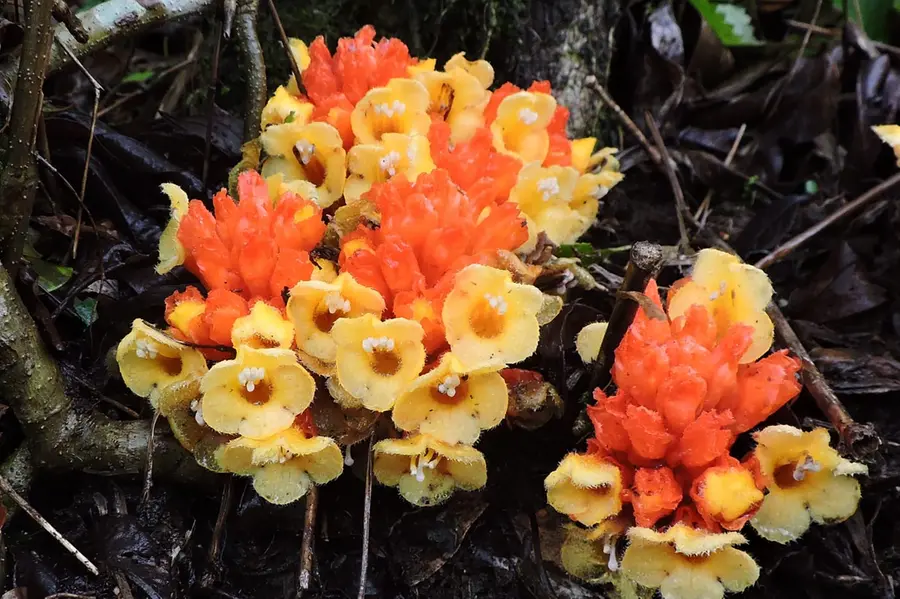
Kalpetta, Wayanad: A rare parasitic plant with striking orange and yellow blooms, long presumed extinct, has been rediscovered in Kerala’s Wayanad district nearly 175 years after it was first recorded.
Researchers have confirmed that the species is Campbellia aurantiaca (family Orobanchaceae), originally collected and described in 1849 from Naduvattam in Tamil Nadu by Scottish botanist Robert Wight.
The rediscovery has been detailed in a paper published in Kew Bulletin, the official journal of the Royal Botanic Gardens, Kew. The plant was recently found in a forest patch less than five kilometres from Chooralmala and Mundakkai, the sites of the devastating landslides in 2024.
Although Wight had established Campbellia with C. aurantiaca as its type species, its taxonomic placement remained unclear for decades due to differing interpretations among botanists. The major task for present-day researchers was proving conclusively that the specimens collected in 2022–23 from the Thollayiram forest region in Wayanad matched the one Wight described.
“Neilgherries (Nilgiris), in a small clump of jungle by the roadside near Nedawuttim (Naduvattam), flowering in August and September. As seen growing, this is a peculiar-looking plant, the deep orange coloured tops only appearing above ground,” says Wight’s original citation from 1849.
The study was authored by Salim Pichan of the M.S. Swaminathan Research Foundation, along with Jose Mathew, P.T. Arunraj and V.N. Sanjai of the Department of Botany, Sanatana Dharma College, Alappuzha, and B. Gopallawa of the University of Peradeniya, Sri Lanka.
According to the research paper, Salim had stumbled upon “a few vibrant orange clumps of a holoparasitic species thriving in humus-rich, moist, shady soil.”
Holoparasitic plants lack the ability to photosynthesise and rely entirely on host plants for sustenance. Detailed morphological study, along with an exhaustive review of historical literature, enabled the team to confirm that the plant is indeed Campbellia aurantiaca.
Published: 06 Dec 2025, 08:29 am IST
Disclaimer: Kindly avoid objectionable, derogatory, unlawful and lewd comments, while responding to reports. Such comments are punishable under cyber laws. Please keep away from personal attacks. The opinions expressed here are the personal opinions of readers and not that of Mathrubhumi.
