
A penguin that looked like all the others has turned out to be something quite different. Scientists have identified the southeastern gentoo as a new species after discovering genetic differences that had gone unnoticed for more than 100 years.
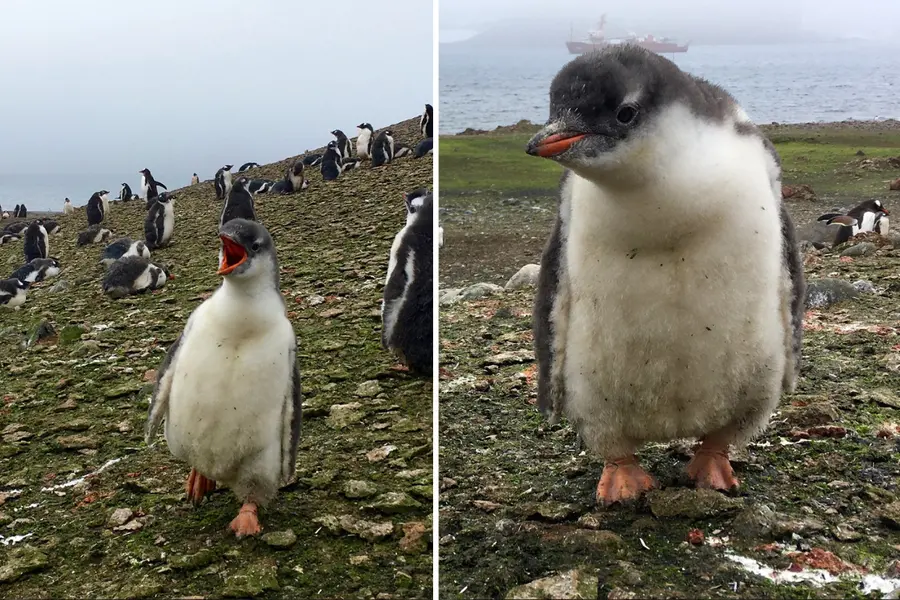
Penguins may seem like one of the easier animals to identify. They have their familiar black-and-white feathers, waddling walk and flipper-like wings. But scientists have discovered that even penguins can keep a few secrets.
Researchers have identified a new species of penguin for the first time in more than 100 years, and the biggest clue was not a striking change in appearance. It was hidden inside the birds' DNA.
The newly recognised species is called the southeastern gentoo penguin, or Pygoscelis kerguelensis. It lives on the remote Kerguelen Islands in the southern Indian Ocean, about 1,200 miles north of Antarctica.
The discovery means that what scientists had long considered one gentoo penguin species is actually four distinct species.
ALSO READ | Kerala scientists discover new colour-changing damselfly species
One gentoo becomes four
An international team of 22 researchers analysed the genomes of 64 gentoo penguins from 10 breeding colonies, covering almost the entire known range of the birds.
Their analysis revealed four genetically distinct lineages: the northern gentoo (Pygoscelis papua), southern gentoo (Pygoscelis ellsworthi), eastern gentoo (Pygoscelis taeniata) and the newly recognised southeastern gentoo (Pygoscelis kerguelensis).
The four groups appear to have separated from one another roughly 300,000 to 500,000 years ago. Geographic isolation and differences between their environments are thought to have helped drive that evolution.
The southeastern gentoo is particularly interesting because it is what scientists call a cryptic species. In simple terms, it looks so similar to a closely related species that its separate identity is difficult to spot just by looking at it.
Researchers found some subtle differences in characteristics such as size and vocalisations, but the genetic differences were much clearer.
The 1897 penguin that had a secret
Perhaps the most surprising part of the discovery is that the new species was not recently found by someone exploring an unknown island.
Scientists had actually collected a specimen of the southeastern gentoo on Kerguelen Island in 1897.
For more than a century, the penguins from the islands were grouped with other gentoo populations because their physical appearance was so similar. It was only with modern genomic analysis that researchers could establish that they represented a separate evolutionary lineage.
In other words, scientists did not discover a completely unfamiliar penguin. They discovered that a penguin they had known for generations had been misclassified as part of another species.
ALSO READ | ‘Satan destroyer’ of Kerala: Botanists discover 5 new spiked rock-grass species
How isolation helped create four species
The researchers found that the gentoo populations have been separated by geography and environmental conditions for hundreds of thousands of years.
The Antarctic Polar Front, a major boundary between different water masses in the Southern Ocean, may have helped keep some populations apart. Once groups remain isolated for long periods, genetic differences can gradually accumulate.
Gentoo penguins also tend to remain relatively close to their breeding colonies and return to the same nesting areas. Their diet is fairly flexible, including fish, krill, squid and cuttlefish, but their movements and breeding patterns can still keep populations separated.
The study also identified genetic differences associated with characteristics such as thermoregulation, oxygen transport and metabolism, suggesting that the different populations have adapted to their particular environments.
Why the discovery matters
The study, “Genomic analysis reveals four species of gentoo penguins,” was published in Communications Biology in 2026. Researchers from the University of California, Berkeley, worked with scientists from Universidad de Los Lagos in Chile and other institutions across five continents.
The discovery is a reminder that appearances can sometimes tell only part of an animal's story. Two populations can look almost identical while having followed separate evolutionary paths for hundreds of thousands of years.
It could also have important implications for conservation. Recognising four species instead of one means scientists may need to look more closely at the population size, habitat and threats facing each group individually.
The southeastern gentoo, meanwhile, has perhaps the most amusing claim to fame: it has technically been around for more than a century, but science has only just realised that it was a species of its own.
The discovery highlights how advances in DNA sequencing are changing the way scientists understand biodiversity. Traditional species classification often relied heavily on physical characteristics, which can make closely related populations difficult to distinguish.
Modern genomic analysis allows researchers to examine evolutionary relationships in much greater detail. In the case of the gentoo penguins, this revealed that populations separated for hundreds of thousands of years had developed enough genetic differences to be considered separate species.
The finding also shows why remote ecosystems such as the Kerguelen Islands can be scientifically important. Isolation can allow populations to follow their own evolutionary paths, creating biodiversity that may not be obvious from appearance alone.
For conservationists, the revised classification could also change how these penguins are studied and protected. A population previously considered part of a widespread species may instead represent a distinct species with its own ecological needs and vulnerabilities.
Published: 01 Oct 2026, 08:07 pm IST
ABOUT THE AUTHOR

Related Topics
Disclaimer: Kindly avoid objectionable, derogatory, unlawful and lewd comments, while responding to reports. Such comments are punishable under cyber laws. Please keep away from personal attacks. The opinions expressed here are the personal opinions of readers and not that of Mathrubhumi.