
Passionate Kerala researchers discover five new Impatiens species in the Western Ghats, naming them as heartfelt tributes to their academic mentors and institutions.
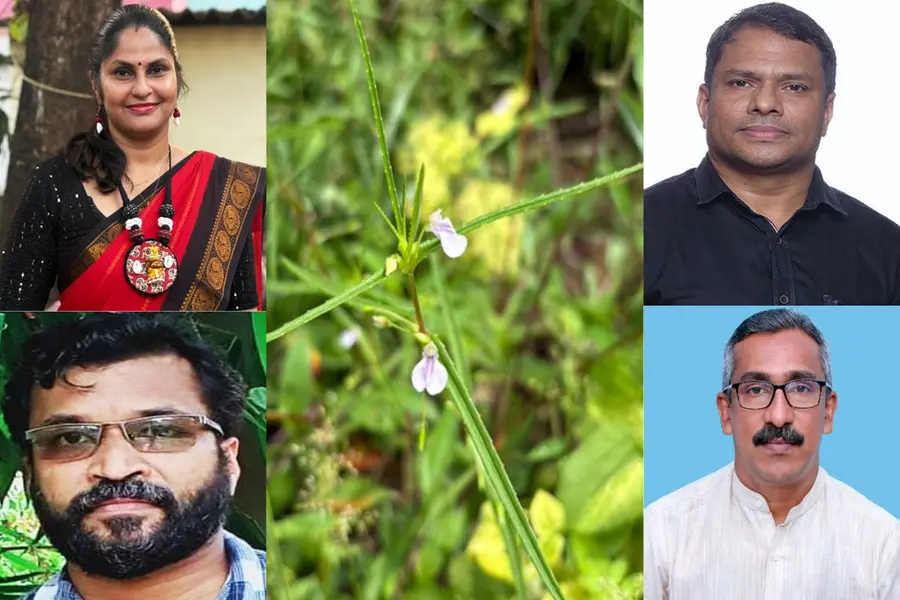
Deep within the misty, rain-soaked peaks of the Western Ghats, a brilliant burst of pink, purple, and gold has been dancing in the mountain breeze for centuries. To the casual passerby, they were just wild balsams—the delicate ‘Kashithumba’ that carpet the hillsides of Kerala. But to a team of Malayali researchers, they were a secret waiting to be told, and a chance to say a beautiful thank you.
The botanical world is celebrating the finding of five entirely new species of Impatiens, recently published in the international journal PhytoKeys. But beneath the dry scientific Latin lies a deeply moving story of gratitude.
The collaborative research team behind this botanical discovery includes Dr Arya S of the Department of Botany at SB College, Changanassery, and Dr Salvy Thomas, the former head of the same department. They were joined by independent researcher Dr Manuel Thomas and Professor (Dr) Rojimon P Thomas, who serves as the Head of the Botany Department at CMS College, Kottayam.
Instead of choosing typical geographical names, the researchers turned this major scientific milestone into a heartfelt tribute to the specific mentors and institutions that shaped their journeys.
While speaking to Mathrubhumi English, Dr Arya S, the first author of the study, said, “Ours wasn’t a funded project. We spent the last three to four years doing field work out of pure passion. Funding shouldn't be the deciding factor when it comes to pursuing research. The four of us were simply so driven that we ventured out into the wild and identified these five new species—which is no small feat, given that Impatiens are notoriously the most difficult to identify.”
Living monuments to academic legends
Swaying gently beside the cold highland streams of Vagamon, a delicate balsam with bright yellow flowers was discovered. It has been named Impatiens berchmansiensis, a living salute to Changanassery’s St Berchmans (SB) College, which has spent over a century nurturing young minds. For co-authors Dr Arya Sindhu and Dr Salvy Thomas, naming this enduring streamside flower after their institution ensures the roots of their work will bloom forever.
In the quiet wilderness of Mankulam Viripara, a resilient herb with beautiful violet petals and deep purple-speckled stems was found. It was named Impatiens ninanii to honour the late Prof C A Ninan, the legendary former Dean of Science at Kerala University. By naming this elegant plant after him, the researchers have ensured that the memory of one of Kerala's greatest pioneers of plant science continues to grow in the very soil he loved.
But perhaps the most personal offering was found deep in the open grasslands of Mamalakkandam. Here, a striking pinkish-purple flower caught the eye, bearing a vibrant splash of yellow and purple at its heart. It has been named Impatiens filcyii for Prof Filcy T Baby, the beloved former botany head at CMS College, Kottayam. This was championed by his former student, Dr Rogimon P Thomas, as a sacred guru-dakshina—a timeless offering to the teacher who first ignited his career.
"Prof Filicy was an exceptional teacher of classical taxonomy," recalled Dr Rojimon. "I wanted to dedicate this finding to him, as he was my mentor during my graduation years between 1998 and 2001. Sadly, he passed away from cancer in 2002," he told Mathrubhumi English.
Hidden treasures of Western Ghats
Dr Rojimon explained that Impatiens derives its name from the impatient, explosive manner in which its seed pods burst open at the slightest touch. These five new findings add hugely to the 110 species of the plant already thriving across the Western Ghats.
While the Kashithumba is generally cherished as a simple ornamental flower, Dr Arya noted that certain species may hold untapped medicinal value, emphasising that this discovery is just the beginning of deeper scientific exploration.
The remaining two species were named after their specific physical characteristics, found by the team to celebrate the region's incredible biodiversity.
Impatiens xanthopetala, which literally means 'yellow-petalled', clings precariously to the sheer, rocky cliffs of Pambanar, showing off deep golden petals marked with dark brown spots like a solitary drop of sunshine.
Meanwhile, hidden away in the dense pockets of Mamalakkandam, Impatiens flavispicata bears pure white flowers with a hidden yellow spur, a quiet beauty that asks for nothing but the mountain mist to survive.
Through meticulous laboratory analysis, mapping tiny pollen grains and petal structures, the team proved these five flowers were entirely new to science. But for the researchers, the true joy wasn't just in making history. It was the quiet knowledge that somewhere out there, in the lonely, mist-covered hills of Kerala, the names of the people who taught them to love nature are now blooming wild and free.
Published: 02 Jul 2026, 08:00 am IST
ABOUT THE AUTHOR

Related Topics
Disclaimer: Kindly avoid objectionable, derogatory, unlawful and lewd comments, while responding to reports. Such comments are punishable under cyber laws. Please keep away from personal attacks. The opinions expressed here are the personal opinions of readers and not that of Mathrubhumi.