
The radar data revealed layered sedimentary deposits characteristic of a delta -- a fan-shaped accumulation of sediment that forms where rivers meet larger bodies of water
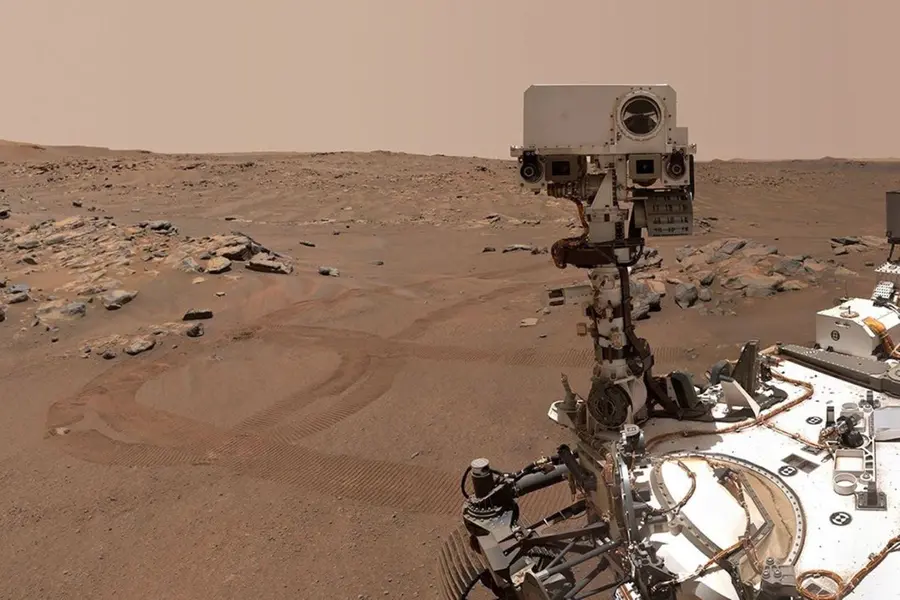
NASA's Perseverance rover has detected the underground remains of an ancient river delta on Mars, providing some of the oldest evidence yet that water once flowed across the planet's surface. The findings, published Wednesday in the journal Science Advances, suggest that Jezero Crater hosted water-rich conditions far earlier than previously known -- and that those conditions may have been capable of supporting life.
Using its ground-penetrating radar instrument known as RIMFAX, Perseverance peered deeper beneath the Martian surface than ever before, revealing geological structures buried as far as 115 feet below ground.
Over the course of 250 Martian days between September 2023 and February 2024, the rover collected data along a 3.8-mile stretch of terrain within Jezero Crater, a 30-mile-wide basin in Mars' northern hemisphere believed to have once contained a lake.
The radar data revealed layered sedimentary deposits characteristic of a delta -- a fan-shaped accumulation of sediment that forms where rivers meet larger bodies of water.
Researchers determined this buried formation dates back roughly 3.7 to 4.2 billion years, making it older than the visible Western Delta on the surface, which scientists estimate at 3.5 to 3.7 billion years old.
"From the features mapped by RIMFAX, we believe that Jezero Crater hosted an ancient water-rich environment, capable of biosignature preservation that existed prior to the formation of Jezero's Western Delta," said Emily Cardarelli, a UCLA planetary scientist and lead author of the study.
The discovery comes alongside separate findings from NASA's Curiosity rover. Research published days earlier by scientists at New York University Abu Dhabi found that ancient sand dunes in Gale Crater, where Curiosity operates, were soaked by underground water billions of years ago, leaving behind minerals capable of preserving traces of organic material.
Meanwhile, Curiosity's own observations of geological formations called boxwork -- low ridges extending above the Martian surface -- suggest the planet's water table was once far higher than expected.
"This suggests that the water necessary for supporting life might have persisted longer than previously estimated," said Tina Seeger, a Rice University mission scientist involved in the boxwork analysis.
Together, the twin lines of evidence paint a picture of a Mars that did not simply dry out after its lakes and rivers vanished but retained subsurface water that could have sheltered microbial life for far longer than once thought.
Perseverance has been collecting rock core samples at Jezero Crater since 2021, including one from a rock nicknamed "Cheyava Falls" that contained what NASA described as a potential fingerprint of past microbial life.
Those samples are slated for return to Earth by a future mission, where laboratory analysis could finally determine whether Mars ever harbored living organisms.
Published: 19 Mar 2026, 11:33 am IST
Related Topics
Disclaimer: Kindly avoid objectionable, derogatory, unlawful and lewd comments, while responding to reports. Such comments are punishable under cyber laws. Please keep away from personal attacks. The opinions expressed here are the personal opinions of readers and not that of Mathrubhumi.
