
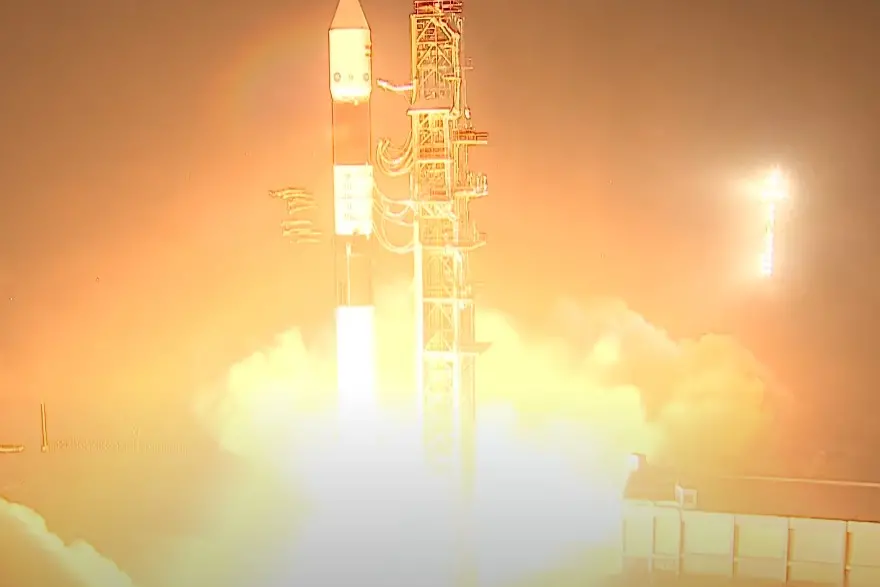
ISRO's SPADEX mission, a groundbreaking effort to master autonomous space docking, is racing against time. The current docking window will close on January 20, 2025, and won’t reopen until March 25, leaving a 65-day gap. This tight schedule adds urgency to the mission, as successful docking must occur before the looming eclipse season disrupts operations.
The challenge lies in the dependence on sunlight, which powers the satellites’ systems. While the mission benefits from sufficient fuel reserves, the availability of solar energy remains critical. Navigating this narrow window is essential for the mission’s success and marks a significant step in advancing India’s space capabilities.
Fuel Sufficiency Amidst the Solar Race
The Chaser satellite (SDX01) currently carries around 4.5 kg of propellant, enough to perform two complete docking and undocking maneuvers. This gives ISRO the flexibility to prioritise precision and safety, even if it means waiting for optimal post-eclipse conditions. As ISRO Chairman V Narayanan reassured, "There is no problem with being late; the satellites have enough fuel.”
A Dance of Satellites and Shadows
The SPADEX mission involves two satellites, the Chaser and the Target, performing an intricate dance to rendezvous (meet) and dock autonomously. This complex maneuver relies on precise control, communication and above all, sufficient power. Here’s why sunlight is so vital:
● Orbital Dynamics and Sunlight Deprivation:
The satellites orbit Earth at an astonishing 7 kilometers per second, completing one orbit every 90 minutes. During this rapid movement, they frequently pass in and out of Earth’s shadow, disrupting their access to sunlight.
● Limited Communication Windows:
Ground stations can only communicate with the satellites for brief 15-20 minute intervals during each orbit. This window shrinks further during eclipse seasons when the satellites spend more time in Earth's shadow.
● Seasonal Variations in Sunlight:
The satellites’ 54-degree inclination in low Earth orbit (LEO) determines how they traverse Earth’s shadow. Seasonal changes and Earth’s tilt create longer shadow durations during eclipse seasons, limiting sunlight exposure.
The Power of Sunlight: More Than Just Energy
The scarcity of sunlight during eclipse seasons poses two critical challenges:
1. Energy Shortages:
The satellites rely on solar panels to recharge their batteries. Prolonged periods in Earth’s shadow hinder energy generation, potentially draining power and jeopardizing key operations like docking.
2. Communication Blackouts:
Reduced sunlight also impacts communication with ground stations, making it harder to monitor and guide the docking process.
The Ticking Clock: A Race Against the Eclipse
The docking window is limited to before January 20, 2025, as the eclipse season approaches. Around this date, the satellite’s orbit will plunge it into longer periods of darkness during each 90-minute orbit. This reduces sunlight exposure and communication opportunities, making docking operations more difficult.
After a 65-day gap, the eclipse season will end, and the orbital geometry will shift. This will once again provide sufficient sunlight, creating a fresh opportunity for docking to resume.
Confidence Amidst Challenges
Despite these challenges, ISRO remains confident in the mission’s success. Chairman V Narayanan has emphasised a cautious and calculated approach, ensuring precision and safety take priority.
The SPADEX mission represents a significant milestone in India’s space journey. By mastering autonomous space docking, ISRO is not only pushing technological boundaries, but also laying the groundwork for future missions to the Moon, Mars and beyond. This mission reaffirms India’s place among the elite spacefaring nations and paves the way for even greater achievements.
(The author of this article is an award-winning Science Writer and a Defence, Aerospace & Political Analyst based in Bengaluru. He is also Director of ADD Engineering Components, India, Pvt. Ltd, a subsidiary of ADD Engineering GmbH, Germany. You can reach Girush Linganna at: girishlinganna@gmail.com)
Published: 15 Jan 2025, 07:12 pm IST
Related Topics
Disclaimer: Kindly avoid objectionable, derogatory, unlawful and lewd comments, while responding to reports. Such comments are punishable under cyber laws. Please keep away from personal attacks. The opinions expressed here are the personal opinions of readers and not that of Mathrubhumi.
