
In a world where critical minerals define power relationships between nations, India's push for self-reliance in titanium, superalloys, and rare earth elements is not just about industrial policy.
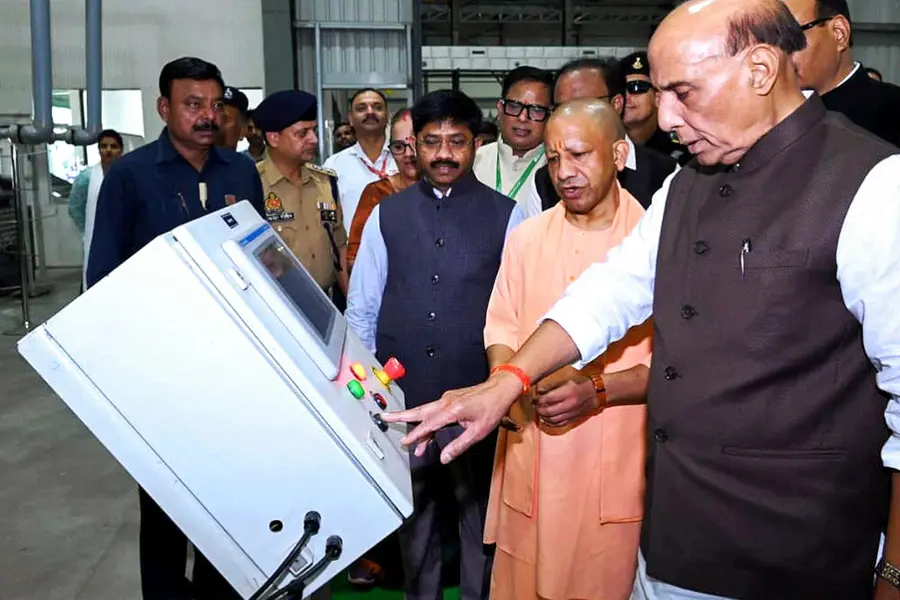
Defence Minister Rajnath Singh's inauguration of the Titanium and Superalloy Materials Plant at PTC Industries in Lucknow on October 18 represents far more than just another industrial facility coming online. It marks India's entry into an exclusive club of nations capable of producing the specialized materials that form the backbone of modern fighter jets and missile systems.
For decades, India's ambitious defence programs have been held hostage by the need to import critical materials from abroad. That era is now ending, and the implications for India's strategic autonomy are profound.
The heart of the matter lies in understanding what makes modern aircraft and missiles work. Titanium alloys and superalloys based on nickel and cobalt are not just useful materials -- they are absolutely essential for aerospace and defence applications.
These materials can withstand extreme temperatures, resist corrosion, maintain strength under stress, and remain lightweight enough for flight. Without them, you simply cannot build a modern fighter jet, missile engine, or spacecraft.
The materials Defence Minister Singh spoke about -- titanium, nickel-based superalloys, and rare earth elements -- are the difference between having a defence industry and merely assembling parts made by others.
Consider a fighter jet like India's indigenous Tejas or the advanced Su-30MKI. The engine alone operates at temperatures exceeding 1,500 degrees Celsius. Only nickel-based superalloys can survive such heat while maintaining structural integrity. The turbine blades, combustion chambers, and other hot-section components must be made from these specialized alloys.
Similarly, titanium alloys are used extensively in the airframe, landing gear, and engine components because they offer the best combination of strength, light weight, and heat resistance. A single fighter aircraft requires hundreds of kilograms of these critical materials, and until now, India has had to import a significant portion of them.
Missiles present an even more demanding challenge. Ballistic missiles re-entering the atmosphere face temperatures that can melt steel. The nose cones and heat shields require advanced titanium alloys and composites that can withstand this thermal assault. The guidance systems need rare earth magnets for precision control. The rocket motors use superalloy nozzles that must channel exhaust gases at extreme temperatures without failing. India's growing arsenal of cruise missiles, ballistic missiles, and hypersonic weapons all depend on these materials. Without a domestic supply, India's missile programs remain vulnerable to supply chain disruptions and technology denials.
The rare earth elements most critical for defence applications include neodymium, samarium, dysprosium, and praseodymium. Neodymium-iron-boron magnets are used in missile guidance systems, aircraft actuators, and radar systems because they produce the strongest magnetic fields of any permanent magnets. These magnets are essential for miniaturizing guidance systems while maintaining precision.
Samarium-cobalt magnets, which India has just started producing at the Visakhapatnam plant, offer better performance at high temperatures, making them ideal for missile applications where heat is a constant challenge. Dysprosium is added to magnets to improve their performance at elevated temperatures, crucial for systems operating in harsh environments.
Beyond magnets, rare earth elements play other critical roles in defence systems. Lanthanum is used in night vision equipment and camera lenses. Erbium is essential for fiber optic communications in military networks. Europium and terbium are used in displays and targeting systems. The electronics that control modern weapons systems are packed with rare earth elements. This is why China's dominance of rare earth production -- controlling 67% of global output and 86% of exports -- represents such a serious strategic vulnerability for countries like India.
The 2010 incident when China restricted rare earth exports to Japan after a maritime dispute should have been India's wake-up call. Japan saw its rare earth imports from China drop by 39%, and prices shot up globally. Industries scrambled to find alternatives. Defence programs faced uncertainty. That single episode demonstrated how a monopoly on critical materials can be used as a geopolitical weapon.
For India, which imports 81% of its rare earth elements by value from China, the message is clear: strategic independence requires control over the materials that make weapons systems possible.
This is why the new Titanium and Superalloy Materials Plant matters so much. India is not just building manufacturing capacity; it is securing the foundation for technological independence. The plant will produce titanium alloys and superalloys domestically, reducing dependence on imports for fighter jet and missile production.
The Rare Earth Permanent Magnet Plant in Visakhapatnam, though starting with modest capacity of 3,000 kg per year of samarium-cobalt magnets, establishes indigenous capability that can be scaled up. Indian Rare Earths Limited, which has been working since 1950, is finally getting the attention and resources it deserves.
The recent removal of IREL from the US export control list opens doors for technology collaboration that were previously closed.
Defence Minister Singh emphasized that India's strength will come from producing its own materials, components, chips, and alloys. This is not rhetoric -- it is strategic necessity.
When India designs the Advanced Medium Combat Aircraft or develops hypersonic missiles, the engineers need confidence that materials will be available when needed, in the quantities required, with the specifications demanded. They cannot afford to have programs delayed or compromised because a foreign supplier refuses to provide materials or imposes restrictions on end-use.
The government's approach shows sophisticated strategic thinking. The Production Linked Incentive scheme for recycling critical minerals will help recover rare earth elements from electronic waste, creating a circular economy.
The partnership with Kazakhstan through the India-Central Asia Rare Earths Forum diversifies import sources -- Kazakhstan has 15 of 17 rare earth elements and existing extraction infrastructure. As India's largest Central Asian trading partner with existing defence ties, Kazakhstan offers a reliable alternative to Chinese supplies.
The creation of Khanij Bidesh India Ltd to secure mineral resources abroad and India's membership in the US-led Mineral Security Partnership expand options further.
The economic benefits extend beyond defence. Aerospace manufacturing for civil aviation also requires these same materials. India's space program, which is expanding rapidly with private sector participation, needs titanium and superalloys for rockets and satellites.
The clean energy transition requires rare earth magnets for wind turbines and electric vehicle motors. By building domestic capability in these materials, India positions itself to compete in multiple high-value industries while creating thousands of skilled jobs.
The challenges are real – rare earth processing is environmentally demanding, technically complex, and capital intensive. Building world-class capabilities requires sustained investment in research, training, and infrastructure.
But as Defence Minister Singh noted, Uttar Pradesh's transformation under improved governance shows what is possible when leadership, resources, and vision align. The state is becoming an industrial powerhouse, and strategic materials production will accelerate that growth. The inauguration in Lucknow signals that India is serious about controlling its technological destiny.
In a world where critical minerals define power relationships between nations, India's push for self-reliance in titanium, superalloys, and rare earth elements is not just about industrial policy. It is about ensuring that India can build the fighter jets, missiles, and satellites it needs without asking permission from anyone. That is the essence of strategic autonomy, and that is what true independence looks like in the 21st century.
Published: 20 Oct 2025, 05:04 pm IST
Related Topics
Disclaimer: Kindly avoid objectionable, derogatory, unlawful and lewd comments, while responding to reports. Such comments are punishable under cyber laws. Please keep away from personal attacks. The opinions expressed here are the personal opinions of readers and not that of Mathrubhumi.
