
Singer and dubbing artist Chinmayi Sripaada triggered a major online debate after saying that “bloodline continues through the daughter, not the son,” with social media users divided over whether the statement was scientifically accurate or oversimplified.
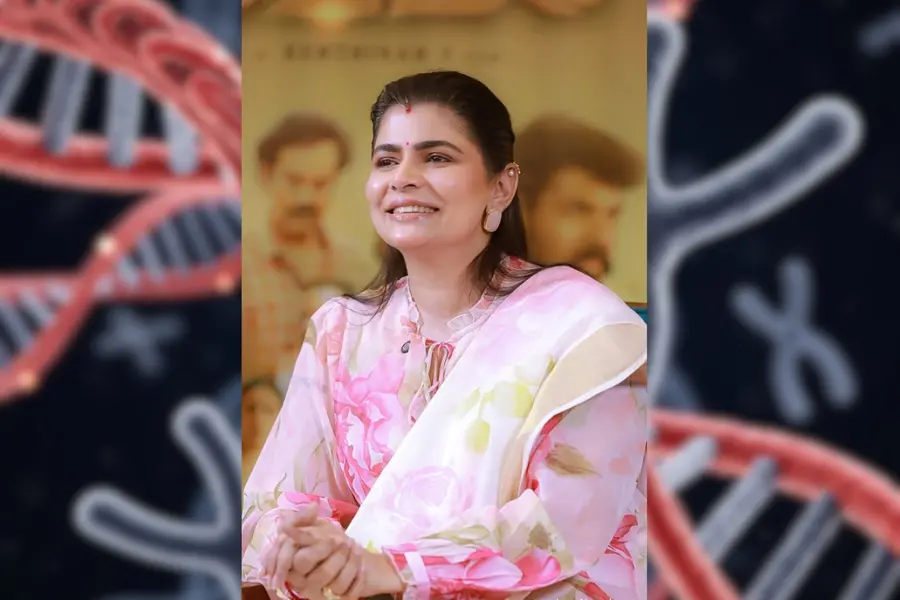
When singer and dubbing artist Chinmayi Sripaada said, “Bloodline continues through the daughter, not the son,” the internet immediately split into two groups. One side said she was absolutely right and backed by science. The other side accused her of spreading “half knowledge” and misunderstanding genetics.
The reason the debate exploded is because both sides were talking about different meanings of the word “bloodline”.
Also Read

In everyday culture, especially in countries like India, “bloodline” usually means the family name, lineage, inheritance, caste identity, dynasty, or surname. Traditionally, many societies treated sons as the people who “carry forward” the family line. That is why people often obsess over having male heirs.
But Chinmayi was not talking about surnames or social systems. She was referring to a very specific biological concept called mitochondrial DNA.
To understand this properly, imagine the human body as a giant city made up of trillions of tiny houses called cells. Inside almost every cell are tiny structures called mitochondria. These are basically the cell’s power generators — they produce energy for the body. What makes them special is that mitochondria have their own separate DNA, different from the main DNA inside the nucleus of the cell.
Now comes the important part.
A baby gets mitochondrial DNA only from the mother.
When a sperm fertilises an egg, the father’s sperm mainly contributes nuclear DNA. The mitochondria from the sperm are usually destroyed very early after fertilisation. The mother’s egg, however, contributes all the mitochondria that remain in the baby’s body. So every human being alive today carries mitochondrial DNA inherited from their mother.
That means:
- A mother passes mitochondrial DNA to both her sons and daughters.
- But only daughters can pass it on further to their children.
- This is the exact scientific point Chinmayi was referring to.
A simple family example makes this easier.
Imagine a woman named Meera. She has two children:
- A son named Arjun
- A daughter named Kavya
Both Arjun and Kavya inherit Meera’s mitochondrial DNA.
But later:
- Arjun’s children will get mitochondrial DNA from Arjun’s wife, not from Arjun.
- Kavya’s children will inherit Kavya’s mitochondrial DNA, which originally came from Meera.
- So Meera’s mitochondrial line survives through Kavya, not through Arjun.
This is why scientists say maternal mitochondrial lines continue only through daughters.
This idea became globally famous because of something called Mitochondrial Eve.
Scientists discovered that if you trace mitochondrial DNA backward through thousands of generations, every human alive today ultimately connects to one ancient woman who lived in Africa around 150,000 to 200,000 years ago.
That does NOT mean she was the only woman alive then. She was part of a large human population. But over thousands of years, other women’s mitochondrial lines disappeared because somewhere along the line they ended up having only sons or no surviving children. Her line alone survived continuously through daughters until it eventually spread across humanity.
This is actually one of the strongest pieces of evidence supporting the “Out of Africa” theory of human evolution.
But critics online were also not entirely wrong.
Many people objected because Chinmayi’s statement sounded too absolute. Human inheritance is far more complex than just mitochondrial DNA.
Every child inherits:
- 50% of their nuclear DNA from the mother
- 50% from the father
- Fathers also pass down something important: the Y chromosome.
A father passes his Y chromosome only to sons. Daughters do not receive it. This means paternal lineages can also be genetically traced across generations through men. Scientists sometimes refer to this ancestral line as “Y-chromosomal Adam”, similar to Mitochondrial Eve.
So biologically speaking:
- Mothers uniquely pass mitochondrial DNA
- Fathers uniquely pass Y chromosomes to sons
- Both parents pass the majority of overall DNA equally
That is why many geneticists would say Chinmayi’s statement is scientifically rooted but oversimplified if interpreted literally.
The internet argument became emotional because the discussion quickly moved beyond genetics into culture and patriarchy.
For centuries, many societies treated daughters as “temporary members” of families because they traditionally married into another household. Sons were seen as carriers of the family name, property, caste, rituals, and inheritance. In some communities, this mindset became so extreme that daughters were neglected or female foeticide became common.
So supporters of Chinmayi argued that her larger point was social, not just scientific. They felt she was challenging the belief that only sons matter for continuing a family line.
Critics, however, argued that using incomplete or simplified science weakens the argument and spreads confusion.
In reality, the truth sits somewhere in the middle.
If you are talking specifically about mitochondrial DNA, then yes — daughters alone continue that exact maternal chain into the future.
But if you are talking about total human genetics, family lineage, ancestry, or inheritance as a whole, then both sons and daughters continue the family line in different ways.
Published: 18 May 2026, 10:31 am IST
Related Topics
Disclaimer: Kindly avoid objectionable, derogatory, unlawful and lewd comments, while responding to reports. Such comments are punishable under cyber laws. Please keep away from personal attacks. The opinions expressed here are the personal opinions of readers and not that of Mathrubhumi.