
China successfully tested Feitian 2, a hypersonic vehicle with a revolutionary RBCC engine capable of switching between rocket and air-breathing modes
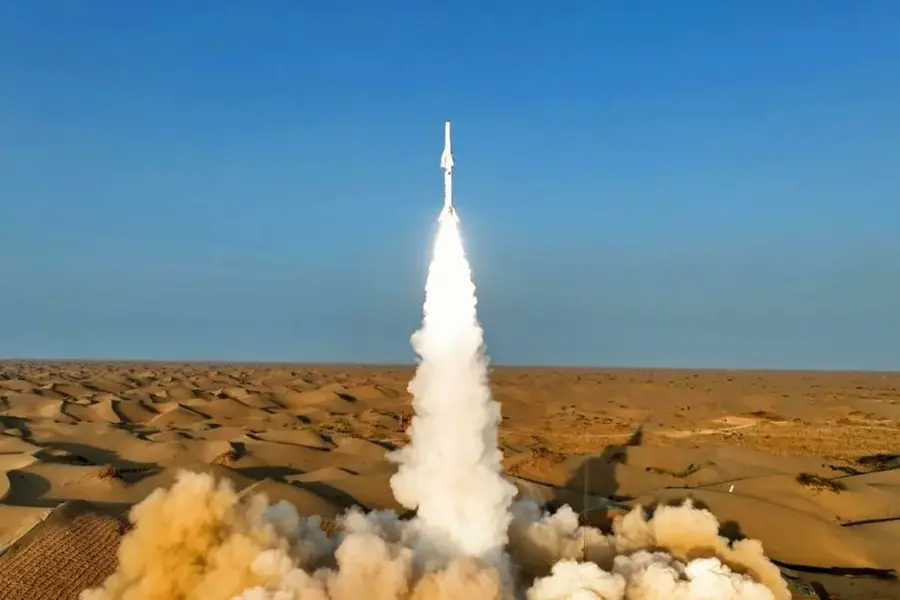
China has successfully tested a new hypersonic vehicle called Feitian 2 in northwestern China. This special vehicle flies at ultra-fast speeds and, during the test, it showed it can switch between two types of engines while flying -- a tough technical breakthrough. This ability is important because it makes the vehicle lighter and more efficient, helping build fast, advanced aircraft or weapons that can travel long distances quickly.
Feitian 2 was developed by Northwestern Polytechnical University (NPU) with help from the Shaanxi Province Aerospace and Astronautics Propulsion Research Institute. It is an improved version of Feitian 1, which had its first flight in July 2022.
The latest test shows that China is making good progress in RBCC engine technology -- a type of engine that uses both rockets and air-breathing systems. The flight also gave scientists useful information to improve high-speed engines and how objects move through air at extremely fast speeds.
What is RBCC engine technology?
RBCC stands for Rocket-Based Combined Cycle engine. It's a special type of engine that can work in two ways:
* Like a rocket: It carries its own fuel and oxygen and can work even in space where there's no air.
* Like a jet engine: It uses oxygen from the air around it to burn fuel, just like normal airplanes do.
Why is it useful?
At first, the engine works like a rocket to launch the vehicle into the sky. Once it is moving fast and high enough, it switches to air-breathing mode, which saves weight (no need to carry extra oxygen).
Later, it can switch back to rocket mode if needed -- for example, when flying in space or very high up where there is no air.
This switching makes the engine more efficient and faster, and helps vehicles travel at very high speeds, even into space, using less fuel.
Think of it like a hybrid car that can use both petrol and electricity depending on the road. The RBCC engine does something similar, but in the sky.
Feitian 2's special engine system
The most important part of Feitian 2 is its RBCC engine, which runs on a mix of kerosene and hydrogen peroxide. What makes it special is that, unlike many other hypersonic vehicles that use very cold (cryogenic) fuels like liquid oxygen, Feitian 2 can use oxygen from the air while flying.
This means it doesn't need to carry as much oxygen onboard, which makes the vehicle lighter and helps it save fuel. This also allows it to fly faster and more efficiently over long distances.
The test flight of Feitian 2 was a success. It showed that the engine could smoothly switch from one mode to another during flight. First, it used rocket power at take-off (called ejector mode) to get off the ground. Then, as it flew faster, it switched to using air from the atmosphere (called ramjet mode) to keep going at high speed.
This kind of smooth switching is very important for flying at hypersonic speeds (more than 5 times the speed of sound) for a long time.
The engine also showed that it can adjust how much air it takes in depending on the speed and height of the flight. This helps the vehicle perform better and stay stable in different conditions.
Better design and self-flying ability
Feitian 2 has been improved compared to the older version. It now has bigger tail fins and extra wings near the front. These changes help the vehicle stay steady and easier to control when flying very fast and high in the sky.
The test also showed that Feitian 2 can fly on its own without needing a pilot. It was able to change its flying angle by itself, depending on what was needed during the flight and what the weather or air conditions were like.
This self-flying ability is very useful for future unmanned hypersonic vehicles, which could be used for defence purposes or scientific research.
New type of fuel and engine design
Feitian 2 uses a mix of kerosene and hydrogen peroxide instead of the usual super-cold (cryogenic) fuels like liquid hydrogen or liquid oxygen.
Even though kerosene has less energy than liquid hydrogen, it is easier to store and handle, making the vehicle simpler, lighter, and safer. It also removes the need for heavy cooling systems.
Feitian 1 had already shown that kerosene works well in high-speed engines. Feitian 2 takes this further by adding hydrogen peroxide as an oxidizer -- a chemical that helps the fuel burn better.
Why hydrogen peroxide?
It helps the engine burn kerosene without needing extra oxygen tanks, which reduces weight. It is easier to store than liquid oxygen and does not need to be kept extremely cold.
It gives a steady and reliable thrust, which is important at high speeds. This smart fuel choice could guide how future hypersonic vehicles are built and flown.
The successful test of Feitian 2 gives China a strong lead in the global race to develop hypersonic technology. Feitian 2 can change engines while flying, fly on its own, and control the air it takes in -- all of which are big technical achievements.
These new abilities can be used in both defence use (building faster and smarter missiles or military aircraft) and civilian use (for super-fast transport and emergency response systems).
Published: 02 Jul 2025, 09:56 am IST
Disclaimer: Kindly avoid objectionable, derogatory, unlawful and lewd comments, while responding to reports. Such comments are punishable under cyber laws. Please keep away from personal attacks. The opinions expressed here are the personal opinions of readers and not that of Mathrubhumi.
