
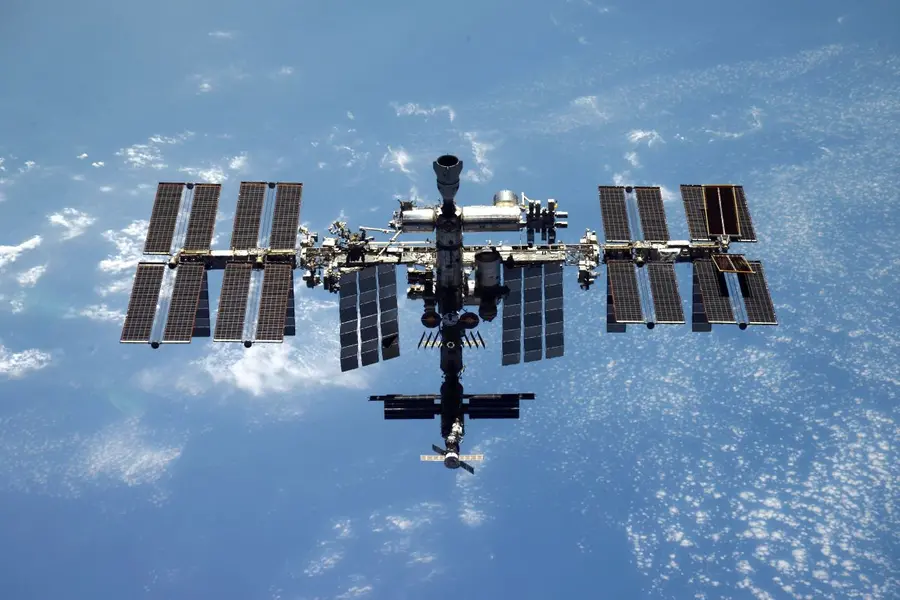
The Axiom-4 mission will bring India, Poland, and Hungary back into human spaceflight after more than 40 years. This will be the second time each of these countries is sending a person into space. But for the first time, astronauts from all three nations will be travelling together to the International Space Station (ISS) on the same mission.
Axiom Space said this historic mission shows how they are creating new opportunities to reach low-Earth orbit and are also helping countries around the world strengthen their space programs.
India's scientific mission
The Ax-4 mission will conduct about 60 science experiments, and seven of them are from India. Group Captain Shubhanshu Shukla will perform seven groundbreaking experiments while in space, with goals ranging from understanding how space affects living organisms to developing sustainable food sources for future missions. The research spans three key areas: agriculture and food security, biological adaptation, and technology optimization for space environments.
Agricultural Innovation in Space
1) Cultivating Indian crops beyond earth
The Indian Space Research Organisation (ISRO), Bengaluru, has designed pioneering experiments to test how traditional Indian food crops like methi (fenugreek) and moong (green gram) adapt to the space environment. These crops will be grown in microgravity conditions to observe changes in their growth patterns and gene activity.
Beyond basic survival, scientists aim to determine whether these familiar crops could serve as reliable nutrition sources during extended space missions, potentially revolutionizing how astronauts eat during long-duration flights to Mars and beyond.
2) Unlocking the potential of space-grown microalgae
The International Centre for Genetic Engineering & Biotechnology (ICGEB), New Delhi, and the National Institute of Plant Genome Research, New Delhi, are collaborating on an ambitious study of edible microalgae in space. Three different species will be monitored to understand how microgravity and space radiation influence their growth, metabolism, and genetic behavior.
This research holds particular promise because edible microalgae like Spirulina and Chlorella are already recognized as nutritional powerhouses on Earth. They're used in health supplements for their high protein and vitamin content, added to functional foods like energy bars and smoothies, and even incorporated into cosmetics for their antioxidant properties.
In space applications, microalgae could serve multiple purposes: providing nutrition, producing oxygen, and helping recycle waste— making them ideal for self-sustaining space habitats.
3) Seeds that travel to space and back
Perhaps most intriguingly, researchers will examine how space travel affects seeds at the genetic level. The Indian Institute of Space Science and Technology (IIST), Thiruvananthapuram, and the College of Agriculture, Vellayani, Kerala Agricultural University are jointly conducting an experiment titled "Impact of Microgravity on Growth and Yield Parameters in Food Crop Seeds." This research focuses on understanding how microgravity influences crop seed growth and yield characteristics.
"We're doing a sprouting experiment using moong (green gram) and methi (fenugreek) seeds, which are known for their health benefits," explained Tushar Phadnis, who leads the Microgravity Platforms and Research Group, during an online press conference. Scientists will analyze whether space exposure creates beneficial genetic changes or affects the seeds' nutritional content and associated microbes.
Biological Frontiers: Life's Resilience in Space
4) Water bears: Nature's ultimate survivors
The Indian Institute of Science (IISc) in Bengaluru brings one of the mission's most fascinating experiments: studying tardigrades, microscopic creatures nicknamed "water bears" or "moss piglets." These eight-legged micro-animals are legendary for surviving extreme conditions – from boiling water to the vacuum of space.
The experiment will observe how these hardy creatures emerge from their dormant state, reproduce, and develop in zero gravity. By comparing their genetic activity with Earth-based counterparts, researchers hope to unlock secrets of extreme survival that could benefit both space exploration and biotechnology development on our planet.
5) Muscle recovery in the final frontier
Addressing one of space travel's biggest challenges – muscle deterioration – the Institute for Stem Cell Science and Regenerative Medicine, Bengaluru, will test targeted nutritional supplements for muscle recovery in zero gravity.
Understanding why muscles weaken in space and developing countermeasures is crucial for long-duration missions. This research could yield treatments not only for astronauts but also for muscle-related diseases on Earth, bridging space science with terrestrial medicine.
6) Nature's life support system
Other Indian research institutions are investigating how cyanobacteria -- blue-green organisms that produce oxygen through photosynthesis -- function in microgravity as part of separate experiments focused on life support systems.
These versatile organisms could become the backbone of future space life support systems, simultaneously producing oxygen, recycling nutrients, and potentially supporting food production. The research examines how space conditions affect their growth and internal processes, with implications for creating self-sustaining space habitats.
Technology Optimization for Space Living
7. Designing better interfaces for space
The final experiment addresses a surprisingly practical concern: how astronauts interact with computer screens and displays in zero gravity. Researchers will study changes in eye movement, focus, and hand-eye coordination when using electronic interfaces in microgravity, as well as associated stress levels.
This human factors research aims to improve the design of computer systems for space environments, ensuring they're more intuitive and comfortable for astronauts to use during critical operations.
Beyond Earth: The bigger picture
These seven experiments represent more than scientific curiosity – they are building blocks for humanity's future beyond Earth. From developing sustainable food systems to understanding biological adaptation and optimizing technology for space environments, India's research aboard Axiom-4 tackles fundamental challenges of long-duration space exploration.
The mission demonstrates how international collaboration in space is opening new frontiers, with countries like India contributing unique perspectives and expertise to humanity's greatest adventure. As we stand on the threshold of missions to Mars and permanent lunar settlements, experiments like these are writing the playbook for how humans will live, work, and thrive among the stars.
For India, this mission marks not just a return to human spaceflight, but a bold step forward into a future where space research drives innovation both above and below the clouds.
Published: 11 Jun 2025, 07:55 am IST
Related Topics
Disclaimer: Kindly avoid objectionable, derogatory, unlawful and lewd comments, while responding to reports. Such comments are punishable under cyber laws. Please keep away from personal attacks. The opinions expressed here are the personal opinions of readers and not that of Mathrubhumi.
