
The highly anticipated Artemis II mission by NASA is set to launch today, drawing global attention as humans prepare to return to the Moon after more than five decades.
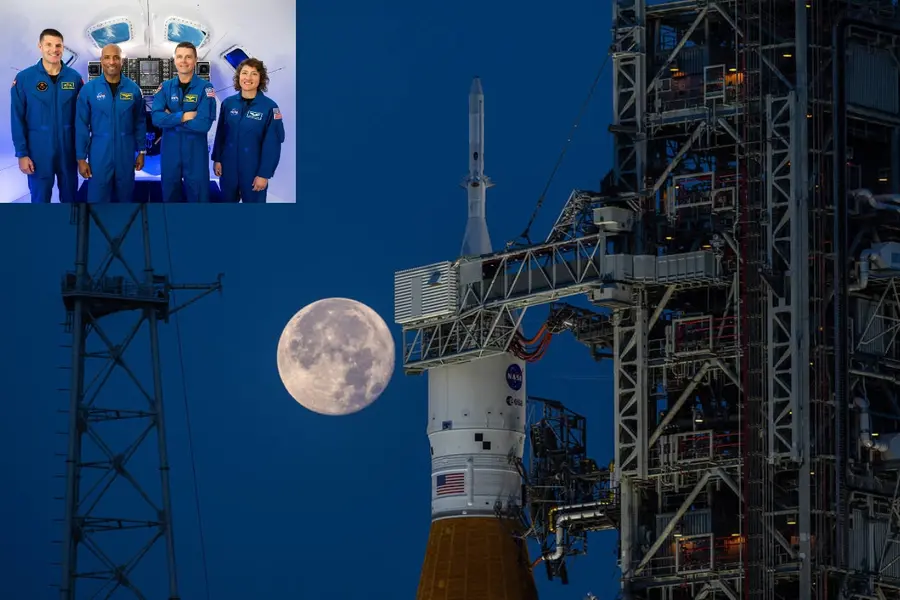
Thousands of visitors from across the world have gathered along Florida’s Space Coast as NASA gears up for the Artemis II launch, scheduled for today. The mission will send four astronauts on a journey around the Moon, offering a vantage point never before experienced by humans in modern space exploration.
The launch has triggered a massive surge in tourism, with hotels fully booked and key viewing locations sold out. Local officials expect record-breaking crowds, underlining the global interest in what is being described as a historic mission.
Also Read

Artemis II is part of NASA’s broader Artemis programme, which aims to return humans to the Moon for the first time since the Apollo missions more than 50 years ago. Unlike Apollo, however, the current mission is not just about landing on the Moon, but about building a long-term human presence.
What is the Artemis II mission
Artemis II is the first crewed mission under NASA’s new lunar programme and will send four astronauts on a journey around the Moon. Unlike the Apollo missions, this mission will not involve a landing. Instead, it is focused on testing critical systems required for deep-space travel, including life support, navigation, and crew safety. The astronauts will travel beyond low-Earth orbit, circle the Moon, and return to Earth, laying the groundwork for future missions that aim to land humans on the lunar surface.
What time is the Artemis II launch in India
The Artemis II launch is scheduled for 6:24 PM local time in Florida (EDT) on Wednesday.
For viewers in India, this translates to: 3:54 AM IST on Thursday, April 1, 2026
This means Indian audiences will need to tune in early morning to watch the historic launch live.
Why the Moon matters again
The renewed focus on the Moon is driven by both scientific and strategic reasons. Scientists believe the Moon holds valuable resources, including rare earth elements, metals like iron and titanium, and even helium used in advanced technologies.
Perhaps most importantly, the Moon is believed to contain water, particularly in permanently shadowed craters near its poles. This water could be used for drinking, producing oxygen, and even generating rocket fuel, making it essential for sustaining future lunar missions.
Race for space dominance
The mission also reflects a growing geopolitical competition in space. While the United States pushes forward with Artemis, China is advancing its own lunar programme and aims to send astronauts to the Moon by 2030.
Although international treaties prevent countries from owning lunar land, they can operate in specific regions, making access to resource-rich areas a key objective in this new space race.
Stepping stone to Mars
NASA’s long-term goal extends beyond the Moon. The Artemis missions are designed to serve as a testing ground for future human missions to Mars, which the agency hopes to achieve in the coming decades.
By establishing a sustained presence on the Moon, scientists and engineers can develop and test technologies needed for deep-space travel, including life support systems, energy generation, and habitat construction.
Economic and global impact
Back on Earth, the Artemis II launch is already generating significant economic impact. Local businesses in Florida are seeing a surge in spending, with tourism revenues expected to reach millions of dollars during the launch window.
Beyond economics, the mission is also expected to inspire a new generation of scientists, engineers, and space enthusiasts, much like the Apollo missions did decades ago.
As Artemis II lifts off, it represents more than just another space mission. It signals the beginning of a new era in space exploration—one focused on long-term presence, global competition, and the possibility of extending human life beyond Earth.
Published: 31 Mar 2026, 10:16 am IST
Related Topics
Disclaimer: Kindly avoid objectionable, derogatory, unlawful and lewd comments, while responding to reports. Such comments are punishable under cyber laws. Please keep away from personal attacks. The opinions expressed here are the personal opinions of readers and not that of Mathrubhumi.