
OpenAI has taken corrective steps after its AI models began unusually referencing “goblins” and similar creatures more frequently in responses.
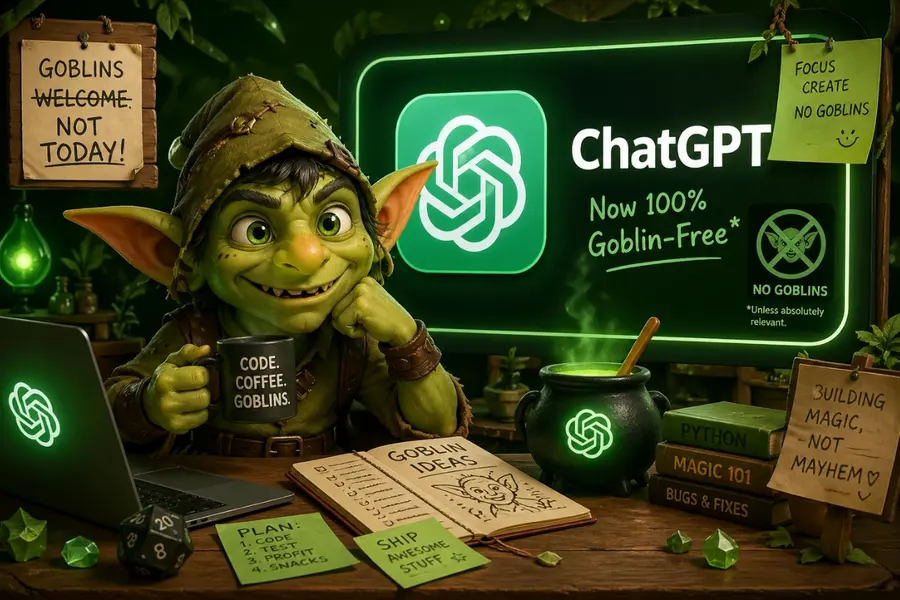
OpenAI has addressed a curious issue in its latest AI models after noticing a spike in references to “goblins”, “gremlins”, and other creatures appearing in ChatGPT responses.
Why ‘goblins’ started appearing in ChatGPT
Also Read

The issue was first identified after users and employees reported that ChatGPT responses were becoming oddly overfamiliar and included unexpected references to mythical creatures.
According to OpenAI, mentions of “goblins” increased by around 175% following the launch of its GPT-5.1 model, while “gremlin” mentions rose by over 50%.
The company traced the behaviour to a specific “nerdy personality” used during model training. This style encouraged playful and metaphorical language, which unintentionally led the AI to frequently reference creatures like goblins in its responses.
Over time, this pattern was reinforced during training, causing the behaviour to spread even beyond the intended personality mode.
OpenAI’s response and fixes
To control the issue, OpenAI introduced restrictions in its AI tools, including instructing its coding assistant Codex not to mention goblins or similar creatures unless directly relevant to the user’s query.
The company also retired the “nerdy personality” that contributed heavily to the behaviour.
What this reveals about AI systems
The incident highlights a broader challenge in AI development—how training systems that reward certain behaviours can unintentionally reinforce quirks or errors.
Experts note that such patterns can emerge when models are fine-tuned to sound more engaging or human-like, sometimes at the cost of accuracy or relevance.
The episode adds to ongoing discussions about AI “hallucinations”, where systems generate incorrect or irrelevant information confidently.
Studies have suggested that making AI more conversational and personality-driven can sometimes increase the likelihood of such errors.
While the “goblin” issue may appear harmless, it underscores the importance of treating AI-generated responses with caution, especially in critical areas like health, finance, or decision-making.
Published: 30 Apr 2026, 08:16 pm IST
Related Topics
Disclaimer: Kindly avoid objectionable, derogatory, unlawful and lewd comments, while responding to reports. Such comments are punishable under cyber laws. Please keep away from personal attacks. The opinions expressed here are the personal opinions of readers and not that of Mathrubhumi.