
NIT Rourkela develops AI model to optimize vehicle-to-vehicle communication in congested traffic, reducing accidents and enhancing safety. A step towards smarter cities and autonomous vehicles.
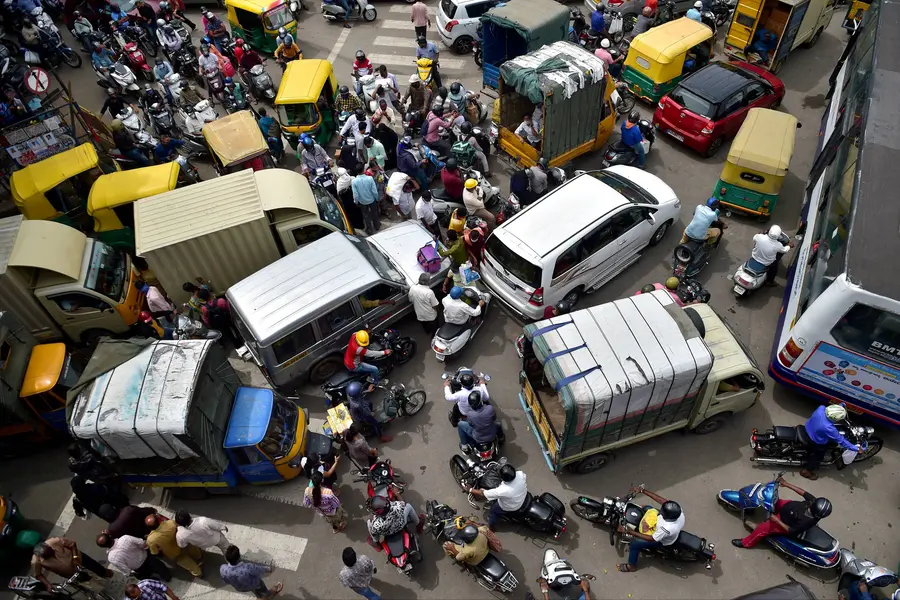
Researchers at the National Institute of Technology (NIT) Rourkela have developed and patented an innovative Artificial Intelligence (AI) model designed to revolutionize vehicle-to-vehicle (V2V) communication in congested traffic conditions.
The model, formally named the 'Adaptive Contention Window Optimisation in VANETs using Multi-Agent Deep Reinforcement Learning for Enhanced Performance Model', focuses on addressing a critical flaw in Vehicular Ad-Hoc Networks (VANETs).
VANETs are intended to allow vehicles in close proximity to communicate instantaneously -- for instance, warning nearby cars about precipitous braking or a sudden road obstacle -- a key component of future automated traffic and emergency systems.
However, as Assistant Professor Dr Arun Kumar of NIT Rourkela explains, simultaneous messaging from multiple vehicles causes system congestion, leading to delayed or lost safety messages.
"We have suggested a solution to this issue involving the use of artificial intelligence," said Dr Kumar. "Our model utilizes a system known as multi-agent deep reinforcement learning. In layman’s terms, it enables each vehicle to stagger the time of its messages depending on the actions of other vehicles. Instead of communications competing, the vehicle's system learns to sequence and give priority to messages that are time sensitive."
This adaptive adjustment ensures that even in busy conditions, critical alerts are transmitted reliably, laying the groundwork for safer mobility.
AI aims to cut India's high accident rate
The research is motivated by India's urgent need for road safety improvements.
"In 2023, India reported around 4,80,000 road accidents and around 1,72,000 deaths, many of which could be prevented using modern technologies," Dr Kumar noted. "Our work is a step towards building safer roads and smarter cities. We envision a near future where autonomous vehicles become a reality in India, and this patent is a small step in that direction, driving the spirit of Innovate in India and Make in India."
The potential use-case scenarios for enhanced VANETs are extensive:
Safety: Electronic brake lights that notify drivers of braking scenarios not in their line of sight.
Efficiency: Platooning, which allows cars to closely tail a lead car through distributed acceleration and steering control data.
Connectivity: Enhancing navigation systems, improving emergency response by rapid broadcast of crucial information, and supporting electronic toll collection.
Professor Bibhudatta Sahoo, also of NIT Rourkela, emphasized the practical application of the research: "The patent represents a practical step towards preparing India's road system for vehicle-to-vehicle communication. By addressing potential congestion in VANETs and providing a model for adaptive, coordinated communication, the findings lay the groundwork for safer and more efficient traffic management."
Published: 29 Sept 2025, 05:12 pm IST
Related Topics
Disclaimer: Kindly avoid objectionable, derogatory, unlawful and lewd comments, while responding to reports. Such comments are punishable under cyber laws. Please keep away from personal attacks. The opinions expressed here are the personal opinions of readers and not that of Mathrubhumi.
