
Critics suggest the toned-down aesthetic looks "cheaper" or feels like a "step backwards" from the bold vision initially presented
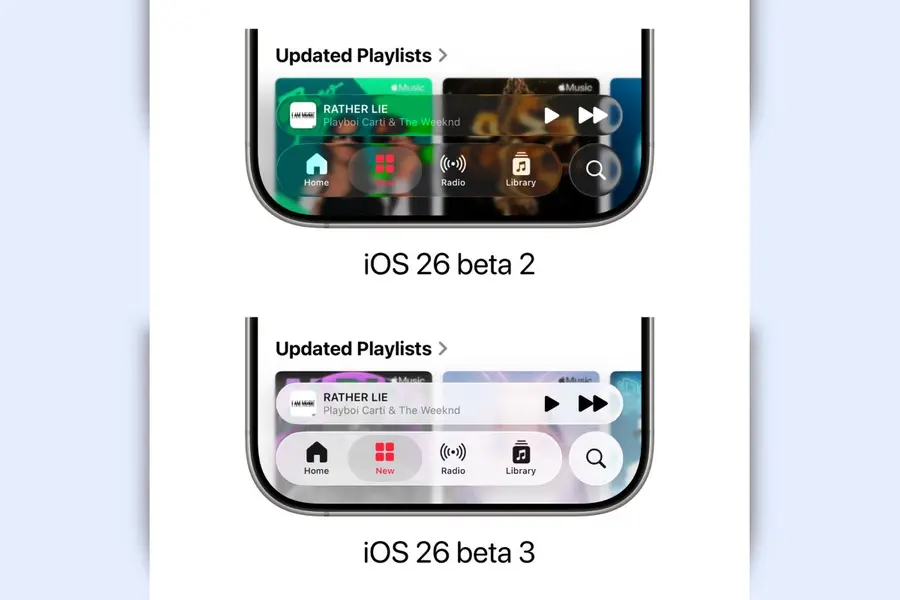
New Delhi: Apple has begun to subtly tone down its much-hyped "Liquid Glass" design language in the latest iOS 26 Beta 3, released to developers this week. The move, which sees a reduction in the signature transparency of UI elements, appears to be a direct response to early tester feedback regarding legibility and clarity.
Unveiled at WWDC 2025 in June, "Liquid Glass" was showcased as a revolutionary visual overhaul for iOS 26 and other Apple operating systems, aiming to create a dynamic, translucent, and glass-like interface. Its initial iterations featured highly transparent elements that reflected and refracted background content, designed to unify the user experience across all Apple devices.
However, as developers and early adopters began testing the first and second betas, concerns mounted. Many users found that the extreme transparency, while visually striking, often made text and critical interface elements difficult to read, particularly over busy or light-colored backgrounds. This "readability nightmare," as some termed it, prompted a wave of feedback to Apple.
In response, iOS 26 Beta 3 introduces changes that make various "Liquid Glass" elements, such as navigation bars in apps like Apple Music, Podcasts, and Safari, as well as notifications, more opaque and "frosted glass"-like. The aim is to improve contrast and ensure that on-screen information is more distinct and easier to read. For instance, notification backgrounds now feature a darker tint to make text stand out more clearly.
The adjustment has, however, led to mixed reactions within the developer and tech communities. While some testers appreciate the improved clarity and usability, others express disappointment, feeling that Apple has "diluted the identity" of the "Liquid Glass" design that was heavily promoted at WWDC. Critics suggest the toned-down aesthetic looks "cheaper" or feels like a "step backwards" from the bold vision initially presented.
It's crucial to remember that iOS 26 remains in its beta phase. Apple frequently refines and adjusts features based on extensive testing and feedback cycles. The changes in Beta 3 likely represent Apple's ongoing effort to find an optimal balance between the striking aesthetics of "Liquid Glass" and the essential practicalities of daily user experience. The full, stable version of iOS 26 is still expected for a public release in September 2025.
Published: 09 Jul 2025, 12:48 pm IST
Related Topics
Disclaimer: Kindly avoid objectionable, derogatory, unlawful and lewd comments, while responding to reports. Such comments are punishable under cyber laws. Please keep away from personal attacks. The opinions expressed here are the personal opinions of readers and not that of Mathrubhumi.
