
On Thursday, shares of Intel surged by as much as 26% after Nvidia announced a $5 billion investment in Intel stock and a long-term collaboration that could redefine the AI hardware landscape.
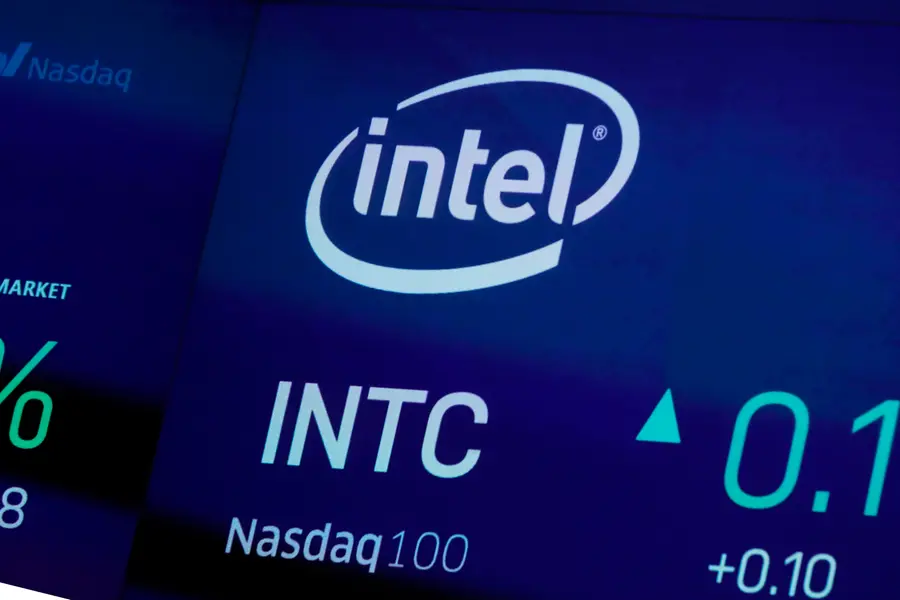
New York: Intel, once the undisputed titan of chipmaking, is experiencing a long-overdue resurgence — and it may be having its best stock market day since 1987 to prove it.
On Thursday, shares of Intel surged by as much as 26% after Nvidia, the world’s most valuable semiconductor company, announced a $5 billion investment in Intel stock and a long-term collaboration that could redefine the AI hardware landscape.
The agreement marks a pivotal moment for both firms, but especially for Intel, which has been floundering for years amid missed technological inflection points and mounting losses. Once dominant in powering personal computers, Intel failed to adapt to the mobile revolution triggered by the iPhone in 2007. More recently, it was left behind in the explosive AI boom — a market Nvidia now leads with its highly sought-after Graphics Processing Units (GPUs) that underpin advanced AI models and data centres around the world.
Last year alone, Intel posted nearly $19 billion in losses, followed by another $3.7 billion in the first half of this year. The company had already begun downsizing, announcing plans to lay off 25% of its workforce by the end of 2025. In response to these struggles — and recognising the company’s strategic importance to U.S. technology and manufacturing — the U.S. government took the rare step of acquiring a 10% equity stake in Intel just last month. This move was widely seen as a bet on national resilience in semiconductor production, especially amid growing geopolitical tensions with China and Taiwan.
Nvidia deal could be a game changer
The Nvidia deal could not have come at a more opportune time. Nvidia has committed to purchasing $5 billion worth of Intel shares at $23.28 each — a significant vote of confidence in Intel’s future. More importantly, the partnership between the two firms aims to tightly integrate Intel’s CPUs with Nvidia’s AI and accelerated computing stack, aligning two of the most critical hardware platforms in the digital economy.
The collaboration will focus on custom silicon for AI-focused data centres and next-generation PC products. Intel will manufacture chips tailored for Nvidia’s AI infrastructure, while also developing new processors that integrate Nvidia technologies directly for consumer devices. In a statement, Nvidia CEO Jensen Huang said, “This historic collaboration tightly couples NVIDIA’s AI and accelerated computing stack with Intel’s CPUs and the vast x86 ecosystem — a fusion of two world-class platforms.”
What makes this partnership so significant is that it moves beyond a simple financial investment — it’s a technological alliance that could help both firms expand their ecosystems. For Nvidia, which currently relies heavily on Taiwan Semiconductor Manufacturing Company (TSMC) for its chip production, the agreement may also signal a gradual shift toward a more diversified and geopolitically secure supply chain. While no formal manufacturing deal has yet been signed, the possibility of using Intel’s foundries in the future would reduce Nvidia’s reliance on overseas fabrication and put pressure on TSMC.
Ripple effects could include new Wall Street records, fewer layoffs
Intel’s share spike — its largest one-day percentage gain in decades — didn’t just lift the company. The announcement helped drive a broader rally in tech stocks. The Nasdaq rose 1%, and the S&P 500 climbed 0.7%, both edging toward fresh records. Nvidia shares rose nearly 3%, reflecting investor enthusiasm about the strength of the partnership.
Market analysts were quick to acknowledge the significance. Wedbush Securities analyst Dan Ives described the announcement as a “game-changer” that could finally bring Intel “front and centre into the AI game.” He added that the past few weeks — marked by the U.S. government investment and now this Nvidia collaboration — represent a “golden stretch” for Intel after years of pain.
The optimism could translate into real-world impact for Intel’s workforce and stakeholders. While the company has not officially revised its layoff plans, the financial and strategic support from both the U.S. government and Nvidia may ease some of the internal cost-cutting pressures. Intel is now in a better position to stabilise operations, scale up manufacturing, and retain key talent needed to build competitive products in AI and high-performance computing.
Tech nationalism and global implications in AI dominance
The announcement also arrives at a time of heightened global scrutiny of chip supply chains. This week, China reportedly barred some domestic tech firms from buying Nvidia chips, while Huawei — under U.S. sanctions — continues to push forward with its own AI chip development. In this geopolitical climate, strategic alliances between U.S. chipmakers like Intel and Nvidia take on added weight. Not only does this deal promise economic upside, it also strengthens the U.S. position in the race for AI dominance and semiconductor self-sufficiency.
Though no foundry contract has been inked yet, the prospect of Nvidia manufacturing chips on American soil with Intel — rather than overseas via TSMC — introduces a powerful new dynamic into the global chipmaking conversation.
Published: 18 Sept 2025, 09:45 pm IST
Related Topics
Disclaimer: Kindly avoid objectionable, derogatory, unlawful and lewd comments, while responding to reports. Such comments are punishable under cyber laws. Please keep away from personal attacks. The opinions expressed here are the personal opinions of readers and not that of Mathrubhumi.
