
The sector's expansion will also require substantial upfront capital expenditure, with investments typically preceding revenue generation by 24-36 months.
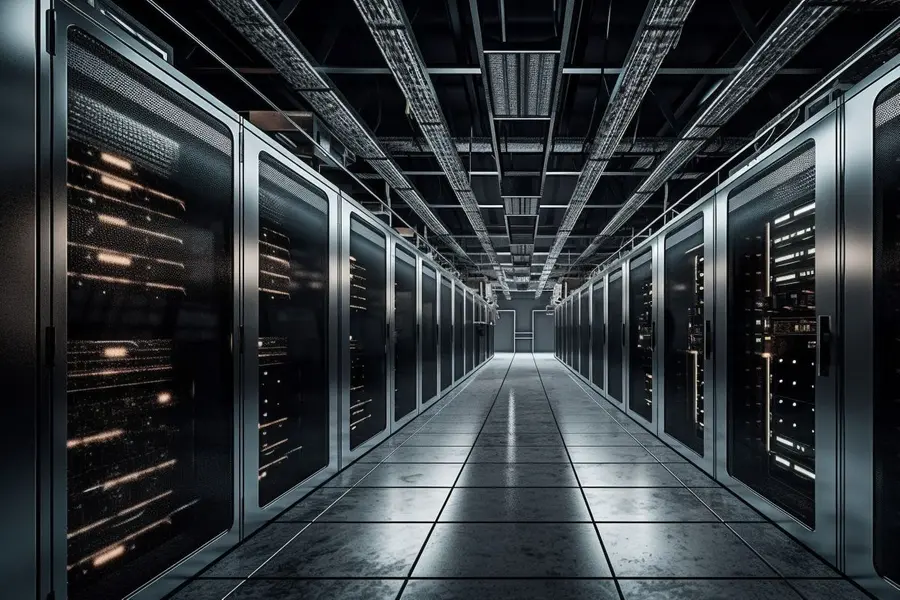
New Delhi: India's data centre expansion is set to be heavily concentrated in three cities, with Visakhapatnam, Mumbai and Hyderabad expected to account for nearly three-fourths of the country's approximately 6 gigawatts (GW) of upcoming capacity by fiscal 2030, according to a report by Crisil Ratings.
The concentration of new facilities in these cities is expected to make them key centres of India's growing digital infrastructure ecosystem. However, the rapid expansion could also put considerable pressure on their existing power infrastructure, requiring timely grid connectivity and transmission capacity augmentation.
India's total installed data centre capacity is projected to increase five-fold to around 7.5 GW by March 2030, attracting investments of more than Rs 3 lakh crore over the next four financial years, the report said.
The expansion is being driven by rising demand for generative artificial intelligence (GenAI), enterprise digitalisation, cloud adoption and increasing data consumption.
The scale of the proposed development could significantly alter the electricity demand profile of the three cities. By fiscal 2030, data centre capacity in Visakhapatnam could be equivalent to around 80 per cent of its current peak electricity demand. The corresponding figures for Mumbai and Hyderabad are estimated at 60 per cent and 20 per cent, respectively.
The projections underline the growing importance of power availability in determining where India's next generation of data centre infrastructure will come up. Delays in grid connectivity and transmission capacity upgrades could affect project commissioning timelines and lead to cost overruns.
Despite these infrastructure challenges, demand visibility remains strong. Existing data centre facilities in India are operating at around 90 per cent utilisation, while more than 95 per cent of the capacity currently under construction has already been contracted.
"Nearly half of the upcoming capacity is already committed under long-term contracts, limiting speculative development and reducing offtake risk," Crisil Ratings said. "Upfront tie-ups with hyperscalers, driven by cloud adoption and compute-intensive GenAI workloads, provide revenue certainty from the outset. This helps de-risk projects, even as the scale and speed of the planned build-out intensify execution requirements."
India's cost competitiveness is another factor supporting the expansion. Development costs are around 20 per cent lower than in several competing Asia-Pacific markets, supported by relatively cheaper land, construction and labour. Lower power tariffs also allow operators to offer rental rates 30-35 per cent below those in peer markets.
The availability of large campuses powered by renewable energy further strengthens India's appeal to global hyperscalers seeking to meet their sustainability commitments.
Anand Kulkarni, Director at Crisil Ratings, said, "India's structural cost advantages further strengthen its attractiveness as a data centre destination. Development costs are around one-fifth lower than in several competing Asia-Pacific markets owing to more competitive land, construction and labour costs. Combined with lower power tariffs, this translates into rentals that are 30-35 per cent lower than in peer markets. The ability to develop large, renewable-powered campuses also aligns well with the sustainability goals of hyperscalers, reinforcing India's competitive positioning."
The growing dependence on global hyperscalers, however, could expose developers to customer concentration risks. Their share of leased data centre capacity is expected to increase to 75-80 per cent by fiscal 2030 from 60-65 per cent in fiscal 2026.
While long-term contracts provide revenue visibility, the increasing bargaining power of large customers could put pressure on rental rates as additional capacity enters the market.
The duration of customer agreements has also increased, with contract tenures extending to 15-20 years from 10-12 years earlier. This is expected to improve cash flow predictability and support customer retention.
Nitin Bansal, Associate Director at Crisil Ratings, said, "The quality of contracted revenues has also strengthened. Contract tenors have lengthened to 15-20 years from 10-12 years earlier, enhancing cash flow visibility. Furthermore, high migration costs and rising replacement capex should support customer retention, although a meaningful contract renewal track record is yet to be established. At the same time, developers will need to ensure that existing facilities remain relevant for next-generation GenAI workloads through timely investments in upgrades to support higher power density and advanced cooling infrastructure."
The sector's expansion will also require substantial upfront capital expenditure, with investments typically preceding revenue generation by 24-36 months. This could keep debt levels elevated in the medium term. However, improved utilisation and cash generation after project commissioning are expected to support a gradual reduction in leverage.
The concentration of upcoming capacity in Visakhapatnam, Mumbai and Hyderabad highlights the importance of regional power infrastructure in India's data centre ambitions. The ability of these cities to provide reliable electricity, expand transmission networks and facilitate timely project execution will be crucial to converting the projected investment boom into operational capacity.
Published: 03 Nov 2026, 03:36 pm IST


ABOUT THE AUTHOR

Related Topics
Disclaimer: Kindly avoid objectionable, derogatory, unlawful and lewd comments, while responding to reports. Such comments are punishable under cyber laws. Please keep away from personal attacks. The opinions expressed here are the personal opinions of readers and not that of Mathrubhumi.