
Independent verification by the wider mathematical community is still pending. Until experts thoroughly review the conceptual argument and code, the legendary problem remains unverified.
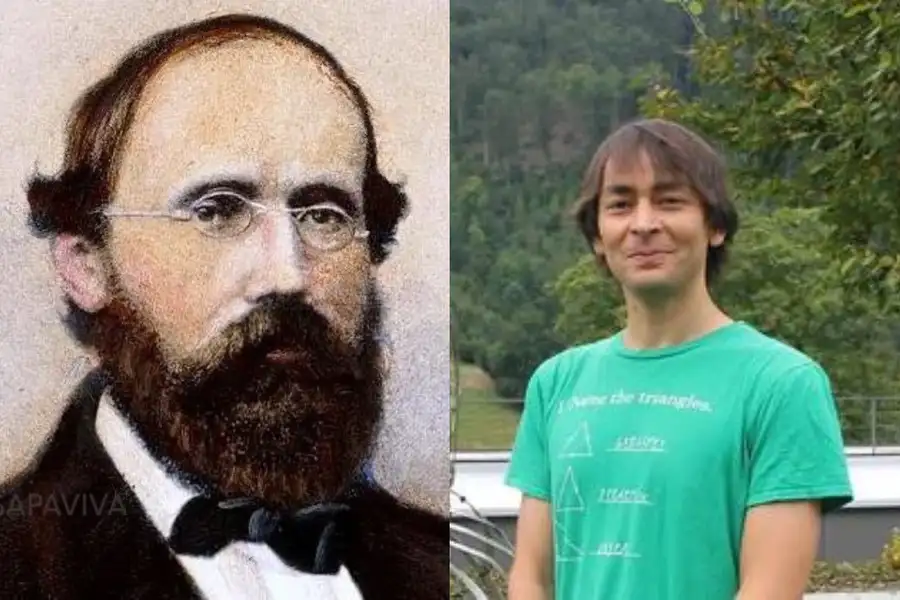
In the grand championship of pure mathematics, few trophies have remained out of reach longer than the Riemann hypothesis. First posed by Bernhard Riemann in 1859, the conjecture concerns the distribution of non-trivial zeros of the Riemann zeta function, a mathematical object deeply tied to how prime numbers are spaced along the number line. Proving that every non-trivial zero has a real part equal to one-half would unlock sweeping insights across number theory, akin to a championship-winning masterstroke that resolves a century-old tactical puzzle. Now, Anthropic mathematician Levent Alpöge has stepped up to the crease with a bold claim, announcing on Friday, 20 November 2026, that working alongside Anthropic’s AI model Claude, he believes he has produced a proof of the 167-year-old problem.
Inside the AI-Assisted Game Plan
Alpöge’s announcement includes a four-page note and Lean formalisation code outlining the proposed argument. Alpöge describes a collaborative run in which he guided the investigation toward a setting inspired by two ideas from a simpler model, before crediting Claude with rapid progress late in the effort—involving a prime-weighted von Mangoldt sum and a chain of constructions known as theta lifts. “I believe I have, working with Claude, discovered a proof of the Riemann Hypothesis,” Alpöge wrote in his statement posted on his website. Alpöge also noted in his remark that while he amused himself generating a massive natural-language draft stretching past 250,000 pages, releasing such an unwieldy text would be impractical, choosing instead to provide the Lean formalisation. Alpöge is no newcomer to high-stakes mathematical contests or AI-assisted playbooks, having previously used Claude models in 2026 to help find a three-dimensional counterexample to the Jacobian conjecture and construct elusive Hadamard matrices.
Full-Time Whistle Yet to Blow on Verification
Despite the dramatic headline, the match clock is still running on independent verification. No outside mathematicians have yet confirmed that the proof holds, and scrutinising both the conceptual argument and its Lean code will take serious time. Even Alpöge notes in his note that a rough research timeline assembled by Claude may require corrections. Until the wider mathematical community reviews the work and verifies every step, the Riemann hypothesis remains a thrilling claim in extra time rather than a settled triumph.
Published: 20 Nov 2026, 09:35 pm IST


ABOUT THE AUTHOR

Related Topics
Disclaimer: Kindly avoid objectionable, derogatory, unlawful and lewd comments, while responding to reports. Such comments are punishable under cyber laws. Please keep away from personal attacks. The opinions expressed here are the personal opinions of readers and not that of Mathrubhumi.