
Google’s year-end Gemini update focuses on speed, visual context, and natural interaction to reshape everyday AI use
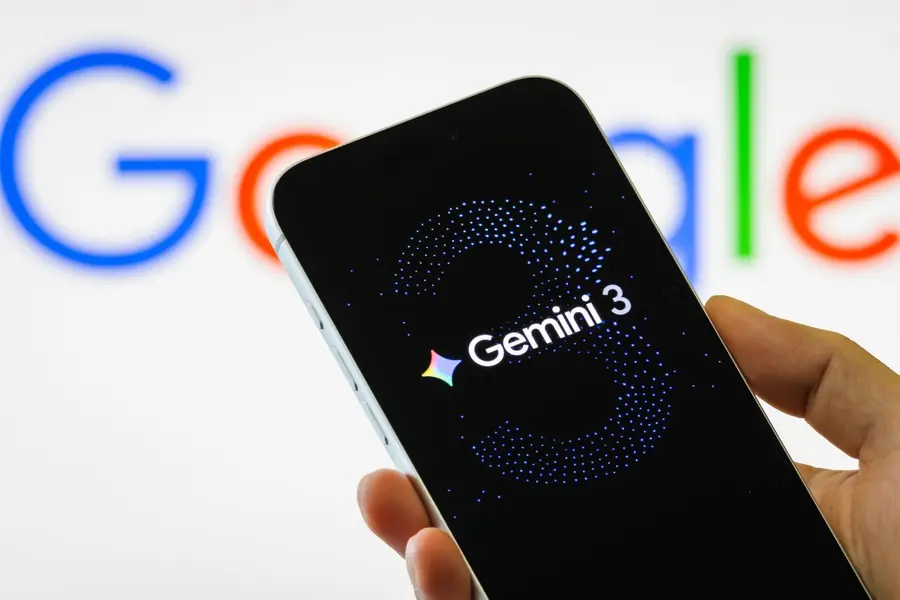
There is a rhythm to the end of the technology year that feels comforting. Product launches tail off, the press releases become reflective, and the industry collectively exhales before the next cycle of innovation begins. Not this December, though, it seems - Google's Gemini team has decided against a slowdown in favour of sharpening its focus. The final "Gemini Drops" of the year - the company's regular update on what is new in its flagship AI app - reads less like a year-end roundup and more like a declaration of intent. In weeks, Gemini has become faster, more visual and more intuitive, with a subtle signalling of a shift in how artificial intelligence is expected to fit into ordinary life.
However, at the heart of this update is Gemini 3 Flash, the latest large language model, now set as the default engine within the Gemini app. Google says it outperforms the previous 2.5 Pro model while running at roughly three times the speed. Such claims are common in Silicon Valley, where every iteration promises to be quicker, smarter, and more efficient than the last. What makes this change noteworthy, however, is not simply the improvement itself but the decision to make it invisible. There is no special mode to switch on, no premium tier to select. Gemini 3 Flash simply arrives, quietly redefining what users should expect as standard.
Speed, in this context, means more than processing power. It's a shaper of behaviour: a slow assistant discourages curiosity; a responsive one invites it. When answers arrive instantly, users are more likely to ask follow-up questions, refine their prompts, or explore ideas they may otherwise abandon. By placing its fastest and most capable model at the core of the app, Google seems to be betting that responsiveness makes AI feel less like a tool and more like a companion. The ambition here isn't to dazzle with complexity; it's to disappear into the flow of thought.
This focus on fluency carries through the rest of the year-end updates. Alongside the new default model, Gemini has gained more visually rich local results, drawing on Google Maps to display photos, ratings and familiar cues when users ask about nearby places. A search for a restaurant or a park, or a repair shop no longer produces a purely textual answer. Instead, it arrives grounded in imagery and social proof, echoing the way people already navigate the world through their phones.
The change may seem modest, but it reflects a deeper understanding of how trust is formed in digital spaces. For years, Google Maps has educated users to make decisions via stars, reviews and photographs. By folding these elements directly into Gemini's conversational responses, Google collapses the distance between asking a question and acting on the answer. The AI is no longer a separate layer sitting atop search; it becomes a lens through which existing information is reorganised and presented more naturally.
This coming together of talk and context speaks to a more general revaluation of what these AI assistants are for. Early chatbots were typically presented as encyclopaedias that could talk back-impressive in their reach, but limited in any practical usefulness. Gemini's most recent step suggests one turned away from such a model toward something more situational and embodied. It's learning not just to answer but to answer in a manner that reflects how people in the real world reach conclusions.
Perhaps the most striking example of this shift is a new ability to draw or annotate directly on images to guide Gemini's understanding. Rather than describe an area of the image in words, users can now circle, point or sketch to indicate exactly what they mean. It is a small interaction, almost childlike in its simplicity, yet it carries profound implications for how humans and machines communicate.
Language has long been a bottleneck in human-computer interaction. Even the most sophisticated natural language models require the user to translate intent into text. By letting visual gesture take some of that load, Gemini acknowledges the fact that meaning is often spatial, it is always tactile, and it's immediate. A quick circle can convey more than a paragraph of explanation. On a practical level, it makes tasks such as photo editing, design feedback, or troubleshooting far less cluttered. On a conceptual level, it shoves AI interaction further into ways that humans naturally collaborate with one another.
These changes also speak to a question of accessibility. Not everyone is comfortable articulating detailed instructions in writing, particularly in a second language. Visual annotation lowers the barrier to entry, enabling a wider range of users to engage with AI on their own terms. In this sense, Gemini's evolution is not just about sophistication but about inclusivity-recognising that intelligence comes in many forms.
What comes from the last Gemini Drops of this year is a vision of an app finally coming into its own. Instead of the novelty chase, Google seems to focus on cohesion. Faster responses make visual local results more useful; richer visuals make conversational answers more trustworthy; new interaction modes decrease friction across tasks. Each improvement reinforces the others, making this an experience that feels deliberately designed, not assembled experimentally.
This matters in an increasingly crowded AI marketplace. The past year has seen generative AI move from novelty into infrastructure, with innumerable apps claiming they can write, summarise, design and advise. As the initial amazement begins to wear off, differentiation depends less on raw capability and more on how well such tools integrate into daily routines. The year-end update of Gemini suggests that Google recognises this shift. It is not a fight based on spectacle, but on familiarity and ease.
There's strategic confidence, too, in the choice of running such changes out at the end of the year. Set a new default now, and Google guarantees that users will carry these expectations into the next cycle of innovation. When Gemini 3 Flash becomes the baseline, slower, less responsive experiences elsewhere start to feel outdated. In such a way, the final update functions as both a conclusion and a provocation: challenging competitors to meet a standard that users may soon take for granted.
Beyond competition, though, these updates raise bigger questions about the role of AI in daily life. As assistants get quicker and more context-sensitive, the line between human intention and machine execution keeps getting blurred. Decisions that used to require intentful searching and comparing are increasingly mediated through conversational interfaces. This ease brings obvious advantages but also puts greater responsibility on the systems that shape those interactions.
Deeply integrating with services like Google Maps, Gemini borrows not just their strength but their influence. The way information is surfaced, prioritised, and framed has real-world consequences, which café gets footfall to which local business gains visibility. When AI takes centre stage as the primary interface for discovery, questions of transparency and fairness begin to gain real urgency. Gemini's richness of new local results makes it more trustworthy; it also serves to highlight the power of design choices that guide behaviour.
The annotation feature, too, invites reflection on how collaboration with machines might evolve. When interaction becomes more intuitive, the temptation is to cede more decision-making to the system. The challenge will be to ensure this collaboration remains a dialogue, rather than a quiet transfer of agency. The design choices made by Gemini suggest an awareness of this tension, emphasising responsiveness and clarity over automation for its own sake.
Seen in this light, the final Gemini Drops of the year feel less like a product update and more like a thesis. It argues that the future of AI lies not in grand demonstrations of intelligence, but in the accumulation of small, thoughtful improvements that make technology recede into the background. Faster answers, clearer visuals, simpler gestures: these are not headline-grabbing breakthroughs, but they're the ingredients of trust. To users, these changes will be noticed in moments, not milestones.
In the ease of searching for a nearby restaurant without having to open multiple apps. In the satisfaction of adjusting an image with a quick sketch rather than a long explanation. In the sense that the assistant is keeping up, rather than lagging behind. These experiences, repeated daily, shape perceptions more powerfully than any launch event. As the year turns, Gemini stands as an example of how AI products are maturing. The early phase of experimentation is giving way to refinement, and refinement demands restraint. Google’s decision to make the important improvements in speed, visual grounding and natural interaction suggests a recognition that intelligence is as much about timing and context as it is about knowledge.
Of course, there's more to come. AI remains a field in rapid flux, and today's defaults may soon feel quaint. Closing the year with these updates, however, Gemini offers a glimpse into a future wherein artificial intelligence is neither intrusive nor theatrical but in lieu quietly interwoven into the fabric of daily life, responding at the speed of thought, and rooted in the world we understand and moulded around the way we already communicate. For a technology often accused of promising too much and delivering too little, this quiet confidence may be Gemini's most significant achievement yet.
Published: 22 Dec 2025, 10:42 am IST
Related Topics
Disclaimer: Kindly avoid objectionable, derogatory, unlawful and lewd comments, while responding to reports. Such comments are punishable under cyber laws. Please keep away from personal attacks. The opinions expressed here are the personal opinions of readers and not that of Mathrubhumi.
