

Cafe Le Te’s stall at Kappa CULTR 2026 is turning heads with bitterballen, hachisu, and a colonial-inspired menu that blends Dutch tradition with Fort Kochi’s food memories.
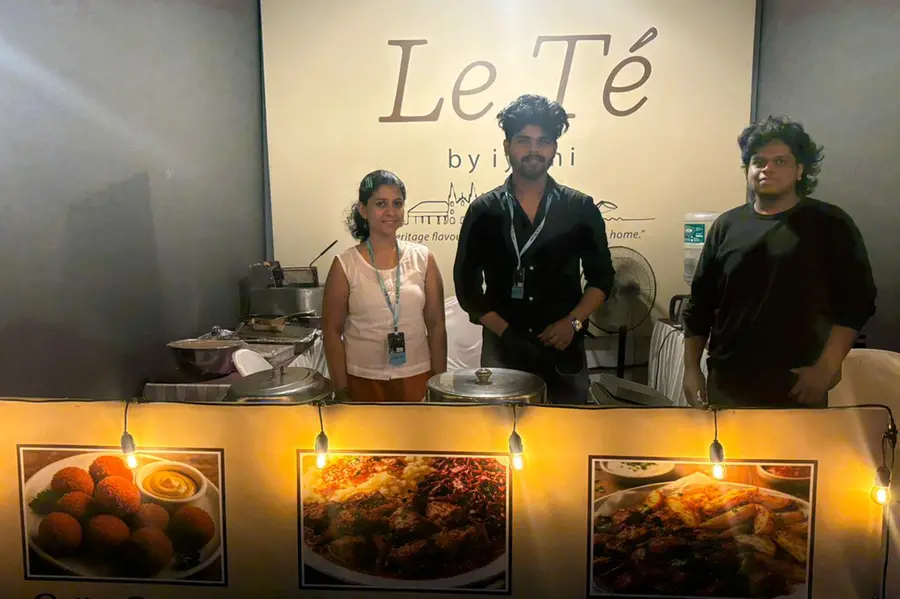
At Bolgatty Palace, where the historic waterfront has transformed into a buzzing hub of music, fashion, art, and gastronomy for Kappa CULTR 2026, Cafe Le Te is drawing crowds with a stall that is as much about storytelling as it is about food.
Preethy EC, associated with Cafe Le Te, is not a newcomer to Fort Kochi’s heritage-rich dining scene. The cafe has built its identity around curated dining experiences inspired by colonial influences, European techniques, and the multicultural legacy of Fort Kochi. At CULTR, that philosophy takes centre stage.
Also Read
“We are not just serving dishes here,” says Preethy. “We are trying to present a dining experience that reflects the colonial influences and food history of Fort Kochi.”
Fort Kochi’s culinary landscape has long been shaped by centuries of migration and colonisation. Portuguese, Dutch, and British footprints remain visible not only in architecture but also on plates across the region. Cafe Le Te’s stall captures that evolution by presenting dishes that echo European roots while resonating with Kerala’s local food memory.
Among the highlights is bitterballen, the beloved Dutch street snack. Crisp on the outside and creamy within, the bite-sized croquettes are a staple across the Netherlands but remain a rarity at Indian festivals. At Kappa CULTR, they are sparking curiosity.
“Bitterballen is something you see in every street in the Netherlands,” Preethy explains. “We wanted people here to experience that typical European snack culture.”
Equally distinctive is hachisu, a traditional Dutch-style stew that stands apart from the spice-heavy dishes typical of Indian food festivals. Cafe Le Te’s preparation focuses on restraint and technique rather than bold seasoning.
“We are not adding spice powders,” she says. We reduce the beef slowly and braise it with other ingredients in red wine. That is the specialty of the dish.” The result is a rich, deeply flavoured stew that relies on slow cooking and ingredient integrity. For many visitors, it offers an unexpected shift from familiar festival fare.
Cafe Le Te’s participation at Kappa CULTR also marks a milestone for the brand. While Preethy recalls attending earlier editions of CULTR as a visitor, this is the cafe’s first time operating a stall at a large-scale cultural festival.
“The first time we came here, it was about understanding what CULTR is,” she reflects. “Now, being part of it feels different. We are engaging directly with people and seeing their reactions to our food.”
According to Preethy, CULTR’s diverse audience played a key role in the decision to participate. Unlike niche events that attract a specific demographic, Kappa CULTR draws a broad mix of young urban crowds, families, travellers, and international visitors.
“We see people from Kerala, from different parts of India, and also a lot of foreigners,” she says. “That diversity matches what our food represents.” Beyond taste and novelty, Preethy emphasises the emotional and cultural layers of food. “When you eat something, it is not just about flavour,” she notes. “It is about memory, culture, and experience. We are trying to recreate a sense of the past.”
That connection becomes especially intriguing when Cafe Le Te highlights similarities between Dutch and Kerala cuisines. Preethy points to vendarachi, a dish commonly found in Fort Kochi and Mattancherry, drawing parallels with hachisu.
“You could say hachisu is like the grandfather or grandmother of vendarachi,” she says. “There is an influence there in terms of slow-cooked meat and technique.” Such culinary overlaps underline Fort Kochi’s identity as a crossroads of cultures, where European cooking methods merged with local ingredients and traditions.
At Kappa CULTR 2026, amid high-energy performances and immersive installations, Cafe Le Te’s stall offers a quieter but compelling experience. Visitors are not just sampling food, they are tasting fragments of history. As festivalgoers bite into bitterballen or savour spoonfuls of hachisu, Cafe Le Te succeeds in its intent: transforming colonial nostalgia into a contemporary culinary experience.
Published: 20 Feb 2026, 08:11 pm IST
ABOUT THE AUTHOR
Related Topics
Disclaimer: Kindly avoid objectionable, derogatory, unlawful and lewd comments, while responding to reports. Such comments are punishable under cyber laws. Please keep away from personal attacks. The opinions expressed here are the personal opinions of readers and not that of Mathrubhumi.