
Speaking on The Tucker Carlson Show, Altman forecast that a wide range of customer support roles are set to be overtaken by artificial intelligence.
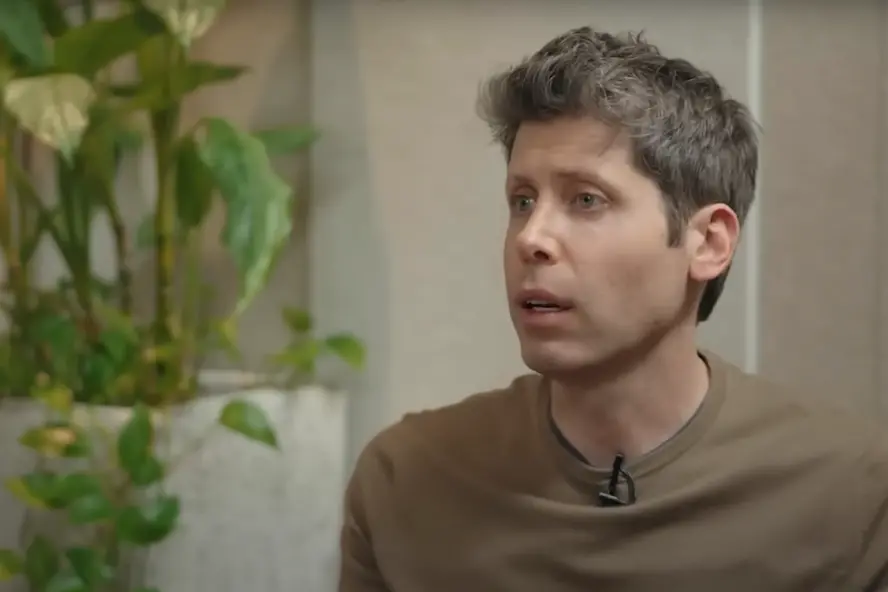
OpenAI CEO Sam Altman recently highlighted the professions most susceptible to AI-driven automation, as well as those likely to endure thanks to their inherently human qualities. In an appearance on The Tucker Carlson Show, Altman forecast that a wide range of customer support roles, particularly those carried out via phone or computer, are set to be overtaken by artificial intelligence. Conversely, he noted that jobs rooted in empathy—such as nursing—are far less likely to be displaced.
Customer support and coding roles under pressure
Altman, while adding the caveat that no one can exactly predict the future, expressed confidence that routine customer service positions—especially those involving scripted phone or online interactions—are among the first in line for automation. According to him, AI is capable of delivering faster and more uniform responses than many human operators, making such roles particularly vulnerable.
The outlook for software engineers and coders is more ambiguous. On one hand, AI tools are empowering individuals without formal training to create websites, apps, and games simply by describing what they want. On the other hand, research suggests that AI can sometimes hamper experienced developers by adding complexity or distraction. While demand for digital products and services continues to rise, it remains uncertain whether this will ultimately lead to more programming roles—or fewer.
Nursing and human-centred professions remain resilient
In contrast to technical fields, Altman pointed to nursing as an example of a career that AI is unlikely to replace. He emphasised that patients depend on the empathy, intuition, and personal connection provided by nurses—qualities that remain well beyond the reach of even the most sophisticated AI systems.
His perspective aligns with that of DeepMind CEO Demis Hassabis, who has previously argued that while AI may assist doctors in diagnostics, the fundamentally human aspect of nursing makes it irreplaceable.
Adapting to an AI-driven future
Altman’s comments underscore a broader message: workers and industries must learn to adapt as AI technologies become increasingly embedded in daily life. Roles demanding creativity, emotional intelligence, and nuanced judgement are expected to remain comparatively secure, whereas routine and highly predictable tasks will likely face mounting pressure from automation.
AI could engineer another pandemic
When asked about the downsides of AI, Altman warned that AI tools like ChatGPT could be misused to engineer a COVID‑style pandemic, owing to progress in biological AI models.
He also raised concerns about less obvious effects, such as large language models gradually altering how people speak and behave.
According to Altman, the future of work will not hinge on resisting AI, but rather on understanding where it offers genuine value—and where only human beings can truly make a difference.
Published: 15 Sept 2025, 03:54 pm IST
Related Topics
Disclaimer: Kindly avoid objectionable, derogatory, unlawful and lewd comments, while responding to reports. Such comments are punishable under cyber laws. Please keep away from personal attacks. The opinions expressed here are the personal opinions of readers and not that of Mathrubhumi.
