
The high temperatures on Friday triggered the tournament’s Extreme Heat Protocol, which is applied according to environmental conditions such as actual temperature, humidity, wind speed, and radiant heat.
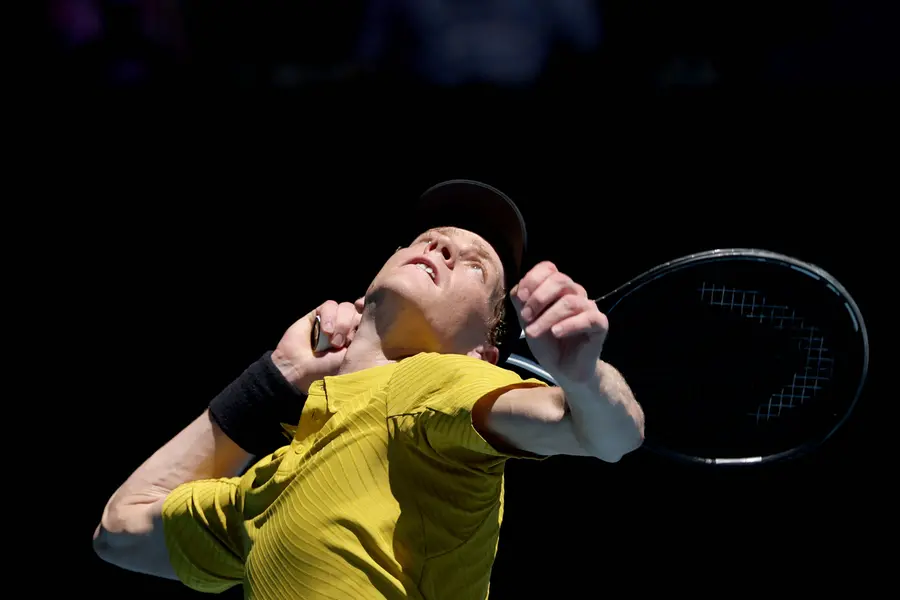
Melbourne: Matches at the Australian Open began an hour earlier than usual across all courts at Melbourne Park on Saturday, later leading to a suspension of play, due to an extreme heat forecast.
The high temperatures on Day 7 triggered the tournament’s Extreme Heat Protocol, which is applied according to environmental conditions such as actual temperature, humidity, wind speed, and radiant heat.
Also Read

Play on the outside courts was halted for at least three hours on Saturday afternoon after the Australian Open’s extreme heat rules were activated. The policy was triggered with temperatures hovering around 35°C (95°F), when the tournament’s heat stress scale reached its maximum level of five. Forecasts had predicted a peak temperature of 40°C (104°F).
Spectators were advised to take precautions, including wearing hats, applying sunscreen, staying hydrated, seeking shade, and allowing extra time for arrival at Melbourne Park.
What are the conditions for the Extreme Heat Protocol?
Introduced in 2019, the Heat Stress Scale ranges from 1 to 5 and is designed to provide consistency for all players while minimising the risk of heat-related illness. The scale sets clear thresholds for interventions such as extra cooling breaks, roof closures, and suspension of play.
Automatic Suspension: Play is automatically halted when the index reaches 5 in both men’s and women’s singles.
Referee Authority: The tournament referee can suspend upcoming matches on outdoor courts and decide whether to close, or keep closed, the roof on arena courts. Additionally, players must receive at least 30 minutes’ notice before play resumes.
Extra Cooling Breaks: When the index hits 4, organizers can implement an additional 10-minute break between the second and third sets in women’s singles and between the third and fourth sets in men’s singles. In arena stadiums, if the roof is closed before the end of these sets, no extra cooling breaks are provided.
Also Read | Nadal to return to Australian Open for ‘Night of Legends’
Heat delay helps Sinner reach last 16
Sinner, who was struggling with cramps and visibly unsettled before the stoppage, was able to regroup as the roof was closed and again during a 10-minute cooling break ahead of the fourth set.
He went on to secure a 4–6, 6–3, 6–4, 6–4 victory to reach the last 16, later acknowledging that the timing of the heat-related interruption may have worked in his favour.
Sinner will next face fellow Italian Luciano Darderi, the 22nd seed, who earlier defeated Russia’s Karen Khachanov in four sets.
Serbia’s Novak Djokovic is scheduled to face world No. 75 Botic van de Zandschulp of the Netherlands later in the evening prime-time session on Rod Laver Arena.
The winner will meet either six-time Grand Slam champion Iga Swiatek or 31st seed Anna Kalinskaya of Russia.
The Australian Open is scheduled to end on February 1.
(With agency inputs)
Published: 24 Jan 2026, 03:03 pm IST
Disclaimer: Kindly avoid objectionable, derogatory, unlawful and lewd comments, while responding to reports. Such comments are punishable under cyber laws. Please keep away from personal attacks. The opinions expressed here are the personal opinions of readers and not that of Mathrubhumi.