
This shift, alongside significant power unit and car design changes, aims for more natural racing, though some question if DRS's guaranteed passing will be missed.
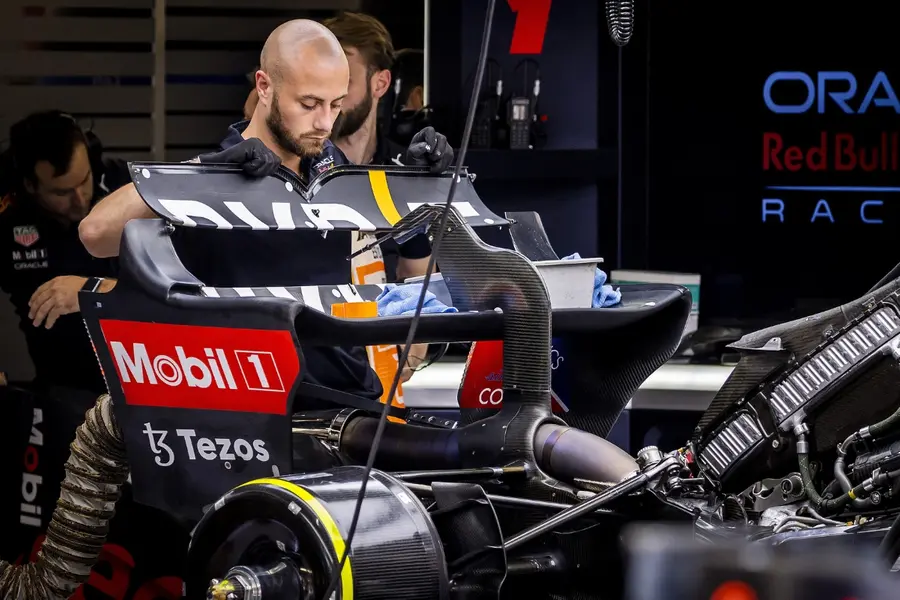
The Abu Dhabi Grand Prix on Sunday marked the end of an era in Formula 1 with the final race featuring the Drag Reduction System (DRS), a technology that has been central to racing strategy since its introduction in 2011. As the sport prepares for a 2026 overhaul incorporating active aerodynamics and hybrid power boosts, the removal of DRS is seen as a bold step toward promoting more natural and competitive overtaking. However, this shift has sparked debate within the F1 community about whether the sport will miss the guaranteed passing opportunities that DRS provided.
Active Aerodynamics Replace DRS
The 2026 regulations eliminate DRS in favour of an integrated active aerodynamics system featuring X-mode for low drag on straights and Z-mode for high downforce in corners. Both front and rear wings will adjust automatically based on track position, with the FIA estimating that drag can change by up to 55 per cent depending on the mode.
"X-mode is our terminology for the low drag mode, and that gives you your high top-speed," explained Jason Somerville, the FIA's head of aerodynamics. "As you approach the braking zone, you'd then pop into Z-mode, which is where the downforce is required to get through braking and around the corner."
A Manual Override Mode will provide an electric power boost to cars within one second of a rival, similar to DRS but using hybrid power rather than aerodynamic adjustments. The chasing car will receive 350kW of electrical power up to 337kph, aided by an extra 0.5MJ of energy per lap.
Radical Power Unit Changes
The 2026 cars will feature a 50-50 split between combustion and electric power, a departure from the current 80-20 ratio. The MGU-K output will nearly triple from 120kW to 350kW, while power from the internal combustion engine drops from 550- 560kW to 400kW. The MGU-H component will be eliminated entirely to reduce complexity and costs.
Cars will be 30kg lighter at a minimum weight of 768kg, achieved through reduced dimensions—100mm narrower and 200mm shorter than current machines. Ground effect floors will be replaced by partially flat designs similar to the 2014-2021 era.
Shortest Winter Break in History
Lewis Hamilton revealed that 2026 preparations are already consuming the off-season, with only 47 days between the post-Abu Dhabi test and the first private test in Barcelona. "It already really starts next week," Hamilton said before qualifying. "Next week, I'll already be in the sim working, and obviously we're doing the test, which is on next season's tyres and training probably will be before Christmas. The break is the shortest that we've ever had."
Ferrari team principal Fred Vasseur disclosed that the team stopped aerodynamic development on its 2025 car in April to focus on 2026, contributing to a drop from second to fourth in the constructors' championship.
The testing schedule includes a private five-day session at Barcelona's Circuit de Catalunya from January 26-30, followed by two public tests at Bahrain International Circuit on February 11-13 and February 18-20. The 2026 season begins in Melbourne on March 6-8.
Published: 08 Dec 2025, 09:07 pm IST
Related Topics
Disclaimer: Kindly avoid objectionable, derogatory, unlawful and lewd comments, while responding to reports. Such comments are punishable under cyber laws. Please keep away from personal attacks. The opinions expressed here are the personal opinions of readers and not that of Mathrubhumi.
