
However, the decision faces significant backlash from Ukraine and some international bodies citing the ongoing war.
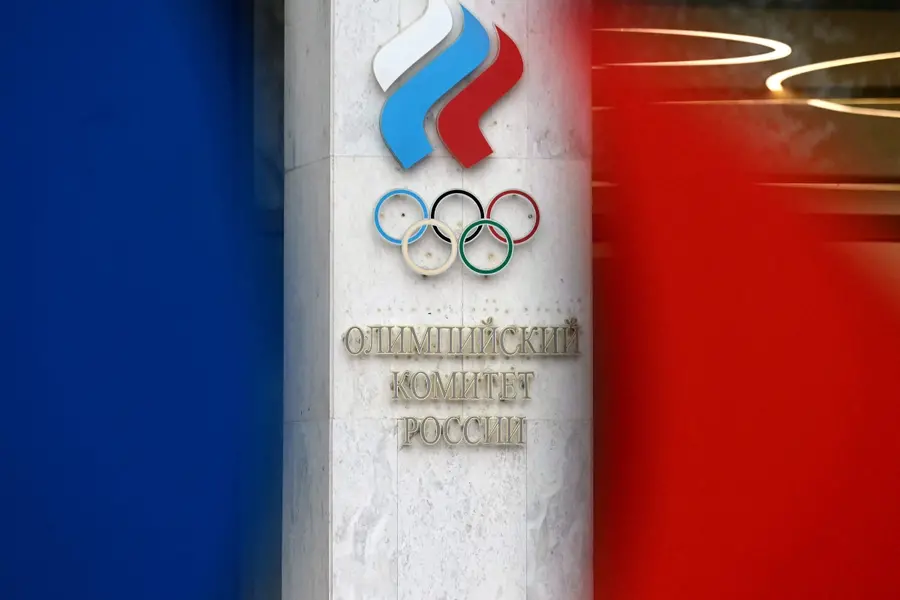
Geneva: Russia has taken a significant step towards sending a full national delegation, complete with its flag and anthem, to the 2028 Los Angeles Olympics.
The International Olympic Committee on Tuesday provisionally lifted its suspension of the Russian Olympic Committee and recommended that international sports federations dissolve a three-year vetting scheme that forced Russian athletes to compete as neutrals.
The IOC stated that the decision was timed to coincide with the start of qualification events for the Los Angeles Games, citing “the need to offer equal access to these competitions to all athletes.”
The directive, which paves the way for Russia’s return to team sports, follows an IOC recommendation two months ago that athletes from Belarus—Russia’s ally during its 2022 invasion of Ukraine—should be permitted to compete under their full national identity.
“We don’t want to hold athletes accountable for the actions of their governments,” IOC President Kirsty Coventry said during an online press conference following an executive board meeting.
Coventry, a two-time Olympic swimming gold medallist for Zimbabwe, defended the fairness of the ruling. “I wouldn’t be sitting here if I had to pay the price when my country was going through things and being sanctioned,” she noted.
Ukrainian Sports Minister Matvii Bidnyi questioned the policy shift, pointing out that in the ongoing war, “nothing changed. The situation became even worse.”
On Monday, a barrage of Russian missiles and drones struck Ukraine, killing at least 22 people.
“So we don’t understand it,” Bidnyi told The Associated Press on Tuesday. “In this day, when all of Ukraine (is) in a day of mourning, when our flags was a little bit lower because of so many people, our peaceful citizens was killed yesterday at night.”
Bidnyi dismissed Russia’s assurances as “just fake and empty words.”
The IOC maintained its “solidarity with the Olympic community of Ukraine” and promised continued financial assistance. However, its reintegration guidelines are not legally binding for independent sports governing bodies.
“Our country’s return to the Olympic family is a green light for international federations to restore the rights of our athletes,” Russian Sports Minister Mikhail Degtyaryov said on Tuesday.
Some sports are resisting the change. World Athletics referred the AP to its ruling last week, which maintained a blanket ban on Russian and Belarusian athletes from its international events. In football, FIFA and UEFA continue to bar Russia from tournaments like the World Cup and Champions League to avoid logistical chaos and potential boycotts from other nations. Russian competitors may also face difficulties obtaining entry visas from host nations.
Conversely, World Aquatics, the governing body for swimming, lifted its restrictions on Russian competitors in April.
The Russian Olympic Committee was initially suspended in 2023 after it absorbed regional sports councils from occupied areas of eastern Ukraine. The IOC stated that the suspension was lifted after “the ROC confirmed that it does not, and will not, conduct any activities in these territories.”
Only 32 neutral athletes from Russia and Belarus participated in the 2024 Paris Olympics. The new guidelines mean Russia could field a delegation closer in size to the 330 athletes sent to the Tokyo Olympics in 2021, where they won 71 medals, including 20 golds.
Previously, to gain neutral status, Russian athletes had to prove they had no ties to state military or security agencies and had not publicly endorsed the war in Ukraine. Coventry confirmed the IOC will continue to track athletes’ social media accounts under the Olympic Charter's rules for role models.
“That is strong enough leverage that we would need at any time in order to decide who would be willing and deserving to come to any Olympic Games,” she said.
IOC official James Macleod noted that complaints forwarded by Ukraine regarding problematic social media activity by Russian athletes “are always taken into consideration.”
In a statement on Wednesday, the Australian Olympic Committee urged the IOC to guarantee “a level playing field in competition,” highlighting Russia’s history of state-sponsored doping.
“Russia has had extremely serious anti-doping breaches in the past,” the AOC statement said. “We therefore support the most stringent possible anti-doping controls being in place to ensure all Russian athletes who are returning, some having been out of the system for many years, are fully compliant.”
To address these concerns, the IOC announced that returning athletes must undergo multiple anti-doping tests and participate in a recognised monitoring programme to “address the lack of confidence in the global sporting community.”
The IOC has stopped short of officially clearing the Russian flag and anthem for Los Angeles, stating that a decision will be made “at an appropriate time.” The next Olympic event on the calendar is the 2026 Youth Summer Games in Dakar, Senegal, commencing on 31 October.
The IOC added that it will continue to bar its own events from being hosted in Russia and will not extend invitations to Russian government or state officials.
With inputs from AP
Published: 08 Jul 2026, 12:31 pm IST
Related Topics
Disclaimer: Kindly avoid objectionable, derogatory, unlawful and lewd comments, while responding to reports. Such comments are punishable under cyber laws. Please keep away from personal attacks. The opinions expressed here are the personal opinions of readers and not that of Mathrubhumi.
