
In Foxborough, Norway’s attacking firepower and world-class talent give them a clear edge, but Iraq’s compact defence and counter-attacking style make this a Group I contest with plenty of drama
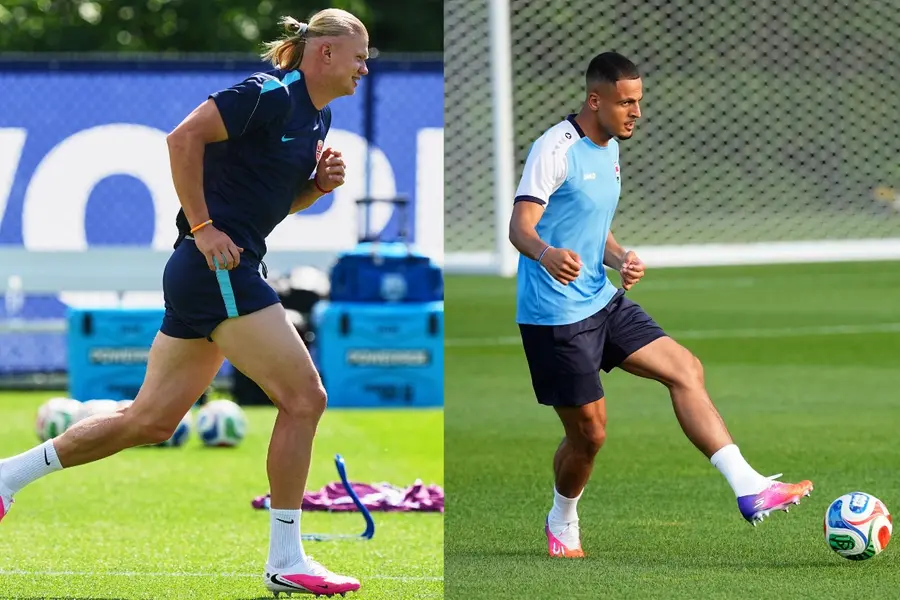
Iraq and Norway face off in a high-stakes Group I match at Gillette Stadium (Boston Stadium), Foxborough, Massachusetts, USA, in what many analysts see as the heavier clash of the group.
Norway, with world-class stars Erling Haaland and Martin Ødegaard leading the line, are clear favourites, but Iraq’s compact defensive structure and counter-attacking threat make them a dangerous opponent on the big stage.
Norway: Strengths, weaknesses and predicted gameplay
Norway are returning to the World Cup for the first time since 1998, and this is their most star-studded squad in decades.
- Norway strengths
World-class attacking pair: With Erling Haaland (Manchester City) and Alexander Sørloth (Atletico Madrid) as strikers, plus Martin Ødegaard (Arsenal) controlling play, Norway have one of the most potent attack lines in the tournament.
Elite midfield control: Ødegaard, Sander Berge (Fulham), Kristian Thorstvedt (Sassuolo) and Morten Thorsby (Cremonese) offer creativity, ball-winning and vertical passing.
Strong defensive depth: With players like Kristoffer Ajer (Brentford), Julian Ryerson (Borussia Dortmund) and Leo Østigård (Genoa), Norway have Premier League and top-tier European experience in defence.
High-press system: Under coach Ståle Solbakken, Norway typically play a compact 4–2–3–1 or 4–3–3 with aggressive pressing and quick transitions.
- Norway weaknesses
Over-reliance on Haaland: Many of Norway’s attacking plans flow through Haaland; if he is isolated, the team can become predictable.
Midfield balance: When Ødegaard and Berge are not fully active, Norway can struggle to control games against compact sides.
Vulnerability to quick counters: Norway’s high defensive line can be exposed if their press is bypassed.
- Predicted XI and shape:
Norway are expected to line up in a 4–2–3–1:
GK: Orjan Nyland
Defence: Kristoffer Ajer, Leo Østigård, Sondre Langas, Julian Ryerson
Midfield (double pivot): Sander Berge, Morten Thorsby
Attacking three: Martin Ødegaard, Kristian Thorstvedt, Antonio Nusa / Andreas Schjelderup
Striker: Erling Haaland
Expect Norway to dominate territory, press high, and focus service onto Haaland and Sørloth.
ALSO READ | Argentina vs Algeria FIFA World Cup 2026: Squads, predicted XIs, timings, strengths
Iraq: Strengths, weaknesses and predicted gameplay
Iraq, refereed by Australian coach Graham Arnold, enter with a squad largely based in domestic and regional leagues, built on tactical discipline, compactness and counter-attacks.
- Iraq strengths
Compact defensive block: Iraq typically play a defensive 4–4–2 or 4–2–3–1, with midfielders and full-backs who track back and deny space in central areas.
Physical midfield: Players like Kevin Yakob, Amir Al-Ammari, Zidane Iqbal and Ibrahim Bayesh provide ball-winning and pressing energy.
Wide creativity: Forwards Ali Jassim, Aymen Hussein and Ali Al-Hamadi offer pace and direct running, ideal for exploiting transitions.
Familiarity and cohesion: With many players from the domestic league and regional clubs, Iraq have strong on-field understanding.
- Iraq weaknesses
Limited top-level experience: Iraq lack the European top-flight exposure that Norway’s players have, which can be a disadvantage in high-pressure games.
Finishing consistency: Iraq often rely on a small group of attackers for goals and have at times lacked clinical edge.
Aerial vulnerability: Against Norway’s physical forwards, Iraq’s centre-backs can be challenged in the air.
Predicted XI and shape
Graham Arnold's squad suggests a 4–4–2 / 4–2–3–1 hybrid:
GK: Jalal Hassan
Defence: Hussein Ali, Manaf Younis, Zaid Tahseen, Rebin Sulaka, Akam Hashem, Merchas Doski
Midfield: Amir Al-Ammari, Kevin Yakob, Zidane Iqbal, Aimar Sher, Ibrahim Bayesh, Ahmed Qasim
Forwards: Ali Jassim, Aymen Hussein, Ali Al-Hamadi, Mohanad Ali
A likely shape:
GK: Jalal Hassan
Defence: Hussein Ali, Manaf Younis, Zaid Tahseen, Merchas Doski
Midfield: Amir Al-Ammari, Kevin Yakob, Zidane Iqbal, Aimar Sher
Attack: Ali Jassim, Aymen Hussein
Match context and statistics
Group I landscape: The group includes Iraq, Norway and other teams, with Norway widely tipped as favourites and Iraq as the compact underdog.
Independent previews give Norway a clear edge in win probability, expected goals and field position, projecting a Norway victory, though Iraq’s defensive discipline and counter-attacking threat keep them competitive.
Tournament history: Iraq's most memorable World Cup moments include their 2004 AFC Asian Cup victory and their 1986 World Cup appearance, while Norway’s last World Cup was in 1998.
ALSO READ | 2002 redux? France vs Senegal World Cup preview: Tactical breakdown, key players & prediction
Key players to watch
- Norway key players
Erling Haaland: World-class striker and main goal threat; Norway’s primary weapon in the box and on counters.
Martin Ødegaard: Creative hub and captain, key to unlocking Iraq’s compact defence with through-balls and set-ups.
Alexander Sørloth: Physical, mobile striker who can stretch Iraq’s defence and score from crosses and cut-backs.
Sander Berge: Midfield enforcer who provides ball-winning, pressing and link-up play.
- Iraq key players
Aymen Hussein: Iraq’s main attacking forward and goal threat; must hold the ball up and create chances for wingers.
Ali Jassim: Dynamic winger who can carry the ball and create chances in transitions.
Kevin Yakob: Defensive midfielder who provides screening, ball-winning and launches counters.
Jalal Hassan: Experienced goalkeeper and key defensive leader, with strong shot-stopping and command of the box.
Date: 17 June
Venue: Gillette Stadium (Boston Stadium), Foxborough, Massachusetts, US
Kick-off time: 3:30 am IST
Published: 16 Jun 2026, 12:45 pm IST
Disclaimer: Kindly avoid objectionable, derogatory, unlawful and lewd comments, while responding to reports. Such comments are punishable under cyber laws. Please keep away from personal attacks. The opinions expressed here are the personal opinions of readers and not that of Mathrubhumi.
