
Argentina could face scrutiny from FIFA over the banner display.
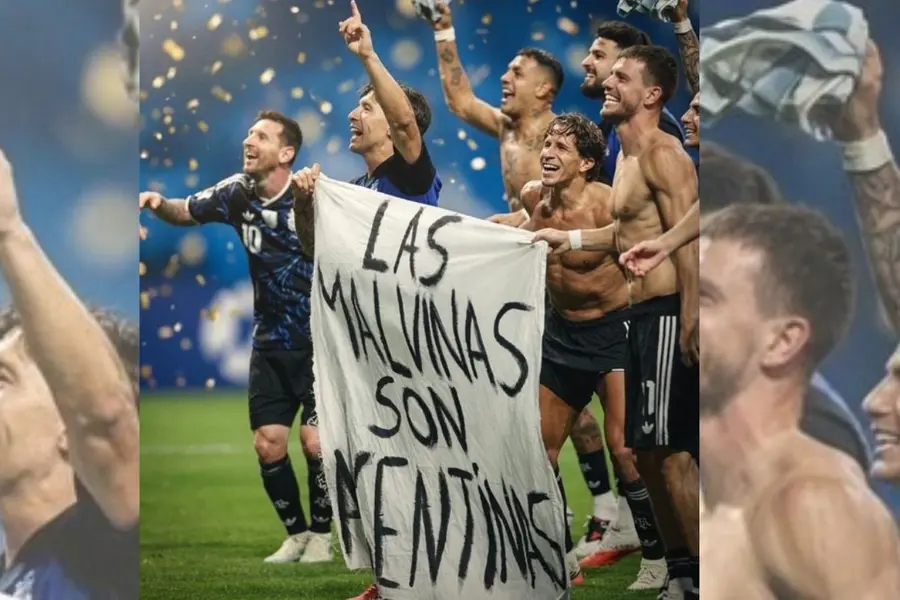
Argentina's dramatic 2-1 comeback victory over England in the FIFA World Cup semi-final was followed by a celebration that quickly sparked debate far beyond football. Moments after sealing their place in the final, midfielders Giovani Lo Celso and Nicolas Otamendi held up a banner reading "Las Malvinas son Argentinas" ("The Malvinas are Argentine"), reigniting the long-running sovereignty dispute over the Falkland Islands.
What did the banner say?
The banner carried the slogan "Las Malvinas son Argentinas", a phrase widely used in Argentina to reaffirm its claim over the Falkland Islands, a British Overseas Territory known in Spanish as the Malvinas.
Lo Celso and Otamendi briefly displayed the banner, believed to have been passed from supporters in the stands, before it was removed. Lo Celso later placed it on the pitch during the celebrations.
Why is it controversial?
The timing of the gesture drew attention because it came immediately after Argentina had defeated England—a nation with which Argentina fought the 1982 Falklands War.
The conflict began when Argentina invaded the islands on April 2, 1982. Britain responded by deploying a naval taskforce under then Prime Minister Margaret Thatcher, eventually regaining control after a 74-day conflict that ended on June 14.
The war claimed the lives of 649 Argentine military personnel, 255 British servicemen and three civilians, leaving a lasting impact on relations between the two countries.
Although Britain has administered the islands since the end of the conflict, Argentina continues to claim sovereignty over the territory, making the issue politically sensitive to this day.
Could Argentina face FIFA sanctions?
According to The Athletic, Argentina could face scrutiny from FIFA over the banner display.
The International Football Association Board (IFAB) and FIFA prohibit players from displaying political messages, flags or slogans during official matches.
IFAB's Laws of the Game state:
"Equipment must not have any political, religious or personal slogans, statements or images. Players must not reveal undergarments that show political, religious, personal slogans, statements or images, or advertising other than the manufacturer's logo. For any offence the player and/or the team will be sanctioned by the competition organiser, national football association or by FIFA."
Whether FIFA chooses to investigate or impose sanctions remains to be seen.
Also read: Argentina 'rigged' allegations: Viral hoax petition gains 10M signatures ahead of World Cup Final
Political backdrop
The incident also came after Argentina's Vice-President Victoria Villarruel intensified the rhetoric ahead of the semi-final by referring to the English as "usurping pirates".
Following the victory, she posted on X:
"The Falklands are Argentine! They banned bringing them to the stadium and forgot that we carry them in our blood and our hearts."
What happened in the match?
England took the lead in the 55th minute through Anthony Gordon after a cross from Morgan Rogers.
Argentina mounted a late comeback as Enzo Fernandez equalised in the 85th minute after being set up by Lionel Messi. Deep into stoppage time, Messi delivered another decisive cross, with Lautaro Martinez heading home the winner to send the defending champions into the World Cup final.
While Argentina's remarkable comeback dominated the sporting headlines, the post-match display of the Falklands banner ensured the historic dispute between the two nations once again became part of the global conversation.(Agencies)
Published: 16 Jul 2026, 01:24 pm IST
Disclaimer: Kindly avoid objectionable, derogatory, unlawful and lewd comments, while responding to reports. Such comments are punishable under cyber laws. Please keep away from personal attacks. The opinions expressed here are the personal opinions of readers and not that of Mathrubhumi.
