
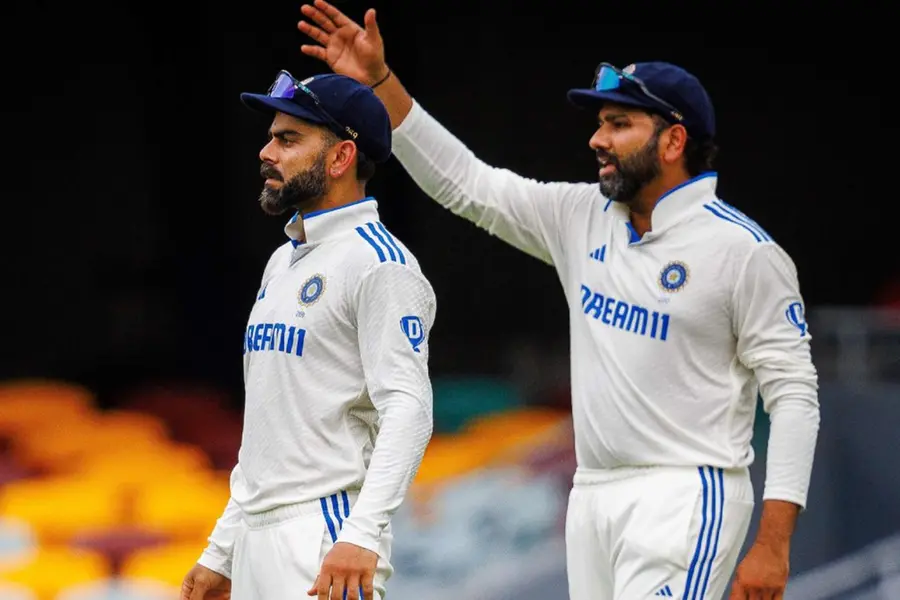
India's performance in the fifth and final Test against Australia on Sunday resulted in a six-wicket loss and the forfeiting of the Border-Gavaskar Trophy for the first time in 10 years.
Australia reclaimed the trophy with a 3-1 series victory, and they also secured a spot in the World Test Championship final against South Africa at Lord’s in June.
A target of 162 could have been more challenging had Jasprit Bumrah, despite struggling with back spasms, been available to bowl. However, once Virat Kohli led the team out, it became evident that defending the target would be nearly impossible.
Bumrah, who finished as the series' top wicket-taker with 32 scalps, was absent for this crucial game due to his injury. Despite his efforts, India’s performance in the final Test was far from ideal. Prasidh Krishna (3/65 in 12 overs) and Mohammed Siraj (1/69 in 12 overs) failed to replicate Bumrah’s impact. Even though they picked up a few wickets, their inconsistent bowling made it easy for Australia to chase the target in just 27 overs.
Usman Khawaja (41), Travis Head (34 not out), and debutant Beau Webster (39 not out) completed the chase, ending India’s misery in what has been a disappointing tour. This series highlighted the team's batting frailties and their heavy reliance on Bumrah’s pace attack.
Bumrah’s absence was clearly felt after he tried shadow bowling in the warm-up and reported discomfort in his back. With his absence, the Australian bowlers, particularly Scott Boland (6/45) and Pat Cummins (3/44), polished off India’s tail quickly. India were all out for 157 in just 39.5 overs. Apart from Rishabh Pant’s gritty 61 and Yashasvi Jaiswal’s 22, the remaining nine players collectively contributed only 74 runs.
The series leaves the Indian cricket establishment with much to reflect upon, particularly in terms of team selection and future planning. With six innings failing to reach 200 runs, it’s clear where the issues lie.
Gambhir, Kohli, Rohit and more
Both regular skipper Rohit Sharma and batting mainstay Virat Kohli struggled, with technical flaws limiting their impact throughout the series. Jaiswal (391 runs) emerged as the top scorer, followed by Nitish Kumar Reddy (298 runs), KL Rahul (276 runs), and Pant (255 runs). While a nuanced view of Rohit and Kohli’s poor form is necessary, it’s undeniable that both veterans are struggling to find form and consistency.
India has several promising young players on the fringes, and the new World Test Championship cycle presents an opportunity for them to develop further. While decisions on Rohit and Kohli's future are awaited, the BCCI also needs to reconsider whether Gautam Gambhir is the right head coach for the team across formats. Under Gambhir’s leadership, India has lost six out of 10 Tests this season, along with a defeat in the ODI series against Sri Lanka.
Gambhir's headstrong approach, which has not endeared him to the dressing room, deserves scrutiny. Decisions such as Ravichandran Ashwin’s retirement after Brisbane and Rohit’s sudden decision to drop himself were handled abruptly and could have been managed better.
The batting issues aside, the team’s bowling—both pace and spin—remains a significant concern. Bumrah’s absence was keenly felt on the final day, and without his 32 wickets, India would have likely lost the series by an even greater margin. Mohammad Siraj’s journey to 100 Test wickets has taken 36 matches, and his performance has been inconsistent. Prasidh Krishna, though showing promise, still lacks the consistency to be relied upon in high-stakes games. Harshit Rana is unprepared for this level and needs extensive domestic experience before he is ready for Test cricket.
Forgetful series for spinners
In the spin department, Ravindra Jadeja is now more of a batsman than a bowler unless the conditions favour spin from day one. Washington Sundar, who took 12 wickets in Pune, is more of a batter than a genuine off-spinner, particularly on wickets that don’t offer much assistance to spinners.
The only silver lining in this series was Jaiswal’s emergence as a potential batting superstar and the raw talent demonstrated by Nitish Reddy. If Reddy’s bowling develops, India could have the option of playing three spinners at home on favourable tracks.
The tour highlighted several areas in which India needs to improve if they are to challenge for major titles in the future. The team management, selectors, and coaching staff must address these concerns promptly to ensure a successful campaign in the upcoming World Test Championship cycle.
Published: 05 Jan 2025, 09:55 am IST
Related Topics
Disclaimer: Kindly avoid objectionable, derogatory, unlawful and lewd comments, while responding to reports. Such comments are punishable under cyber laws. Please keep away from personal attacks. The opinions expressed here are the personal opinions of readers and not that of Mathrubhumi.
