
This move aims to provide financial stability, motivate talent, and reward the national team's recent success, bringing women's domestic pay closer to men's.
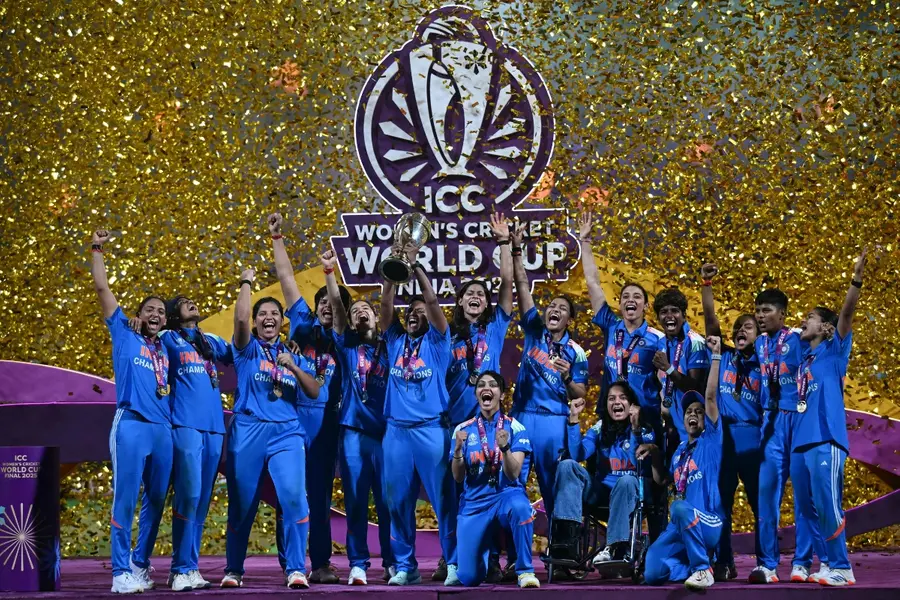
New Delhi: The Board of Control for Cricket in India (BCCI) has authorised a landmark salary increase for women’s domestic cricketers and match officials, more than doubling existing match fees following India’s first-ever Women’s ODI World Cup victory.
Massive Financial Boost for Players
The Board’s Apex Council, meeting on Monday, approved a revised pay structure that significantly enhances the earning potential of professional women cricketers. Senior players in the starting XI will now receive ₹50,000 per day for multi-day and one-day domestic matches—a 150% increase from the previous ₹20,000.
The new pay scales are categorised as follows:
- Senior Women (ODI/Multi-day): Playing XI members will earn ₹50,000 per day, while reserves will receive ₹25,000.
- Senior Women (T20): Starters will earn ₹25,000 per match, with reserves getting ₹12,500.
- Junior Categories (U-23 & U-19): Players in the XI will be paid ₹25,000 per day, and reserves will earn ₹12,500.
BCCI officials estimate that a top-tier domestic player featuring in all formats throughout a full season can now expect to earn between ₹12 lakh and ₹14 lakh.
Remuneration Hike for Officials
The financial upgrade extends to the domestic ecosystem's support staff. Umpires and match referees will now earn a uniform ₹40,000 per day for league matches. For higher-stakes knockout fixtures, the fee will rise to between ₹50,000 and ₹60,000 per day.
Under this new arrangement, an umpire officiating a full Ranji Trophy league match will earn approximately ₹1.60 lakh, while knockout appearances could fetch up to ₹3 lakh per game.
Strengthening the Ecosystem
The move is designed to offer greater financial stability and serve as a catalyst for growth in the women's game. The BCCI noted that this "equitable" shift is intended to motivate domestic talent and reward the recent success of the national team on the global stage.
"This is about strengthening the overall domestic ecosystem," a BCCI official stated, noting that the revised rates bring women's match fees much closer to their male counterparts in the domestic circuit.
With inputs from PTI
Published: 23 Dec 2025, 11:47 am IST
Related Topics
Disclaimer: Kindly avoid objectionable, derogatory, unlawful and lewd comments, while responding to reports. Such comments are punishable under cyber laws. Please keep away from personal attacks. The opinions expressed here are the personal opinions of readers and not that of Mathrubhumi.
