
Australia’s ICC Men’s T20 World Cup 2026 campaign ended in dramatic disappointment as the former champions were eliminated in the group stage following shock defeats, batting failures, and an unforgiving qualification equation compounded by rain.
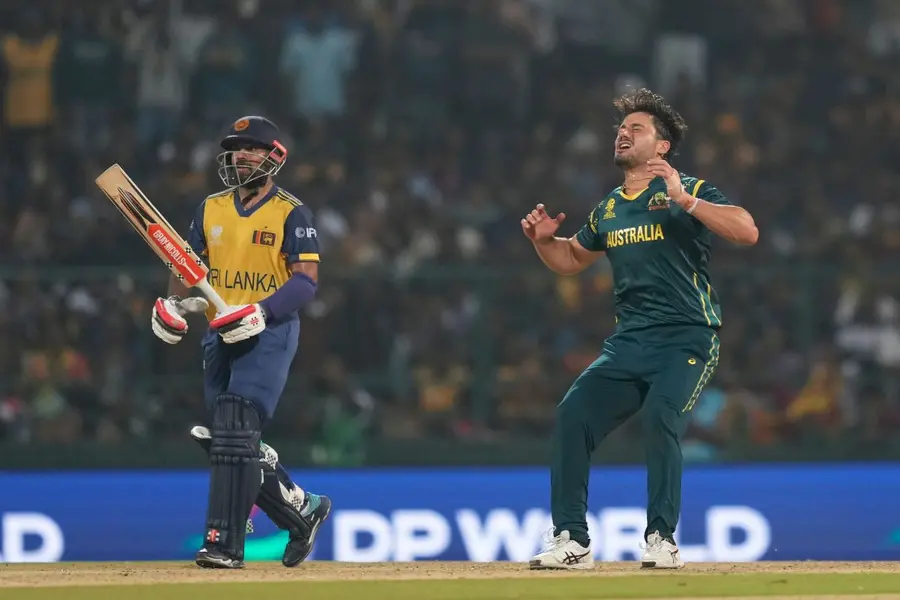
Australia’s turbulent campaign at the ICC Men’s T20 World Cup 2026 came to a premature end as the former champions were eliminated in the group stage following a sequence of costly defeats and an unfavourable points-table equation.
The exit marks one of Australia’s most disappointing T20 World Cup performances in recent years, underlining the volatility of the shortest format.
Also Read

Placed in a competitive group featuring Sri Lanka, Zimbabwe, Ireland, and Oman, Australia entered the tournament with high expectations. However, inconsistent performances with both bat and ball left Mitchell Marsh’s side struggling to find momentum when it mattered most.
Australia’s fate was largely sealed after a comprehensive defeat to Sri Lanka at the Pallekele International Cricket Stadium.
Sri Lankan opener Pathum Nissanka produced a match-defining century, guiding the hosts through a comfortable chase and securing their Super Eight qualification.
Despite promising contributions from Australia’s top order earlier in the innings, a middle-order collapse and lack of late acceleration restricted them to a below-par total.
Sri Lanka’s batters capitalised with authority, exposing Australia’s bowling frailties on a surface that offered little margin for error.
Zimbabwe loss tightens pressure
Earlier in the group phase, Australia suffered a shock defeat to Zimbabwe, a result that significantly complicated their qualification prospects.
Zimbabwe’s disciplined bowling and clinical execution in the chase exposed Australia’s inability to close out key moments, a recurring theme throughout their campaign.
The defeat forced Australia into a scenario where qualification was no longer fully in their control, leaving them dependent on other results and net run rate permutations.
Rain compounds Australia’s misery
Weather disruptions further narrowed Australia’s path. A rain-affected Ireland vs Zimbabwe fixture ultimately swung the mathematical advantage away from Australia.
With points shared due to a no-result outcome, Australia’s chances of reaching the Super Eight stage evaporated regardless of their final group match.
The abandonment highlighted the harsh realities of tournament cricket, where external factors can abruptly determine a team’s fate.
Questions over balance and execution
Australia’s early exit has triggered scrutiny over team composition, bowling strategies and finishing capabilities. While flashes of brilliance were evident, the side struggled with consistency — particularly in death bowling and middle-overs acceleration.
Former players and analysts pointed to Australia’s failure to adapt quickly to varying subcontinental conditions, as well as an inability to deliver under scoreboard pressure.
A rare early exit
For a nation with a formidable ICC pedigree, the elimination represents a rare stumble on the global stage. Australia’s supporters, accustomed to deep tournament runs, were left stunned as the team bowed out before the knockout rounds.
As attention shifts to the Super Eight phase, Australia will be forced into reflection mode, reassessing combinations ahead of future white-ball assignments.
Why Australia’s T20 World Cup 2026 campaign unraveled
Shock defeat to Zimbabwe: Australia’s unexpected loss to Zimbabwe put immediate pressure on their qualification pathway, damaging both confidence and points-table standing.
Comprehensive loss against Sri Lanka: A dominant Sri Lankan performance, highlighted by Pathum Nissanka’s century, exposed Australia’s bowling vulnerabilities and net run rate concerns.
Batting inconsistency in key moments: Promising starts repeatedly fizzled out, with middle-order collapses preventing Australia from posting or chasing match-winning totals.
Death bowling and execution issues: Struggles in containing runs during the final overs allowed opponents to seize momentum and close games comfortably.
Rain-affected results hurting qualification chances: Weather disruptions, particularly a no-result match involving rivals, mathematically narrowed Australia’s path to the Super Eight stage.
Published: 17 Feb 2026, 06:02 pm IST
Disclaimer: Kindly avoid objectionable, derogatory, unlawful and lewd comments, while responding to reports. Such comments are punishable under cyber laws. Please keep away from personal attacks. The opinions expressed here are the personal opinions of readers and not that of Mathrubhumi.