
India secures tech transfer for advanced Israeli Air Lora and Ice Breaker missiles
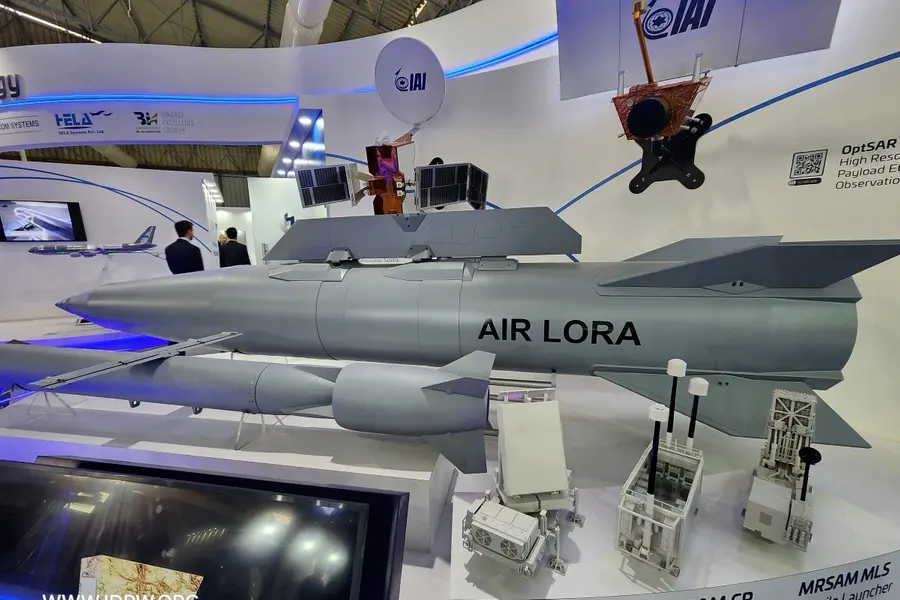
Last month, something incredible happened that most Indians don't even know about. A top-secret team from India's Defence Ministry quietly flew to Israel for a mission that could change Indian defence forever. According to idrw.org, India is now preparing to manufacture two of the world's most advanced missiles – the Air Lora ballistic missile and the Ice Breaker cruise missile – completely on Indian soil!
What makes this deal truly special is that Israel has agreed to give India full technology transfer rights. This means Indian engineers will learn exactly how these missiles are built, and we'll make them ourselves in government companies like Bharat Electronics Limited (BEL) and Hindustan Aeronautics Limited (HAL). It's like learning the secret recipe of your favourite dish – except this recipe is for building super-advanced missiles!
So what's so special about these weapons?
These are "standoff munitions" – imagine playing a video game where you can shoot enemies from far away without getting close to their danger zone. That's exactly what these missiles do. An Indian fighter jet can fire these weapons from hundreds of kilometres away and destroy enemy targets without ever entering dangerous airspace where enemy missiles could shoot it down. It's like having a really long arm that can punch someone from across the street while you stay safe on your side.
What makes these missiles even more incredible is their ability to work even when enemies try to jam GPS signals. You know how sometimes your phone's GPS stops working? Well, enemies in war try to do the same thing to missiles. But these Israeli missiles are smart enough to overcome that problem. They use backup systems like terrain matching, camera-based navigation, and internal motion sensors. So even if someone blocks GPS, these missiles will still find and hit their targets with pinpoint accuracy.
The timing couldn't be better. Right now, China has been building strong defence systems along the Line of Actual Control (LAC) designed to stop Indian aircraft and missiles. India needed weapons that could break through these defences, and that's exactly what Air Lora and Ice Breaker do. Plus, during Operation Sindhoor against Pakistan in May 2025, Israeli Rampage missiles destroyed Pakistani air defences even when Pakistan tried to jam them.
A senior source told idrw.org that these missiles performed exceptionally well even when satellite signals were completely blocked – they worked when other missiles failed. This real success story convinced Indian defence planners that we need this technology.
Let's talk about Air Lora first – the heavyweight champion.
This missile can travel over 400 kilometres, meaning an Indian Sukhoi-30MKI, Rafale, or Tejas fighter can fire it from deep inside Indian territory and still hit targets inside enemy land. The missile weighs 1,600 kg with a massive 570 kg warhead – heavy enough to destroy bunkers, missile launchers, or tank groups. And it's so accurate that it lands within 10 metres of its target. Imagine throwing a paper ball from one end of a football field and landing it in a small bucket at the other end!
What makes Air Lora truly special is that it's a quasi-ballistic missile – it flies in a high arc but can also change direction mid-flight to dodge enemy defences. It's like a cricket ball that can suddenly curve in the air to avoid being caught! Even better, if the missile is flying toward Target A, operators can send new instructions and redirect it to attack Target B instead. This flexibility is priceless in real warfare.
BEL will manufacture almost everything in India – including advanced components like composite materials and seeker heads (the "eyes" of the missile). This isn't just assembly work; Indian engineers will truly master this technology. Our own DRDO will learn from this and use it to improve India's own missile programmes.
Now for Ice Breaker – the lightweight ninja!
Made by Israel's Rafael company, it weighs just 400 kg, so smaller fighters like our Tejas can easily carry it. But don't let the lighter weight fool you – this missile is packed with cutting-edge technology. It has stealth features and uses artificial intelligence to hunt for targets. Yes, AI inside a missile!
Ice Breaker can fly over 300 kilometres and attack targets on land or at sea – enemy airfields, warships, or coastal defence systems. The missile can actually loiter (fly in circles) over an area, search for targets on its own using machine learning, and attack the most important one. It's like having a small, intelligent drone that carries a powerful warhead.
What's really amazing is how Ice Breaker works when enemies jam GPS and radio signals. It combines internal sensors with terrain-matching and image-based navigation. So even if every satellite signal is jammed, this missile finds its way to the target. This technology was proven in Ukraine and during Operation Sindhoor.
For the Indian Air Force, Ice Breaker will destroy enemy radar stations and missile sites before main attacks, clearing the path for other aircraft. HAL will produce these missiles since they've already successfully integrated weapons like Astra on Tejas fighters. HAL had discussions with Israel Aerospace Industries in July 2025, and both agreed that Ice Breaker will work smoothly with Tejas's digital systems.
The Defence Ministry team is finalising technology transfer agreements, local supply chains, and testing procedures for all three services. Because BEL and HAL already have agreements with Israeli companies, this creates a smooth ecosystem. Once India masters production, we can even export these missiles to Southeast Asian countries, earning money while strengthening friendships.
There are still challenges like export restrictions and financial approvals, linked to India's bigger $20 billion fighter jet deal. But sources told idrw.org they're optimistic – once price and technology transfer details are finalised, the Cabinet Committee on Security could approve this by mid-2026.
Imagine what this means! Instead of depending on foreign countries for weapons, India will make advanced missiles in our own factories. Indian engineers will understand the technology deeply and can improve it. The missiles will be cheaper and produced faster. Most importantly, India's armed forces will have world-class weapons matching anything our adversaries have.
For students like you, this shows India's future in defence manufacturing. Under "Atmanirbhar Bharat", companies like BEL, HAL, and DRDO are becoming true centres of excellence. Maybe some of you will become the engineers or scientists working on the next generation of Indian missiles!
The secret visit to Israel might have happened quietly, but its impact will be loud. When Indian fighters carry Air Lora and Ice Breaker missiles made entirely in India, it sends a powerful message: India isn't just buying weapons anymore – we're building some of the best in the world!
- Girish Linganna is an award-winning science communicator and a defence, aerospace & geopolitical analyst. He is the Managing Director of ADD Engineering Components India Pvt. Ltd., a subsidiary of ADD Engineering GmbH, Germany.
Published: 08 Nov 2025, 06:57 pm IST
Related Topics
Subscribe to our Newsletter
Disclaimer: Kindly avoid objectionable, derogatory, unlawful and lewd comments, while responding to reports. Such comments are punishable under cyber laws. Please keep away from personal attacks. The opinions expressed here are the personal opinions of readers and not that of Mathrubhumi.
