
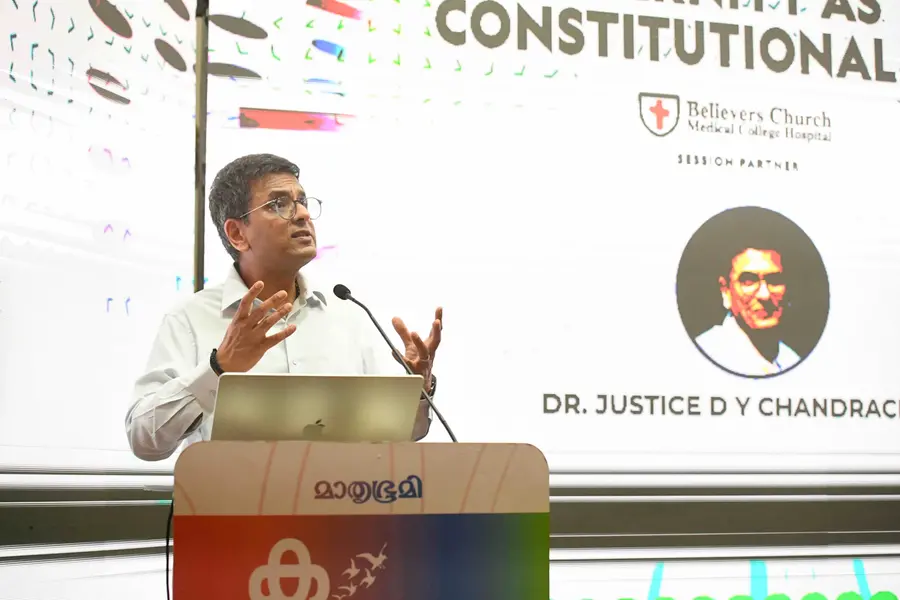
In a solo session on ‘Fraternity as the Constitutional Soul’ at the Mathrubhumi International Festival of Letters on February 6, former Chief Justice of India, Justice DY Chandrachud, explored the essence of fraternity through the lens of cinema. Drawing insights from the narratives of well-known films, he examined how they depict both unity and division in society.
Opening the discussion, he referenced the multiple award-winning 'All We Imagine As Light', highlighting the quiet yet profound solidarity among women, or in a broader sense, between individuals.
An unembroidered portrayal of the everyday struggles of women whose lives are marked by trials and tribulations, the movie paints a picture of friendship that finds strength and shade in each other through trials and tribulations.
Justice Chandrachud emphasised that this shared resilience is the essence of fraternity, the core principle of societal growth through collective support.

He then turned to 'Joyland', a film that delves into the complexities of identity and societal constraints. The protagonist, Haider, a closeted gay man, is trapped in a patriarchal household in Lahore, while his wife, Mumtaz, battles expectations that demand from her a son. Haider’s life takes an unexpected turn when he falls for Biba, a transgender performer, leading to a painful yet transformative journey of self-discovery and defiance.
Justice Chandrachud underscored the need for more inclusive and open-hearted communities where people can embrace their true selves without fear of judgement or regret. Furthering his conversation, he spoke about 'The Wizard of Oz', where Dorothy, Scarecrow, Tin Man, and the Cowardly Lion set out on a journey seeking what they believe they lack. Despite their different desires, they move forward together, united by a common goal. The former Justice used this as a metaphor, encouraging all of society to work as a team to overcome both personal and collective challenges and create a better world for all.
While celebrating films that promote positive change, he also warned of cinema’s potential to reinforce harmful narratives. He pointed out that several Malayalam films in 2024 glorified toxic masculinity, directly and indirectly contributing to societal issues like domestic violence, sexual assault, and the normalisation of misogynistic attitudes and practices in our communities. He stressed that such portrayals have real-world consequences, fostering a culture that normalises and perpetuates violence.
At the heart of constitutional fraternity, he concluded, lies dignity—the fundamental human right to be acknowledged and treated with respect. While institutions bear the responsibility of ensuring fraternity and dignity, the greater duty rests with individuals.
On this note, Justice Chandrachud urged everyone to be conscious of the evolving currents of change around them, to respond with empathy, and to uphold the values of respect and justice in everyday life.
Published: 07 Feb 2025, 04:53 pm IST
Related Topics
Disclaimer: Kindly avoid objectionable, derogatory, unlawful and lewd comments, while responding to reports. Such comments are punishable under cyber laws. Please keep away from personal attacks. The opinions expressed here are the personal opinions of readers and not that of Mathrubhumi.