
Zohran Mamdani’s New York mayoral victory marks a global shift toward inclusive, progressive politics
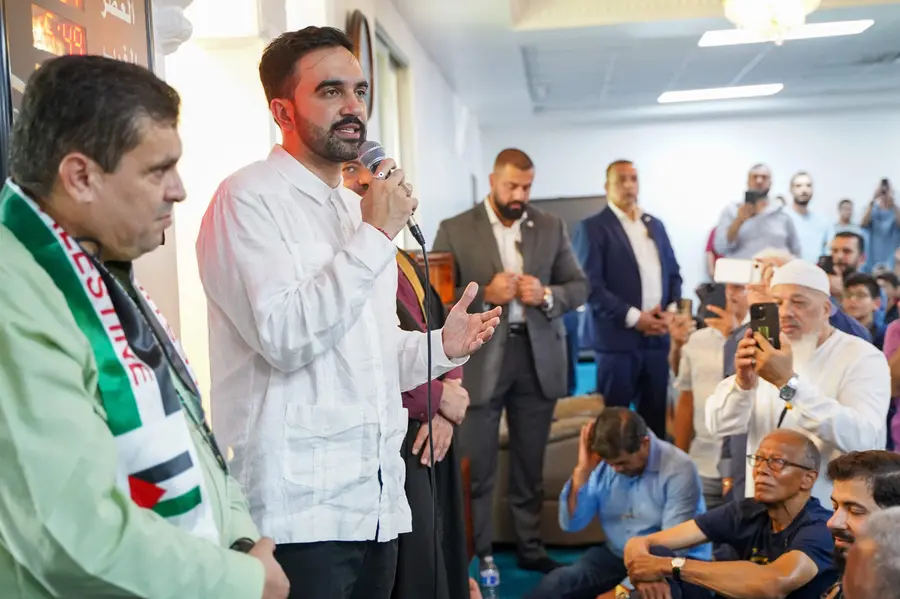
Zohran Mamdani's election as mayor of New York city is not merely a local electoral upset; it is a symbol of an incipient global realignment. The victory of a 34-year-old democratic socialist and the city's First Muslim mayor - achieved on a platform of rent relief, stronger worker safeguards, and anti-big money politics- matters because New York is a mirror of modern geopolitics. It is where wall street meets foreign policy, where cultural narratives about power are made. Mamdani’s win therefore signals more than municipal reform; it is a wallwriting that the era of unchallenged and feared American political, ideological and military dominance is fraying, and that the pushback against exclusionary, xenophobic polities has tangible political purchase.
For 75 years after 1945, the United States acted as the world's default Supreme Court, intervening militarily, covertly sponsoring coups, installing compliant regimes, and underwriting economic orders that favoured US strategic advantage. The Scholarly, and journalistic literature documents this record in grim detail- from direct military interventions to CIA backed regime changes. William Blum's Killing Hope remains the single most sustained popular account of this interventionist era, cataloguing covert and overt actions across Continents. The point is not moralising about “bad” or “good”, but recognizing that such a pattern produced durable resentment and a global backlash that now finds both electoral and geopolitical expression.
Two linked dynamics make Mamdani's victory consequential. First is political exhaustion of xenophobic nativism - the domestic and international face of Trumpism. Despite periodic surges, Trumpism’s attraction as a bulwark against liberal cosmopolitanism depends on narratives of fear; fear of migrants, fear of foreign entanglements, fear of internal dissent. But electoral politics is brittle; here ordinary, grievances can be offered credible program - affordable housing, public transit, worker protections-nativist populism loses purchase. Mamdani's Campaign Converted grievances into policy promises and grassroots discipline, offering a practical alternative to fear politics. “Fear politics wields a dagger of the mind - an illusion so sharp it draws real blood". Early analyses of the Post Trump era suggest that the myth of durable, electorally dominant Trumpism is weakening in many arenas - especially where its policies fail to deliver economic basics.
Second is the geopolitical rebalancing driven by China's rise. Over recent decades China has become the engine of global growth; its integration into global supply chains, scale of manufacturing, and Infrastructure diplomacy have altered economic leverage worldwide. While China faces structural headwinds, demographic aging leading to shrinking work force, debt burdens, and a property Sector in distress - its aggregate economic footprint and technological marvels remain a strategic challenge to American hegemony. This geoeconomic power shift weakens the automatic political authority America once exercised; it creates room for other models and for Countries, cities, and movements to pursue alternatives to US political primacy.
If the US ruling narrative depended on policing the global order and exporting its political template, the combination of China's economic ascent and internal political fatigue in western electorates opens the possibility of political defeats-diplomatic setbacks, loss of global moral authority, markets and alliances shifting toward plural governance models etc. The triumph of Mamdani is one electoral instance of how that political contest plays out: local democracy reasserting other visions and showing center-left paths can win where they offer bread, shelter, safety, and dignity.
A further dimension of Mamdani's significance is symbolic resistance to Islamophobia and racialised exclusion. His Campaign was repeatedly dogged by Islamophobic attacks and nativist tropes- yet he prevailed. This is not just a personal triumph; it is a rebuke to the politics of exclusion. Where cities elect leaders who reflect diverse constituencies, the political cost of scapegoating rises. Such victories change the arithmetic of national politics: they expand the plausible coalition for progressive politics and reduce the electoral legitimacy of racist demagoguery. In an era when xenophobia and Islamophobic imaginaries are weaponised globally, a successful, democratic campaign in the United States sends signals across diasporas and allied movements that exclusionary politics can be repudiated electorally.
To romanticise Zohran Mamdani's victory is to mistake spark for the sunrise. The United States still retains extraordinary capacities - military, financial, technological, and media but retrenchment or reform will be contested. Public opinion measured internationally shows significant declines in confidence in American leadership in many Countries; domestic polarisation remains acute. But history moves not only through imperial power but also through the cumulative weight of politics at home; electoral shifts, new governing coalitions. and municipal experiments can cascade upward. Cities can pioneer housing and labor policy; they can model climate and trade stances that refuse Washington’s militarised options. Political defeat of hegemonic policy choices begins in towns, boroughs, and City halls; Mamdani’s Victory is precisely one such catalytic example.
Finally, there is a tactical lesson for progressive movements worldwide. Winning requires translating moral outrage about imperial misadventures into organisational capacity and policy deliverables. Anti-imperialist rhetoric without programs is a moral posture, progressive governance must show how to secure housing, health care, employment and safety. Mamdani's Campaign succeeded because it combined a radical critique of structural injustice with concrete municipal proposals and disciplined grassroots organisation. That is the template for effecting political defeat of imperial continuities: build alternatives, win locally, link them to transnational solidarity.
Zohran Mamdani's victory is a political fissure in an old world. It does not end American global policing overnight, nor does it erase the history of US interventions. But it confirms that power is contested and defeatable at the ballot box and in every day governance. Political defeat - the democratic erosion of policies and narratives that justified interventionism, xenophobia, Islamophobia, and dominance- is both the ethical and strategic path forward for those who seek a more multipolar, less militarised world order. Mamdani's win is a beginning; a reminder that the center of gravity of geopolitics can shift when citizens choose leaders who place people over Power.
The unveiling of a hoax: A lesson for India
Narendra Modi Came to power in 2014, primarily by marketing the hoax of the Hindu - a Synthetic ‘unity’ stitched together from the torn cloth of Caste. The 90% of India's population, humiliated and dispossessed for millennia, were administratively classified as “Hindu” without their Consent. The census enumeration obliterate the names of their ancestors, erasing histories of blood-soaked struggles for human dignity and branding them all with a single criminal word- Hindu.
But even that seamless illusion woven with slogans, symbols, fear of Muslims - began to fray at its edges. BJP could never secure the support of more than one third of the voters. The arithmetic of deceit required more than slogans; it demanded manipulation. Electoral rolls were scrubbed clean of dissenters. Ghost voters appeared obedient to their masters. The republic became a theatre where democracy was recited but never lived.
And yet, every deception ripens into its own undoing. The lower castes of India are now beginning to see the ‘Hindu’ garland placed around their necks for what it truly is -the noose they mistook for a garland. It was woven from the dried veins of caste apartheid. What was paraded as unity was, in truth, the hangman’s rope of serfdom.
Across oceans, in the heart of an empire that once dictated the world's political weather, Zohran Mamdani's win shone an unexpected dawn. His triumph is not simply electoral, it is symbolic- a movement when the voiceless broke through the walls of privilege and prejudice. His ascent is a message that political hope can still bloom where cynicism has built its fortresses.
For the lower castes of India, this moment carries a deeper resonance. It tells them that history's direction can still be reversed, that the same rope which once strangled their selfhood can be used against their real hangmen. When the mask of Hinduism falls, it will reveal the oldest apartheid buried beneath the name of Santana dharma!
Mamdani's rise to N.Y.C. Mayer is therefore not just an American episode. It is a mirror held to India’s face. The garland of “Hindu”, that once smothered many voices of the oppressed will be untwined, thread by thread, until its emptiness is laid bare. That moment will mark the beginning of a new republic - one that no longer kneels before the gods of birth, but stands upright in the radiant light - glimmering with freedom and equality.
Published: 08 Nov 2025, 04:46 pm IST
Related Topics
Disclaimer: Kindly avoid objectionable, derogatory, unlawful and lewd comments, while responding to reports. Such comments are punishable under cyber laws. Please keep away from personal attacks. The opinions expressed here are the personal opinions of readers and not that of Mathrubhumi.
