
Iran used a mathematical formula to warn the United States about the impact of a Strait of Hormuz blockade
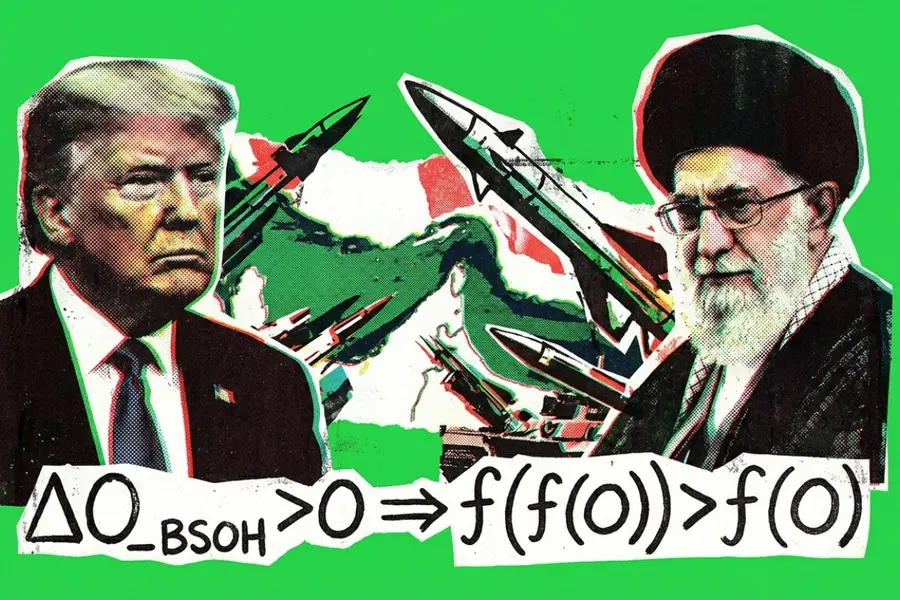
Recent tensions between Iran and the United States took an unusual turn when a mathematical-style expression was used to send a political message. After talks between the two countries broke down and Donald Trump warned of a possible blockade of the Strait of Hormuz, Iran responded not with a typical statement but with a formula.
The expression “ΔO_BSOH>0 ⇒ f(f(O))>f(O)” was shared by Mohammad Bagher Ghalibaf to explain the potential consequences of such a move.
Breaking down the formula
At first glance, the formula may seem complex, but its meaning becomes clearer when each part is understood.
O represents oil prices or an oil shock.
BSOH stands for a blockade of the Strait of Hormuz.
The first part of the expression, ΔO_BSOH > 0, indicates that any increase in blockade activity leads to a rise in oil prices. In simple terms, restricting the flow of oil pushes prices upwards.
Understanding the chain reaction
The second part of the formula, f(f(O)) > f(O), highlights something more significant. It shows that the impact of the initial price rise does not remain limited. Instead, it becomes stronger over time.
This means that once oil prices increase, further effects follow. These include panic in the market, disruptions in supply, rising shipping costs and reactions from traders. Each of these factors adds pressure, leading to a second and even larger increase in prices.
Why the impact grows over time
The formula suggests that the effect of a blockade is not linear. It does not lead to a simple or steady increase in oil prices. Rather, it creates a cascading effect.
The first disruption causes prices to rise. That rise then triggers additional problems, which in turn push prices even higher. This cycle continues, making the overall impact more severe with each stage.
In simpler words, a blockade of the Strait of Hormuz could first cause a jump in oil prices, followed by a second, sharper surge driven by market panic and logistical challenges.
Through this expression, Iran is signalling that any attempt to block oil movement would have far-reaching consequences. The country is pointing out that the damage would not grow gradually but would accelerate as the situation develops.
To reinforce this warning, Ghalibaf shared an image showing petrol prices near the White House. He suggested that Americans might soon look back at current fuel prices as relatively low if such a blockade were enforced.
In a post on the social media platform X, he advised people to “enjoy the current pump figures” and warned that prices could rise to or even cross the $4 to $5 range.
US plans for a possible blockade
The warning came after the United States announced plans to restrict maritime movement linked to Iran. The decision followed the collapse of ceasefire discussions between Washington and Tehran in Pakistan.
According to the United States Central Command, the blockade would begin on Monday at 10 am EDT, which corresponds to 5.30 pm in Iran.
The restrictions would apply to all ships entering or leaving Iranian ports and coastal regions, including areas in the Arabian Gulf and the Gulf of Oman.
US authorities stated that vessels from all countries could be subject to these measures. However, ships travelling between ports that are not connected to Iran would still be allowed to pass through the Strait of Hormuz. This indicates that some commercial traffic may continue even if tighter controls are introduced.
Published: 13 Apr 2026, 05:38 pm IST
Disclaimer: Kindly avoid objectionable, derogatory, unlawful and lewd comments, while responding to reports. Such comments are punishable under cyber laws. Please keep away from personal attacks. The opinions expressed here are the personal opinions of readers and not that of Mathrubhumi.
