
The Smithsonian’s National Museum of American History finds itself at the centre of a high‑stakes argument about who gets to define “America’s story” in an era of polarised politics and rapidly changing public expectations of major museums.
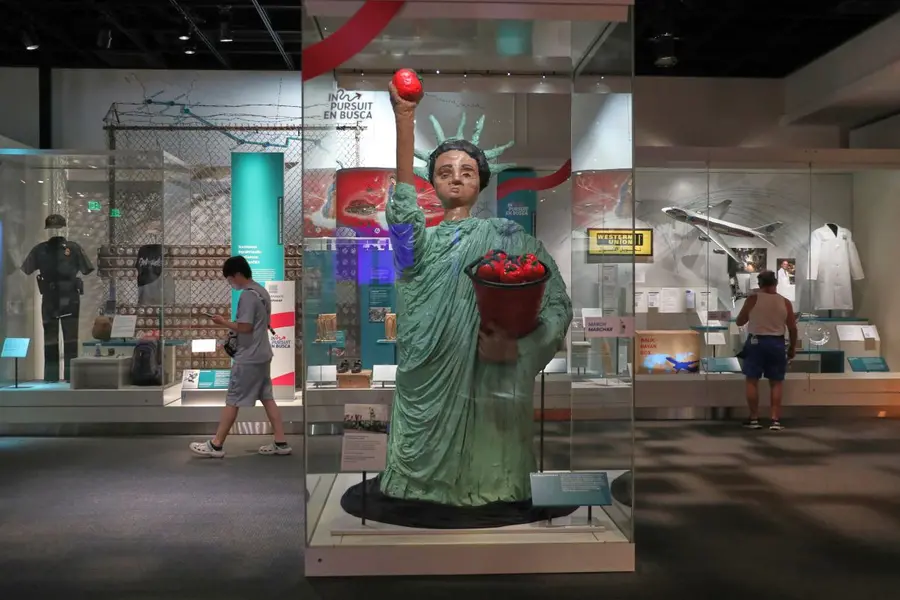
A new White House report has accused the Smithsonian Institution's current leadership of imposing a “radical, activist ideology” on its museums and failing to tell "the noble, honest story of the great country", escalating a political clash over how American history is presented at one of the world’s most prominent cultural institutions.
The report, released by the White House’s Domestic Policy Council on July 4 and titled 'Saving America’s Story: How Ideological Capture at the Smithsonian’s National Museum of American History Erases Our Heritage,' focuses primarily on the National Museum of American History, though its language targets Smithsonian leadership more broadly.
Its “central finding,” as cited by The Washington Post, is that the museum leadership has “explicitly adopted an ideological framework that no longer treats the American story as a shared national inheritance to be taught or celebrated, but as a political instrument to divide, dispirit, and discourage our citizens.”
The report claims that the museum’s mission has shifted “from straightforward historical education and scholarship toward extreme political activism that seeks to transform our country,” and that, under current leadership, the Smithsonian “cannot be trusted to tell America’s story honestly and in a way that is inspiring, unifying, and worthy of our great republic.”
The document suggests that President Donald Trump may move to install his own team at the museum and across parts of the Smithsonian, describing the effort as part of an initiative he has framed as “Restoring Truth and Sanity to American History.”
Allegations of ideological bias
Several passages in the report accuse the museum of exhibiting anti‑white bias, downplaying the nation’s founding and reframing key episodes in US history through what the authors describe as a divisive ideological lens.
It asserts that displays and interpretive materials have been shaped by a framework that casts the American story primarily in terms of oppression and injustice, rather than achievement and shared heritage.
“The museum, by the intention and at the direction of current Museum and Smithsonian leadership, has become subject to institutional capture by a radical, activist ideology that is fundamentally opposed to telling the noble, honest story of the great country we know and love,” one section of the report states.
The report was overseen by a former top Trump speechwriter, who chairs the council that produced it, underscoring the political context in which it has been released.
Smithsonian and expert reaction
As of publication, the Smithsonian Institution has not issued a detailed line‑by‑line response to the report, but coverage in US media has noted that museum officials and many historians see the criticism as part of a broader campaign to roll back efforts to present a more inclusive narrative of American history.
In earlier statements responding to cultural‑war attacks, Smithsonian representatives have defended their work as grounded in mainstream scholarship and committed to telling a fuller story that includes the experiences of marginalised communities as well as the contributions of founding figures and institutions.
Independent experts quoted in media outlets have pointed out that major museums worldwide have, over the past decade, expanded exhibits on race, gender, immigration and colonialism, arguing that such shifts reflect changes in historical research rather than “ideological capture.”
Wider battle over cultural institutions
The White House review marks the latest episode in an ongoing struggle over the role of cultural institutions in the United States, with the Trump administration repeatedly targeting museums, universities and arts organisations it accuses of promoting “woke” or “far‑left” narratives.
The report’s release on Independence Day, and its framing around “restoring” America’s story, are seen by observers as deliberate signals to the administration’s political base.
US news outlets note that any attempt to reshape the Smithsonian’s leadership or interpretive approach would raise complex questions about the institution’s governance, which involves both federal oversight and its own Board of Regents, including members of Congress, the Chief Justice of the United States, and prominent public figures.
For now, the report has sharpened the debate over how American history should be taught and displayed: as a celebratory national narrative, a critical examination of power and inequality, or some combination of both.
Museum professionals warn that sustained political pressure could threaten curatorial independence, while supporters of the White House initiative argue that cultural institutions funded in part by taxpayers should align more closely with what they describe as the country’s “noble” heritage.
Published: 07 Jul 2026, 07:52 pm IST
Related Topics
Disclaimer: Kindly avoid objectionable, derogatory, unlawful and lewd comments, while responding to reports. Such comments are punishable under cyber laws. Please keep away from personal attacks. The opinions expressed here are the personal opinions of readers and not that of Mathrubhumi.
