
While the Super Heavy booster splashed down, Starship endured reentry with intentional heat shield stress testing.
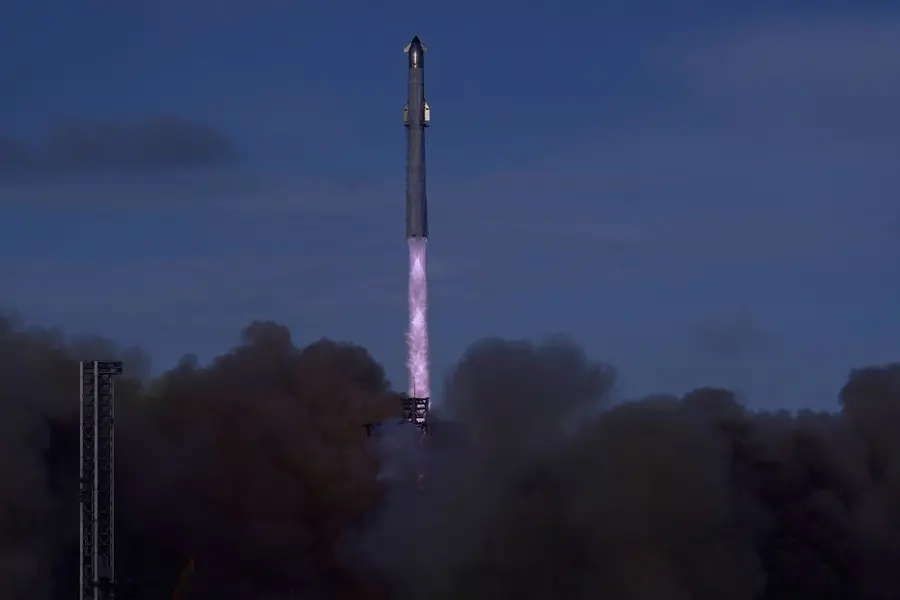
South Padre Island: SpaceX’s massive Starship megarocket roared into the skies from Starbase in South Texas on Tuesday, marking a key milestone after several recent setbacks. At 403 feet (123 meters) tall, Starship is the most powerful launch vehicle ever built and central to Elon Musk’s vision of human space exploration to Mars, as well as NASA’s plan to return astronauts to the Moon.
The launch took place at 6:30 p.m. local time (5:00 am IST, August 27) to cheers from SpaceX engineers. The first-stage Super Heavy booster made a controlled splashdown in the Gulf of Mexico several minutes after liftoff, producing a sonic boom. Unlike previous flights where SpaceX attempted to catch the booster with robotic arms, this test focused on how the rocket performs with certain engine failures.
Also Read

Attention then shifted to the upper stage, known individually as Starship, which successfully separated on schedule and soared on its suborbital trajectory. For the first time, SpaceX deployed eight dummy Starlink internet satellites, with live onboard footage showing a robotic mechanism releasing them one by one.
The vehicle endured a punishing reentry, with some heat shield tiles falling off and minor damage to a flap due to high temperatures. SpaceX communications manager Dan Huot explained the flight was designed to stress the vehicle, intentionally pushing its limits by removing some heat tiles.
CEO Elon Musk congratulated the team on the milestone on the social media platform, X, noting the flight was an important success after previous Starship attempts during 2025 ended prematurely due to explosions.
Musk highlighted the complexity of developing a fully reusable orbital heat shield capable of rapid refurbishment, a task that took the Space Shuttle nine months between flights. Another key hurdle is proving Starship can be refuelled in space with super-cooled propellants, essential for deep space missions.
With NASA aiming to use a modified Starship as a lunar lander by 2027 and Musk’s goal of an uncrewed Mars Starship flight next year, the company faces a challenging timeline.
With inputs from AFP
Published: 27 Aug 2025, 08:14 am IST
Disclaimer: Kindly avoid objectionable, derogatory, unlawful and lewd comments, while responding to reports. Such comments are punishable under cyber laws. Please keep away from personal attacks. The opinions expressed here are the personal opinions of readers and not that of Mathrubhumi.