
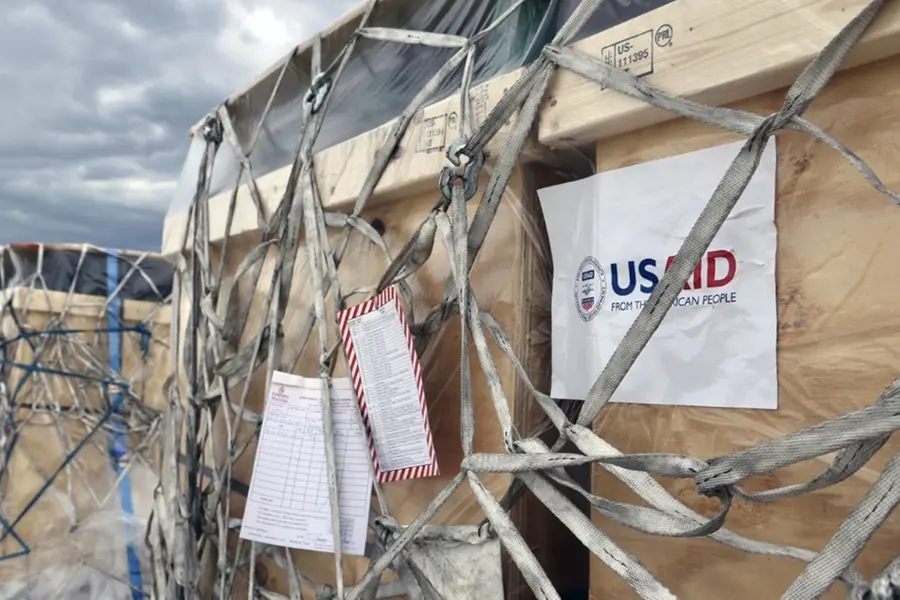
Washington DC: The US government has taken a decisive step towards dismantling the United States Agency for International Development (USAID), a move that will significantly reduce America’s global foreign aid contributions. The State Department, in coordination with USAID, formally notified Congress on Friday of its plans to transfer some of the agency’s functions while eliminating others by July 1, 2025.
US Secretary of State Marco Rubio justified the decision, stating that USAID had deviated from its founding principles. "Unfortunately, USAID strayed from its original mission long ago," Rubio said. "As a result, the gains were too few and the costs were too high." The Trump administration has portrayed the restructuring as an efficiency-driven measure aimed at aligning foreign aid programs more closely with broader US diplomatic and security priorities.
The move to shut down USAID follows a broader shift in US foreign aid policy under President Donald Trump. Shortly after taking office in January 2025, Trump signed an executive order freezing all US foreign aid for 90 days. This abrupt halt led to sweeping budget cuts across USAID programs, with only a few exceptions made for urgent humanitarian assistance. The decision has since raised concerns among humanitarian organisations, diplomats, and lawmakers, who argue that the cuts could severely impact global development efforts.
The decision has faced strong backlash from Democratic lawmakers, particularly members of the Senate Committee on Foreign Relations. In a joint statement, committee members condemned the move as "illegal, dangerous, and inefficient." They warned that dissolving USAID would place an overwhelming burden on the State Department, which lacks the infrastructure and specialised personnel to handle large-scale foreign aid programs.
“This reorganisation will not only render it impossible for any retained USAID programs to be implemented, but the burden placed on the State Department will cause significant disruption to its core mission,” the statement read.
USAID's role and impact
Before its planned closure, USAID was one of the largest foreign aid agencies in the world, managing an annual budget of approximately $43 billion. The agency accounted for over 40% of global humanitarian assistance, funding programs in health, education, disaster relief, and economic development in dozens of countries.
USAID's contributions ranged from emergency food aid in conflict zones to long-term initiatives like disease eradication programs, infrastructure development, and democracy promotion. The agency played a crucial role in responding to natural disasters, supporting public health initiatives, and stabilising fragile regions through development assistance.
However, many of these programs have been suspended or drastically reduced following the Trump administration’s budget cuts. Aid workers and international organisations have expressed alarm over the long-term consequences of eliminating USAID, warning that it could create a leadership vacuum in global humanitarian efforts.
Impact on USAID staff and operations
USAID staff were informed on Friday through an internal memo that all positions not explicitly required by law would be eliminated. According to US media reports, acting USAID chief Jeremy Lewin confirmed that most of the agency’s independent operations would be phased out in the coming months. Employees were urged to prepare for the transition, with many expected to be reassigned or laid off.
“The restructuring marks the most dramatic overhaul of US foreign aid policy in decades,” a senior USAID official, speaking on condition of anonymity, told reporters. “The biggest concern now is what happens to the critical projects that USAID was overseeing. The State Department simply doesn’t have the capacity or expertise to absorb all these responsibilities.”
Future of US foreign aid
While some USAID functions will be transferred to the State Department, the extent to which US foreign aid will continue remains uncertain. The Trump administration has emphasised a more transactional approach to international relations, prioritising economic and security interests over traditional humanitarian assistance.
The move to close USAID is expected to have a far-reaching impact on global development efforts, particularly in regions heavily reliant on US aid. Critics argue that the decision could weaken America's influence in international diplomacy and give rival nations, such as China and Russia, greater opportunities to expand their own foreign aid initiatives.
As the July 1 deadline approaches, debates over the future of US foreign aid are likely to intensify in Congress. Lawmakers, aid organisations, and foreign governments will be watching closely to see how the State Department manages the transition—and what role, if any, the US will continue to play in global humanitarian assistance.
Published: 29 Mar 2025, 07:51 am IST
Related Topics
Disclaimer: Kindly avoid objectionable, derogatory, unlawful and lewd comments, while responding to reports. Such comments are punishable under cyber laws. Please keep away from personal attacks. The opinions expressed here are the personal opinions of readers and not that of Mathrubhumi.
