
Addressing a youth gathering in Mumbai, RSS Chief Mohan Bhagwat described Gen Z's concerns over the education system as genuine and underscored that democratic protests are a vital form of dialogue.
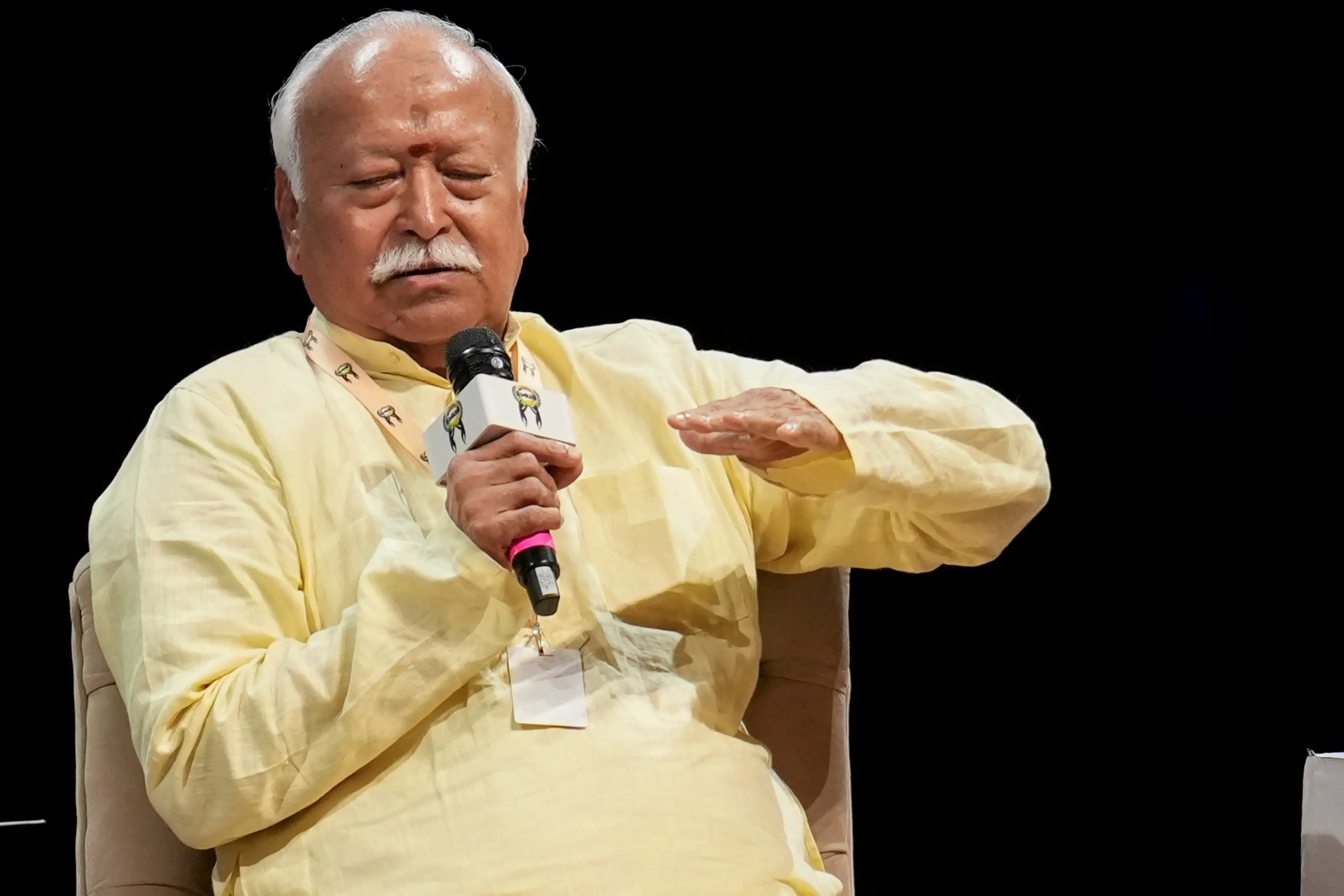
Mumbai: In an extensive outreach to the younger generation, Rashtriya Swayamsevak Sangh (RSS) chief Mohan Bhagwat emphasised that democratic agitations serve as legitimate platforms for building public consensus. Speaking to a audience of around 2,000 Gen Z and Gen Alpha participants at the 15th-anniversary conference of India’s International Movement to Unite Nations (IIMUN) in Mumbai, Bhagwat validated student concerns following recent countrywide agitations over exam paper leaks.
Bhagwat’s address comes in the wake of widespread student demonstrations organised by fledgling youth groups. Reinforcing the need to engage with young citizens constructively, he asserted that constructive discussion must remain the primary pathway for resolving grievances.
Democratic protests and youth agitations
Highlighting the fundamental role of public discourse in democratic setups, Bhagwat stated that expressing dissent should aim to unite rather than fracture society.
“Protest is also a way of dialogue. In a democracy, protest is a way of building consensus. Different views come together and a consensus evolves after discussion,” he said.
“I want to make it clear that if Gen Z engages in any agitation, they are not anti-national. They are our own people; they are our next generation. A sense of belonging and mutual respect is needed for dialogue to take place. We need to recognise and respect each other. Only then can a meaningful dialogue happen, where we understand their concerns and they understand our perspective. This is how it should be. I do not believe that Gen Z or the younger generation is like that... I believe today's younger generation, Gen Z and Gen Alpha, is more honest than the existing generation. This generation should have honesty towards the nation, a spirit of patriotism, and a commitment to service,” he added.
Addressing why citizens resort to public demonstrations, he noted, “If, for various reasons, concerns are not heard through dialogue, people may turn to agitation. But the purpose of all this is to build consensus, not to create divisions. The Gen Z grievances are genuine and I believe in their honesty,” he emphasised.
Bhagwat further observed that unlike previous generations who accepted authority without question, today's youth demand logical explanations, respect and transparent engagement. He reiterated that starting with open dialogue is crucial.
“There should be dialogue. What should happen if dialogue does not work can be considered later,” the RSS leader opined.
Revamping India's education sector and employment
Reflecting on structural issues in the nation's schooling and higher education, Bhagwat threw his weight behind long-standing calls to expand public funding for the sector. He urged that education must remain accessible to every citizen rather than turning into a commercial enterprise.
Bhagwat affirmed his support for raising the national education spend to 6 per cent of the country's Gross Domestic Product (GDP).
“Education is not a commercial business; it should be structured in such a way that it is available for all. Society should also contribute to improving the status of education,” the RSS chief said.
Touching upon the challenge of joblessness, he noted that employment should be viewed through a broader lens, asserting that “employment does not only constitute jobs but also entrepreneurship”.
Managing cross-border conflict and diplomatic dialogue
When asked about managing ties with neighbouring nations like Pakistan and China during times of geopolitical friction, Bhagwat noted that citizens must firmly back the state and national forces. However, he cautioned against letting temporary political conflicts permanently sever long-standing historical or cultural ties.
“In times of conflict, we have to go with whatever the government or military does. But that should not sever the ties which are already there,” he said.
Explaining India's foundational philosophy of harmonious integration rather than conquest, Bhagwat added, “During conflicts, dialogue can be halted, but conflict should not sever dialogue. After a conflict is resolved, we have to take it forward from where we left it. Permanent animosity or hatred is not the solution,” Bhagwat stated.
“When there is trouble, we have to deal with it in the proper way, and during conflict we are with our government and military. But it is a temporary situation arising out of politics. It is not that Pakistanis are wholeheartedly enemies of Indians or vice versa. The state, politics and international borders are facts of life,” Bhagwat said.
On whether civil society groups should host citizens or students from neighbouring countries during active friction, Bhagwat said that such exchanges are unsuitable during ongoing hostility or proxy warfare.
“Not during the times of conflict. A conflict may be a military war or even terrorism. Terrorism is not only about terrorists of a radical group; there is a whole philosophy and policy behind it, a 'thousand cuts' approach. It is a hidden war and we have to treat it accordingly,” he said.
Navigating social media, tech misuse and digital discipline
A major segment of the session focused on digital habits, online safety and the role of social media in young lives. Bhagwat rejected flat bans on platforms, arguing that outright prohibitions usually push activities underground rather than solving core problems.
“If you ban something, it simply moves to the black market and spreads even more. The entire society has to respond to this challenge together. Only then will the government's efforts succeed,” he said.
Instead, he advocated for cultivating internal discipline alongside critical thinking to combat deepfakes and digital misinformation.
“Rules and discipline are necessary, but they succeed only when attitudes change. Many laws have been made. What matters is changing people's mindset,” the RSS leader maintained.
“Today, technology can create fake videos using our faces and voices. Knowing this, people should never believe anything on social media without verifying it from authentic sources,” he suggested.
Addressing digital influencers directly, Bhagwat stressed the moral accountability that comes with large followings.
“If I am a social media icon and 10 lakh people follow me, it becomes my responsibility to ensure they do not end up in a problem by following me. That much wisdom is necessary,” he said.
“We need self-imposed discipline in using social media. Once that discipline develops, regulations will work effectively," Bhagwat observed.
PTI
Published: 06 Aug 2026, 11:30 pm IST
ABOUT THE AUTHOR

Related Topics
Disclaimer: Kindly avoid objectionable, derogatory, unlawful and lewd comments, while responding to reports. Such comments are punishable under cyber laws. Please keep away from personal attacks. The opinions expressed here are the personal opinions of readers and not that of Mathrubhumi.