
The US launched strikes on Iranian air defenses near the Strait of Hormuz after a US helicopter was downed. Iran has vowed retaliation.
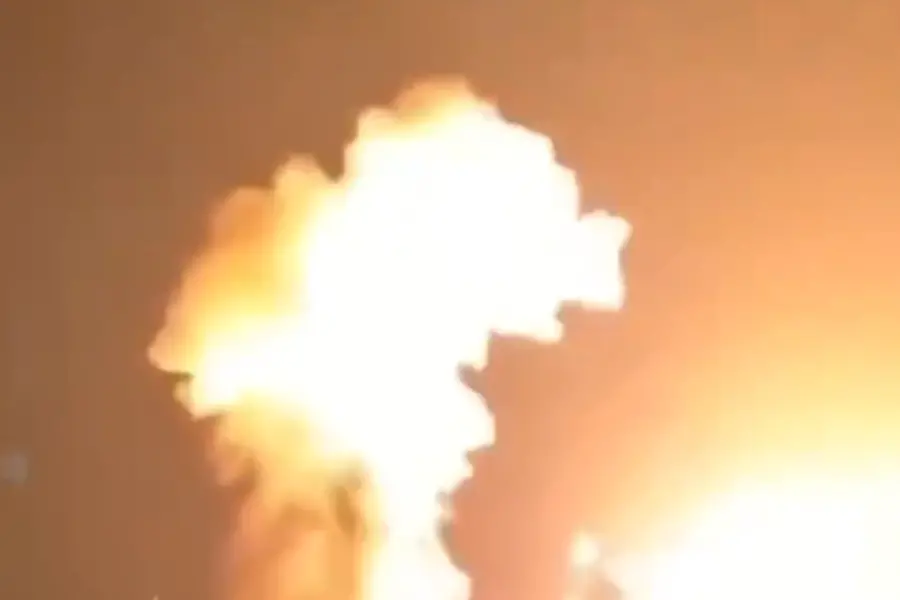
US forces carried out strikes against Iranian military targets near the Strait of Hormuz on Tuesday, escalating tensions in the Gulf after the loss of a US Army Apache helicopter that Washington says was brought down by Iran a day earlier.
According to US Central Command (CENTCOM), American forces began conducting what it described as self-defense strikes at approximately 5 p.m. ET on the orders of President Donald Trump. The military said the operation was aimed at Iranian air defense and radar systems and characterized the mission as a “proportional response to unjustified Iranian aggression.”
The strikes followed the downing of a US Army Apache helicopter near the coast of Oman on Monday. CENTCOM said both crew members were rescued within about two hours and were in stable condition. A spokesperson added that a naval surface drone assisted in the recovery effort.
Speaking to ABC News before the strikes were announced, Trump said the United States was responding “in a strong manner” after “what they did with our helicopter last night.”
“And I believe the response should be very strong, very powerful, and that's what this one is,” Trump said.
Iranian media reported a series of explosions along the country's southern coast near the Strait of Hormuz but later said the situation had returned to calm.
Iranian Foreign Minister Abbas Araghchi condemned the US action and warned that Tehran would retaliate.
Araghchi also urged foreign military forces operating near Iranian waters to leave the region, arguing that their presence increased the risk of confrontation.
“The Strait of Hormuz is NOT international waters but shared between Iran and Oman,” he said, adding that foreign forces in the area faced risks from accidents, miscalculations or being caught in crossfire.
The latest military exchange comes despite repeated assertions by Trump in recent weeks that negotiations aimed at ending the broader Middle East conflict were nearing a conclusion. Hours before the strikes, Trump again suggested diplomatic efforts were in their final stages.
The Strait of Hormuz remains one of the world's most important energy chokepoints, carrying roughly one-fifth of global oil supplies. The renewed confrontation rattled energy markets, with US benchmark West Texas Intermediate crude rising about 1.4% to $89.40 per barrel in early Asian trading.
The escalation also happened against a backdrop of continued regional instability. Although a fragile ceasefire between the main parties in the conflict has been in place since April 8, it came under renewed strain over the weekend when Iran and Israel exchanged attacks before each side announced a halt.
With AFP inputs
Published: 10 Jun 2026, 06:32 am IST
Disclaimer: Kindly avoid objectionable, derogatory, unlawful and lewd comments, while responding to reports. Such comments are punishable under cyber laws. Please keep away from personal attacks. The opinions expressed here are the personal opinions of readers and not that of Mathrubhumi.
