
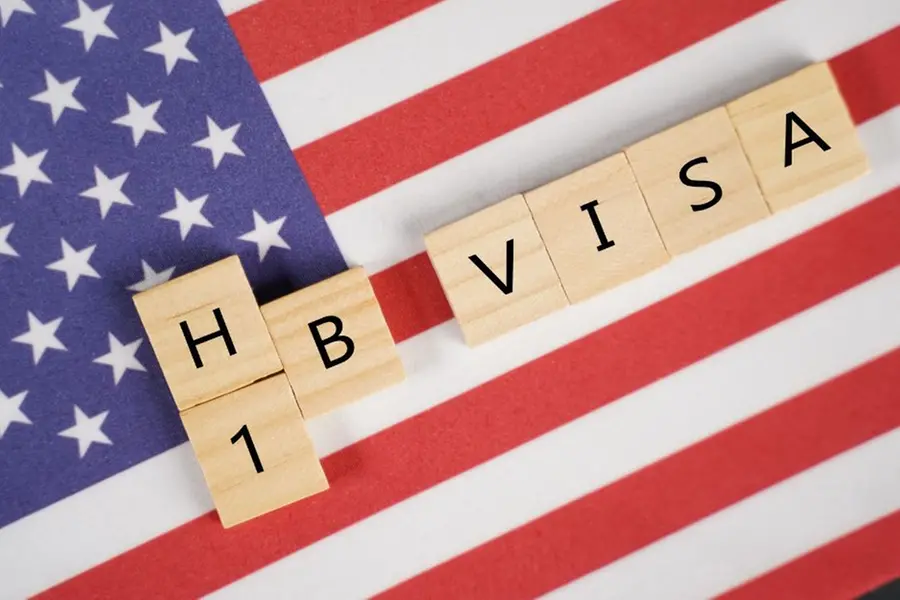
A growing number of Indian immigrants in the United States, who arrived as children on H-4 dependent visas, now face the looming threat of self-deportation. Once they turn 21, they are no longer considered dependents of their H-1B visa-holder parents, leaving them without legal status unless they secure another visa. Until recently, they had a two-year grace period to transition, but shifting immigration policies and legal challenges have cast doubt on this provision, leaving thousands in fear of being forced to leave the country they have known all their lives.
What is self-deportation?
Self-deportation refers to the process in which an immigrant voluntarily leaves a country due to legal restrictions, often because their visa has expired or they no longer qualify for residency. Unlike forced deportation, where government authorities physically remove individuals from the country, self-deportation occurs when individuals feel compelled to leave to avoid legal troubles, employment restrictions, or a lack of documentation.
Thousands of Indian youth caught in visa limbo
According to The Times of India, nearly 1.34 lakh Indian children were expected to ‘age out’ of their dependent visa status as of March 2023, long before their families could secure green cards. The massive backlog in the US employment-based green card system disproportionately affects Indian immigrants, with some applications projected to take anywhere between 12 to 100 years to process. Many of these young individuals, who have spent most of their lives in the US, now face an impossible choice—returning to India, a country they barely know, or remaining in the US without documentation.
As an alternative, many are exploring options in Canada or the UK, where immigration policies are more flexible. Meanwhile, the US Citizenship and Immigration Services (USCIS) has opened the H-1B visa registration process for the fiscal year 2026, running from 7 March to 24 March. The programme, which permits American companies to hire foreign professionals in specialised fields, has an annual cap of 65,000 visas, with an additional 20,000 allocated to applicants with US master’s degrees.
Legal setbacks and controversy around H-1B
The situation has worsened following a recent Texas court ruling that blocked new applicants from receiving work permits under the Deferred Action for Childhood Arrivals (DACA) programme. Previously, DACA provided a two-year renewable protection from deportation for undocumented youth, including dependent visa holders who lost status upon turning 21. With this provision under legal threat, many fear they will be left with no option but to leave the country.
Adding to the uncertainty, US Senator Bernie Sanders has strongly criticised the H-1B visa programme, arguing that it primarily benefits large corporations at the expense of American workers. Sanders has proposed an amendment to the Laken Riley Act, which would double H-1B visa fees, generating an estimated $370 million annually to fund nearly 20,000 STEM scholarships for American students. He has also suggested increasing the minimum wage for H-1B workers to the median local wage to prevent companies from undercutting domestic salaries.
Citing Economic Policy Institute data, Sanders highlighted that between 2022 and 2023, the top 30 H-1B employers hired over 34,000 foreign workers while laying off 85,000 American employees. He also took aim at billionaire figures such as Tesla owner Elon Musk and Indian-American entrepreneur Vivek Ramaswamy, arguing that their claims of a skilled worker shortage were misleading.
Meanwhile, the backlog in employment-based green cards continues to grow, with The Economic Times reporting that 10.7 lakh Indians are currently stuck in the EB-2 and EB-3 green card queues. Processing these applications could take up to 134 years, further exacerbating the crisis for dependent visa holders who risk being forced out of the US before their families secure permanent residency.
(With inputs from agencies)
Published: 06 Mar 2025, 05:09 pm IST
Related Topics
Disclaimer: Kindly avoid objectionable, derogatory, unlawful and lewd comments, while responding to reports. Such comments are punishable under cyber laws. Please keep away from personal attacks. The opinions expressed here are the personal opinions of readers and not that of Mathrubhumi.
