
Trump's tougher H-1B rules could affect Indian IT workers through wage-based selection, employer scrutiny and uncertainty over the $100,000 fee.
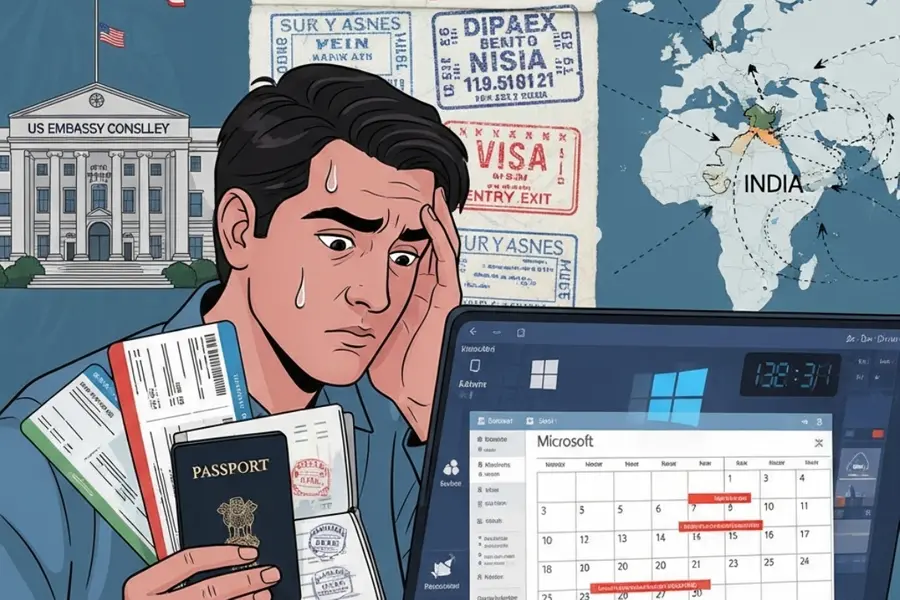
New Delhi: Indian technology professionals could face a tougher road to the US as the Donald Trump administration signals further action on the H-1B visa programme, with tighter scrutiny of employers, greater emphasis on high-paid and highly skilled workers and continued uncertainty over a controversial $100,000 fee for certain new H-1B workers.
The latest signal came from US Labour Department Inspector General Anthony D’Esposito, who posted on X: “Big week ahead on the foreign labour visa front,” followed by: “We’re taking LFG to a whole new level. American jobs. American workers.”
D’Esposito did not specify which visa programme, company or investigation he was referring to.
The developments are particularly significant for Indians. According to US Citizenship and Immigration Services data, beneficiaries born in India accounted for 71 per cent of all approved H-1B petitions in fiscal 2024, making Indians by far the largest group benefiting from the programme.
Why Indians could feel the impact
The biggest change is the shift away from a purely random H-1B selection system towards a wage-weighted model, which gives greater weight to higher-paid and higher-skilled positions. The new system is intended to favour jobs at higher wage levels rather than treating every eligible registration equally.
For Indian professionals, this could mean tougher odds, particularly for entry-level, lower-paid and outsourcing-linked positions, while highly specialised professionals with higher salaries could be better placed.
The impact is not merely theoretical. A Penn Wharton Budget Model analysis estimates that the combined effect of the $100,000 payment and wage-weighted selection could reduce India's share of H-1B selections from about 66.8 per cent under the earlier random system to between 55.7 per cent and 63.5 per cent, depending on how employers respond to the fee. The analysis also found that the impact would be concentrated among lower-paid workers, those with bachelor's degrees and applicants without prior US visas.
That could be particularly relevant to Indian IT workers entering the US directly from India, as opposed to professionals already working or studying in the US.
Outsourcing firms face greater pressure
The administration has also targeted what it describes as abuse of the H-1B system, particularly the use of foreign workers at lower wages.
Vice President JD Vance has called the H-1B programme “completely broken” and said he supports eliminating it.
“If you’re going to bring in an accountant making $45,000 a year to replace an accountant who is an American making $60,000 a year, that’s not you using the programme to bring in a genius,” Vance said.
“That’s you destroying American jobs and defrauding the American people.”
He added, “If you’re just trying to replace an American accountant with a cheaper foreign accountant, then you’re not going to pay $100,000.”
This could have a direct bearing on India's large IT services and outsourcing industry, where companies have historically relied on H-1B visas to move skilled employees to US client locations.
The White House says H-1B registrations from large IT outsourcing companies have already fallen sharply, with combined registrations from the largest staffing and outsourcing firms dropping from 24,946 to 2,055, a 92 per cent decline, between the relevant registration periods. It also reported a sharp fall in consular processing requests used to bring workers into the US.
What about the $100,000 H-1B fee?
The fee remains one of the biggest concerns for Indian applicants, but its legal status needs to be watched closely.
The Trump administration imposed a $100,000 payment requirement for certain new H-1B workers outside the US, with exceptions for cases deemed to be in the national interest. The White House extended the restriction in September 2026.
However, on October 1, a second federal judge blocked the fee, ruling that US authorities had failed to follow required rule-making procedures. A Boston federal judge had already blocked the measure earlier, and the administration is facing continuing legal challenges.
So, the $100,000 charge should not be described as an uncontested fee that every Indian H-1B applicant must currently pay.
The potential impact, however, is substantial if the measure survives in some form. Research suggests Indian nationals are disproportionately exposed to the fee because a large share of those applying from outside the US fall into the category covered by the payment.
Indian students and fresh applicants
The changes could also affect Indian students hoping to transition from US education into employment.
The new selection system gives an advantage to higher-paid positions, potentially making the path more difficult for fresh graduates entering the job market at lower salaries. At the same time, applicants who already have US study or work experience could be less exposed to some of the financial barriers associated with bringing workers into the country from abroad.
This creates an important divide among Indian applicants: highly paid, specialised professionals may remain attractive to US employers, while lower-paid and entry-level applicants could face significantly tougher competition.
More scrutiny for employers hiring Indians
The administration has also ordered agencies to examine whether companies sponsoring H-1B workers have laid off, or intend to lay off, comparable American employees. The Labour Department has been directed to audit previously filed labour-condition applications.
Vance has summed up the administration's position bluntly, “My view is the H-1B programme is completely broken, and I’d be very supportive of just eliminating it.”
“But while we have it, what we have to do is protect American workers.”
For Indians, therefore, the emerging H-1B policy is about more than a single visa fee. Higher salary thresholds, wage-weighted selection, tougher employer scrutiny and uncertainty over new-worker fees could collectively make the traditional route from an Indian IT job to a US-based H-1B position harder and more expensive.
Published: 05 Oct 2026, 12:21 pm IST
ABOUT THE AUTHOR

Related Topics
Disclaimer: Kindly avoid objectionable, derogatory, unlawful and lewd comments, while responding to reports. Such comments are punishable under cyber laws. Please keep away from personal attacks. The opinions expressed here are the personal opinions of readers and not that of Mathrubhumi.