
Trump's latest H-1B order puts employers with recent or planned US layoffs under greater scrutiny as Washington tightens oversight of the visa programme.
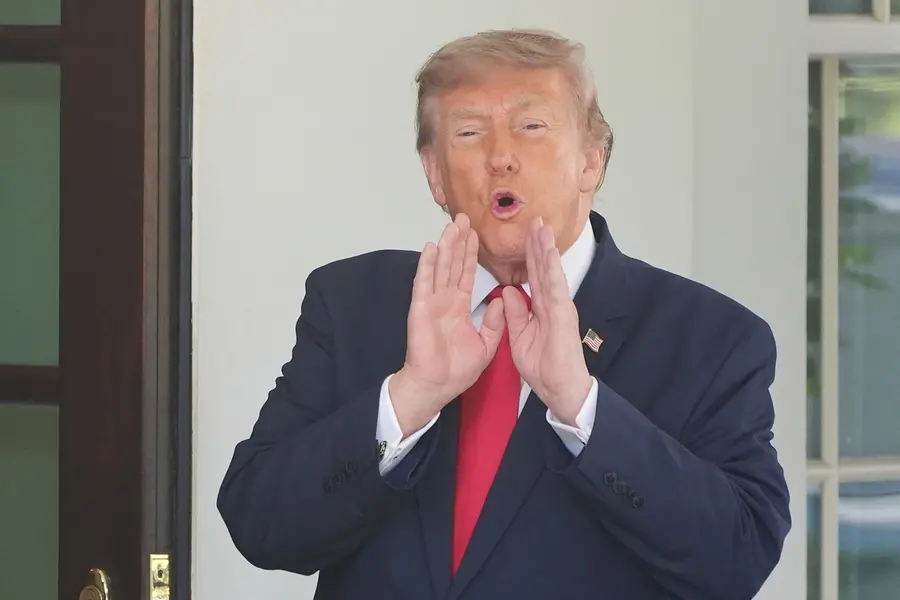
US President Donald Trump has signed an executive order directing federal agencies to give greater scrutiny to H-1B employers that have laid off US workers or are planning layoffs that could affect similarly situated American employees.
The Trump administration has introduced another measure aimed at tightening oversight of the H-1B visa programme, this time focusing on employers that have recently cut US jobs or are planning layoffs.
Also Read

The executive order directs the Departments of State, Labor and Homeland Security to consider an employer's recent layoffs and planned workforce reductions when assessing H-1B-related applications, petitions, visas and entries.
The measure does not create a blanket ban on H-1B hiring by companies that have conducted layoffs. Instead, it instructs agencies to examine whether the use of H-1B workers could affect similarly situated US employees.
Employers face closer H-1B scrutiny
Under the order, agencies will consider whether an H-1B sponsoring employer has directly or indirectly carried out layoffs during the previous year.
They must also consider whether the employer has plans for future layoffs that could negatively affect similarly situated US workers.
The Labor Department's Wage and Hour Division has been directed to begin reviewing data from previously submitted labour condition applications within 30 days. The review is intended to determine whether additional action against H-1B sponsors may be warranted.
The order also expands information-sharing between federal agencies involved in administering and monitoring the H-1B programme.
Why the Trump administration is targeting employers
The White House says the move is intended to strengthen the integrity of the H-1B programme and protect American workers.
The administration has alleged that some employers, outsourcing companies and third-party placement firms have used H-1B workers to fill positions at lower costs and, in some cases, replace US employees.
The White House has also pointed to layoffs in the technology sector as part of its justification for the policy. These figures and allegations represent the administration's stated rationale for the order.
The order further cites alleged violations involving job descriptions, working conditions, specialty-occupation requirements and educational credentials in some H-1B cases.
What changes for H-1B employers?
The order does not automatically prohibit a company from hiring H-1B workers after conducting layoffs.
Instead, federal agencies are being instructed to take employment reductions into account when evaluating H-1B-related cases.
The order also calls for greater coordination between the Departments of Labor, Homeland Security, State, Commerce and Education, as well as the Small Business Administration.
These agencies are expected to share information on areas including wages, employment, education, industry conditions and economic data.
H-1B restrictions come alongside $100,000 payment
The latest order comes as the Trump administration continues to tighten H-1B rules.
A separate presidential proclamation extends restrictions under which certain H-1B workers seeking entry into the US must have petitions accompanied by a $100,000 payment, subject to specified exceptions. The restriction is scheduled to take effect on September 21, 2026.
For Indian technology professionals and companies that rely heavily on the H-1B programme, the combination of increased employer scrutiny and higher costs could affect future hiring and visa planning.
What it means for Indian professionals
Indian nationals have historically accounted for a substantial share of H-1B beneficiaries, particularly in the technology sector. The new employer-focused scrutiny means that workers' applications could increasingly be affected by the employment practices of their sponsoring companies.
The order itself does not introduce a nationality-based restriction. Its focus is on employers, labour practices and compliance with H-1B requirements.
The latest measure adds an employer-side layer of scrutiny to the Trump administration's broader H-1B policy changes.
The key distinction is that a company having conducted layoffs does not automatically lose the ability to sponsor H-1B workers. Instead, recent and planned layoffs can become relevant to how federal agencies examine the employer's H-1B activity.
The policy also expands the role of information-sharing between government agencies. This could allow immigration and labour authorities to compare H-1B applications with employment, wage and workforce data when assessing potential compliance concerns.
For businesses, the practical issue will be how agencies implement the new review requirements. For H-1B workers and prospective applicants, the impact will depend partly on how individual sponsoring employers are assessed under the expanded scrutiny.
Published: 19 Sept 2026, 08:03 am IST
ABOUT THE AUTHOR
Related Topics
Disclaimer: Kindly avoid objectionable, derogatory, unlawful and lewd comments, while responding to reports. Such comments are punishable under cyber laws. Please keep away from personal attacks. The opinions expressed here are the personal opinions of readers and not that of Mathrubhumi.