
The drone interceptions and subsequent strikes mark the latest exchange in a series of military actions that have tested the already fragile ceasefire and complicated efforts to secure an extension of the truce.
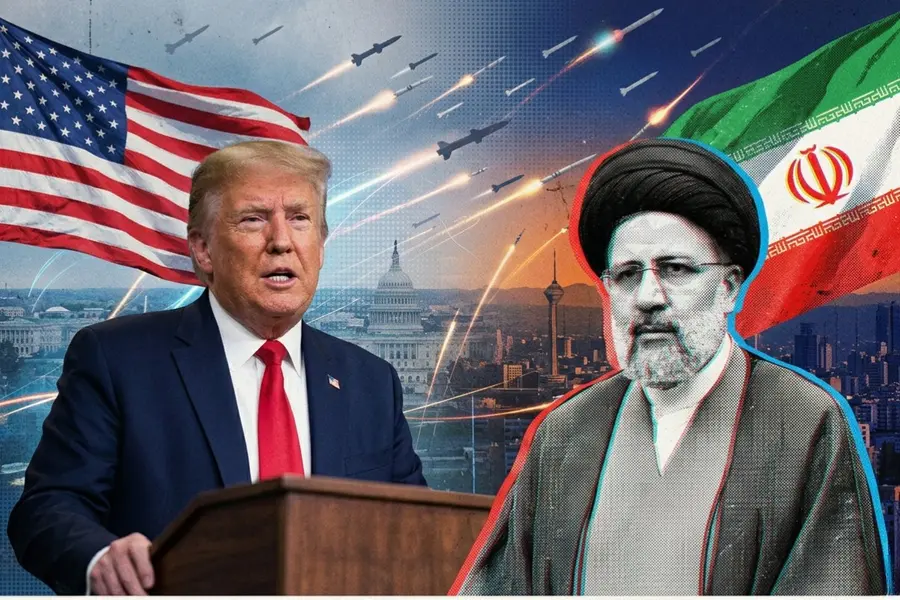
New York: Chippewa Falls, Wisconsin: The United States military said it shot down four Iranian drones launched towards the Strait of Hormuz on Friday before carrying out strikes on Iranian coastal surveillance radar sites, escalating tensions around a fragile ceasefire as the Trump administration increases pressure on Tehran.
US Central Command said the drones posed a direct threat to maritime traffic in the region.
“The attack drones posed an immediate threat to regional maritime traffic,” the command said in a post on social media.
The military said the radar installations, including one located on an island in the Strait of Hormuz, were targeted to prevent further attacks.
The latest developments come as the US continues to enforce a blockade on Iranian ports in response to Tehran's restrictions on access through the strategically important waterway, a key route for global oil and natural gas shipments. The disruption has pushed up energy prices and created political challenges for President Donald Trump and his Republican Party ahead of the midterm congressional elections.
Ceasefire under strain after recent attacks
The drone interceptions and subsequent strikes mark the latest exchange in a series of military actions that have tested the already fragile ceasefire and complicated efforts to secure an extension of the truce.
Earlier this week, Iranian drones caused heavy damage to a passenger terminal at Kuwait's main airport. The attack killed one person, injured dozens and temporarily forced the closure of the airport.
Despite growing concerns that the ceasefire could unravel, Trump struck an optimistic tone while speaking to reporters in Wisconsin on Friday.
“The situation with Iran seems to be going quite well,” he said during an event with farmers.
“We're going to come out of Iran very quickly and it's going to be very strong one way or the other, whether it's a piece of paper or the very tough way,” Trump said. “The very tough way is maybe the easier way, but we're going to come out, and your fertiliser prices are going to go way down, just like they were four months ago.”
Nuclear talks remain unresolved
The conflict has increasingly settled into a stalemate as diplomatic efforts continue alongside military pressure.
US and Iranian negotiators reached a tentative agreement a week ago to extend the ceasefire by 60 days and begin a fresh round of talks on Iran's nuclear programme. However, Trump has sought additional changes to the proposed arrangement, while Iranian officials have not publicly indicated whether they will accept the deal.
Speaking to NBC's Meet the Press on Friday, Trump was asked why the process was taking so long.
“It’s a very hard thing for them,” he said, referring to Iran. He cited the country's “great independence” and said its leaders were “strong” and “proud”.
“There are things they never thought they'd be doing that they're going to have to do. They've got no choice, and it takes a little while,” Trump said.
The US president also claimed that Iran still possesses between 21 per cent and 22 per cent of its missile stockpile.
Lebanon fighting adds to regional tensions
The administration has also highlighted a ceasefire agreement reached this week between the Lebanese government and Israel following US-mediated talks in Washington.
However, the deal faces uncertainty after the Iran-backed Hezbollah group rejected the agreement. Fresh violence has further increased doubts about its durability.
The Israeli military carried out strikes across several parts of southern Lebanon on Friday and issued evacuation warnings for nine villages, including one that has been sheltering thousands of people displaced by the conflict.
Lebanon's state news agency reported that nine people were killed in six separate locations in the south.
The Israeli military said two of its soldiers were wounded during an encounter with militants in southern Lebanon, including one who sustained serious injuries.
Israeli forces have seized large areas of southern Lebanon during the fighting. The continued conflict has complicated wider efforts to stabilise the region and reopen the Strait of Hormuz, with Iran insisting that any lasting truce must also cover Lebanon.
US expands pressure campaign
Separately, the US military said earlier on Friday that its forces boarded a sanctioned oil tanker linked to Iran in the Indian Ocean as part of efforts to curb Iranian revenue from oil exports and other trade.
Washington also announced new sanctions targeting Iran's energy sector. The measures affect a network of individuals, companies and tankers accused of supporting Iranian oil-related activities.
Published: 06 Jun 2026, 07:02 am IST
Related Topics
Disclaimer: Kindly avoid objectionable, derogatory, unlawful and lewd comments, while responding to reports. Such comments are punishable under cyber laws. Please keep away from personal attacks. The opinions expressed here are the personal opinions of readers and not that of Mathrubhumi.
