
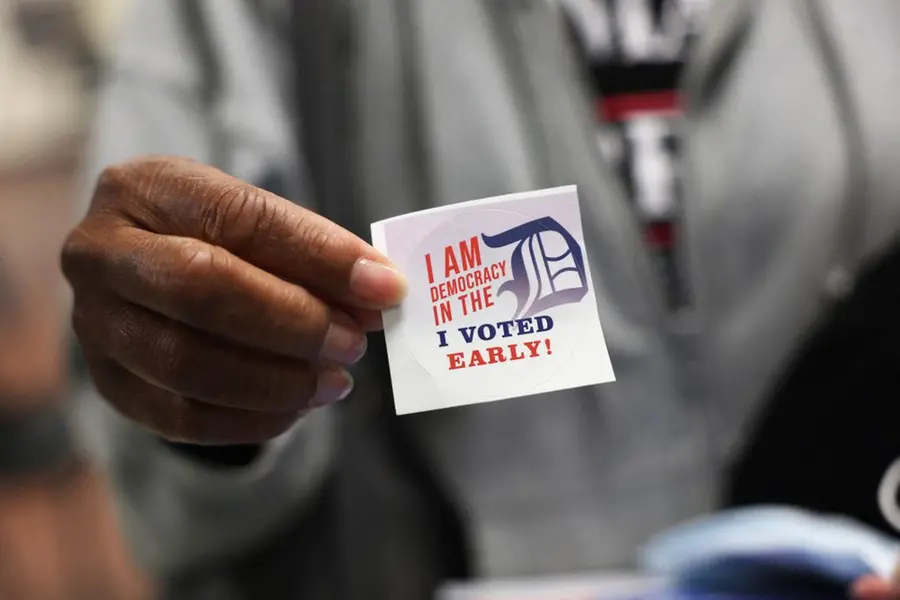
Early voting has become a critical factor in the United States elections, providing voters a chance to cast their ballots before Election Day. In 2024, both Donald Trump and Kamala Harris are urging their supporters to vote early. As per observers 8 million votes are casted between postal and early stage. But to compared to same tine in 2020, voting is yet to pick up steam.
Virginia, Minnesota, and South Dakota began early voting on September 20, offering both traditional polling options and absentee ballot drop-offs.
Also Read

California started early voting on October 7, and Texas follows on October 21. These two states are particularly significant: California, the largest state by population, allows early voting until November 4, while Texas, a historically conservative state with shifting demographics, ends early voting on November 1. The rules in these major states can shape voter turnout and the election’s outcome.
Understanding the Vote
* Early Voting: Vote in person before Election Day at designated polling stations.
* Absentee Voting: Request, complete, and return a ballot by mail or in person.
* Mail-In Voting: Automatically receive and return a ballot by mail.
* Election Day Voting: Cast your ballot in person on Election Day.
* In-Person Absentee Voting: Drop off absentee ballots early in person
In 2020, early voting surged due to the pandemic, with 36.9% of voters casting early ballots and 43% using absentee or mail-in voting. Election Day votes accounted for just 20.6%, a stark contrast to 2016, when 17.5% voted early and 21% used absentee ballots, while a majority -- 61.5% -- voted on Election Day. This trend towards early and absentee voting is expected to continue in 2024.
The rise of early voting has steadily increased over the past few decades. It began to gain traction in the 1980s and 1990s, with states like California and Oregon leading the way in offering more flexible voting options. By 2016, more states expanded early voting, and by 2020, most states had adapted to allow either no-excuse early voting or mail-in ballots, particularly due to the COVID-19 pandemic. This shift reflects a broader trend of making voting more accessible to a wider population.
However, not all states are as flexible. Alabama, for instance, requires specific reasons for absentee voting, such as illness or travel. Despite such restrictions in some states, forecasts suggest early voting will dominate again in 2024, particularly in battleground regions.
With differing early voting periods and significant turnout expected, early and absentee voting could once again reshape the electoral landscape. In states like California and Texas, where large populations and political shifts can sway national results, early voting is poised to play a pivotal role in determining the final outcome.
Published: 21 Oct 2024, 10:46 am IST
Disclaimer: Kindly avoid objectionable, derogatory, unlawful and lewd comments, while responding to reports. Such comments are punishable under cyber laws. Please keep away from personal attacks. The opinions expressed here are the personal opinions of readers and not that of Mathrubhumi.