
Trump Mobile launches a new 5G cellular service with the T1 phone, promising US-based support and features.
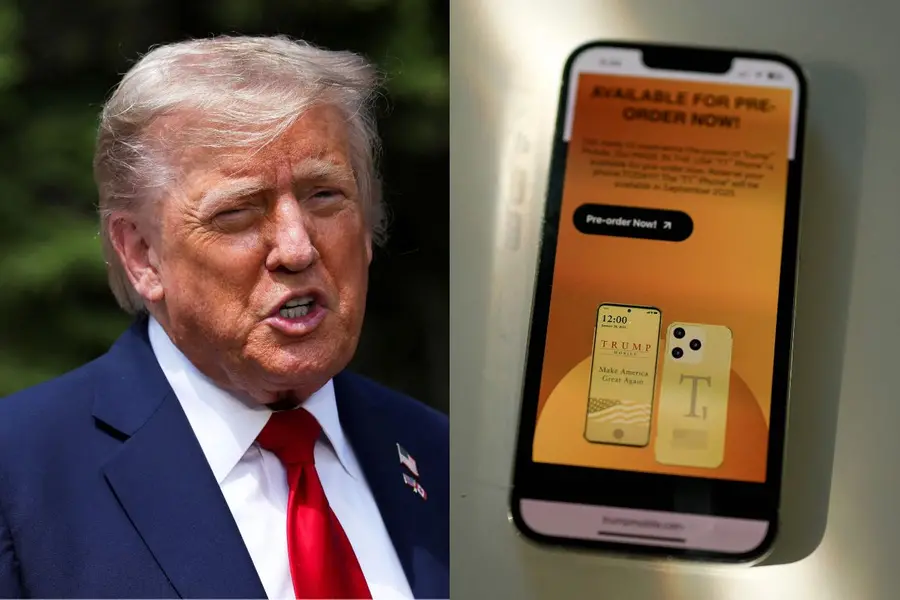
The Trump Organisation has added another business to its expanding portfolio—this time in the telecommunications sector. The newly unveiled Trump Mobile, announced Monday at Trump Tower in Manhattan, is being touted as an “all-American” cellular service backed by a smartphone and bundled services. The venture arrives as yet another example of the Trump family capitalising on President Donald Trump’s political identity and name recognition.
Here’s what we know about the new mobile service.
What is ‘Trump Mobile’?
According to a press release, Trump Mobile is a "transformational, new cellular service" and “next-generation wireless provider” that aims to deliver 5G connectivity across the United States. The service, launched by T1 Mobile LLC under a licensing deal with the Trump Organisation, claims to offer widespread network access without contracts or credit checks.
Donald Trump Jr, during the launch, positioned the venture as a patriotic, US-based alternative to major mobile providers, stating the company and its products would be based and manufactured domestically.
Trump organisation’s link to Trump mobile
While the branding might suggest direct Trump family involvement in the operations of Trump Mobile, the reality is more nuanced. The Trump Organisation is not manufacturing phones or directly offering the service.
Instead, the Trump name is being used through a licensing agreement. The press release clarified, "Trump Mobile, its products and services are not designed, developed, manufactured, distributed or sold by The Trump Organization or any of their respective affiliates or principals."
It added, "T1 Mobile LLC uses the ‘Trump’ name and trademark pursuant to the terms of a limited license agreement which may be terminated or revoked according to its terms."
This model echoes many of the Trump Organisation’s earlier ventures, where branding has been leveraged for products ranging from clothing to real estate and, infamously, Trump Steaks and Trump University.
Products and services it offers
Trump Mobile aims to go beyond standard mobile service. Its main offering, dubbed “The 47 Plan”, includes unlimited talk, text and data. Subscribers will also receive additional benefits like 24/7 roadside assistance via a partnership with Drive America Motor Club, and access to telehealth services provided by Doctegrity, which normally charges $29 per month. It remains unclear whether Trump Mobile subscribers will incur additional costs for this feature.
International users are also being courted: the company promises free calls to more than 100 countries. However, the official website notes these calls may come with time limitations, contradicting the broader claim made in the press materials.
Subscribers can either pre-order Trump Mobile’s exclusive phone or use their current devices by inserting a provided SIM card.
Features and pricing
The highlight product is a new smartphone, the T1 Phone, marketed as a sleek, gold-coloured device “proudly designed and built in the United States.” It is now available for pre-order, with a full price tag of $499 and a down payment of $100. However, Trump family members have admitted that initial batches may not be entirely US-made.
Eric Trump recently said on a podcast, "eventually, all the phones can be built in the United States of America."
The subscription plan, “The 47 Plan”, will cost $47.45 per month. The pricing directly references Donald Trump’s dual presidential status—first as the 45th and now 47th President of the United States.
Customers can switch to Trump Mobile with a phone call to 888-TRUMP45, according to the company. The mobile provider says its customer service team, which is based in the United States, will be available 24 hours a day to assist users.
Unlike many major telecom providers, Trump Mobile claims its support line is not automated. “When customers call, they’re talking to a real person,” the company said.
Despite claiming to operate on the nation’s three largest networks—Verizon, AT&T, and T-Mobile—Trump Mobile has not disclosed which carrier infrastructure it actually relies on. NBC reported that company representatives declined to name the backend provider. Similarly, although the firm promises U.S.-based customer support, a company representative refused to reveal the exact location of the call centre, citing “security reasons.”
Ethical concerns and business transparency
The launch of Trump Mobile comes as the Trump family faces continued scrutiny over potential conflicts of interest and the blending of business with politics. According to Reuters, Harvard Law Professor Lawrence Lessig noted, "no one who has been paying attention could miss that President Trump considers the presidency a vehicle to grow his family's wealth. Maybe this example will help more come to see this undeniable truth."
The Trump Organisation has a history of failed ventures tied to licensing, including Trump Vodka, Trump Mattresses, and Trump Ice. Meanwhile, ethics watchdogs argue that Trump Mobile presents another avenue for self-enrichment while Donald Trump serves in public office.
Further concerns were raised when the Trump family recently ventured into cryptocurrency. Their firm, World Liberty Financial, introduced a stablecoin and meme coin, reportedly delivering 75% of proceeds to a Trump-linked entity.
In Trump’s recent financial disclosure filed before his second term began, he reported more than $600 million in earnings from business deals, crypto ventures, golf resorts and other assets. These numbers likely do not reflect additional millions raised after the disclosure period ended in 2024.
Manufacturing doubts
While the Trump family markets the T1 Phone as made in America, tech experts have questioned the feasibility of this claim. A supply chain analyst told the BBC that building a smartphone entirely from U.S.-made components is “virtually impossible” due to the country's limited domestic tech manufacturing capabilities and dependence on global suppliers.
This gap between marketing and operational reality mirrors past Trump-brand projects that promised premium, all-American products but were later found to rely heavily on overseas production.
Published: 17 Jun 2025, 09:53 am IST
Related Topics
Disclaimer: Kindly avoid objectionable, derogatory, unlawful and lewd comments, while responding to reports. Such comments are punishable under cyber laws. Please keep away from personal attacks. The opinions expressed here are the personal opinions of readers and not that of Mathrubhumi.
