
President Donald Trump had earlier suggested the Taiwan arms package could also become a bargaining tool in negotiations with China.
Washington: The United States has paused a proposed USD 14 billion arms sale to Taiwan amid growing concerns that the ongoing conflict with Iran is rapidly depleting American missile stockpiles, according to officials and reports emerging from Washington.
The move was confirmed during a Senate Appropriations Defence Subcommittee hearing on Thursday, where Acting Navy Secretary Hung Cao said the administration was temporarily halting the deal to ensure the US military retained enough munitions for “Operation Epic Fury” — the American military campaign linked to the Iran conflict.
“Right now we're doing a pause in order to make sure we have the munitions we need for Epic Fury -- which we have plenty of,” Cao told Senator Mitch McConnell. “We're just making sure we have everything, but then the foreign military sales will continue when the administration deems necessary.”
When McConnell asked whether the Taiwan sale would eventually move forward, Cao replied that the decision would be left to War Secretary Pete Hegseth and Secretary of State Marco Rubio.
“Yeah, that's what's really distressing,” McConnell responded.
The development comes as reports suggest the US has already expended a massive portion of its advanced missile-defence inventory defending Israel during the war with Iran.
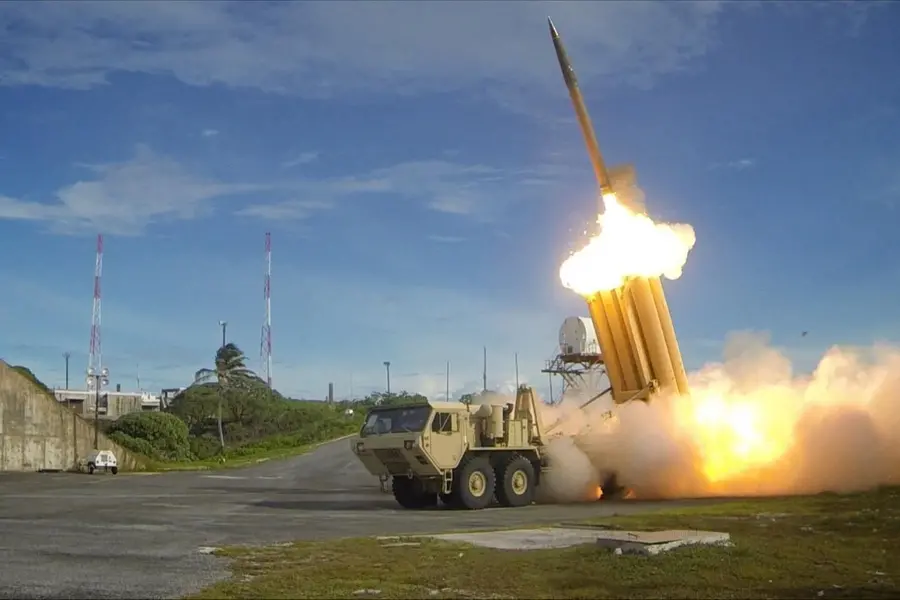
According to a report by The Washington Post, the US launched more than 200 THAAD interceptors, nearly half of the Pentagon’s total stockpile, along with over 100 SM-3 and SM-6 naval interceptors in the eastern Mediterranean during the conflict.
“In total, the US shot around 120 more interceptors and engaged twice as many Iranian missiles,” a US administration official told the newspaper.
The report added that if hostilities resume, the US may face even greater strain because some Israeli missile-defence batteries are currently offline for maintenance.
“The imbalance will likely be exacerbated if fighting restarts,” the official said.
President Donald Trump had earlier suggested the Taiwan arms package could also become a bargaining tool in negotiations with China.
Also read | Iran’s military rebound appears faster than first believed after US-Israeli strikes: Report
“I haven't approved it yet. We're going to see what happens,” Trump told Fox News. “I may do it; I may not do it.”
After a recent visit to China, Trump said the issue had been discussed “in great detail” with Chinese President Xi Jinping and that he would “make a determination over the next fairly short period”.
The possible delay has alarmed Taiwanese officials, who argue that continued US arms support is critical to deterring Chinese military aggression.
“If we want to prevent a war from happening, I think it's best that Taiwan is strong, able to defend itself, and therefore we should be able to acquire -- to buy the arms that we need to have a stronger defence,” Alexander Yui said on Sunday.
Despite the concerns over dwindling stockpiles, Hegseth publicly dismissed suggestions that the US military was under strain.
“First of all, the munitions issue has been foolishly and unhelpfully overstated,” Hegseth told House appropriators last week. “We know exactly what we have. We have plenty of what we need.”
The White House is reportedly preparing to seek between USD 80 billion and USD 100 billion in emergency funding from Congress to replenish weapons systems used during the Iran conflict, which has remained under a tense ceasefire since early April.
Meanwhile, both Washington and Israel defended their military coordination during the war.
“Ballistic missile interceptors are just one tool in a vast network of systems and capabilities that comprise a layered and integrated air defence network,” Pentagon spokesman Sean Parnell said.
“Both Israel and the United States carried the defensive burden equitably during Operation Epic Fury, which saw both countries employ fighter aircraft, counter-UAS systems, and various other advanced air and missile defence capabilities with maximal effectiveness,” he added.
The Israeli Embassy in Washington also defended the joint operation, saying, “Operations Roaring Lion and Epic Fury were coordinated at the highest and closest levels, to the benefit of both countries and their allies. The US has no other partner with the military willingness, readiness, shared interests, and capabilities of Israel.”
Published: 22 May 2026, 07:46 am IST
Related Topics
Disclaimer: Kindly avoid objectionable, derogatory, unlawful and lewd comments, while responding to reports. Such comments are punishable under cyber laws. Please keep away from personal attacks. The opinions expressed here are the personal opinions of readers and not that of Mathrubhumi.
