
Newly released emails reveal US-Iran coordination over deportation flights, raising questions about asylum privacy, consent and removals during wartime.
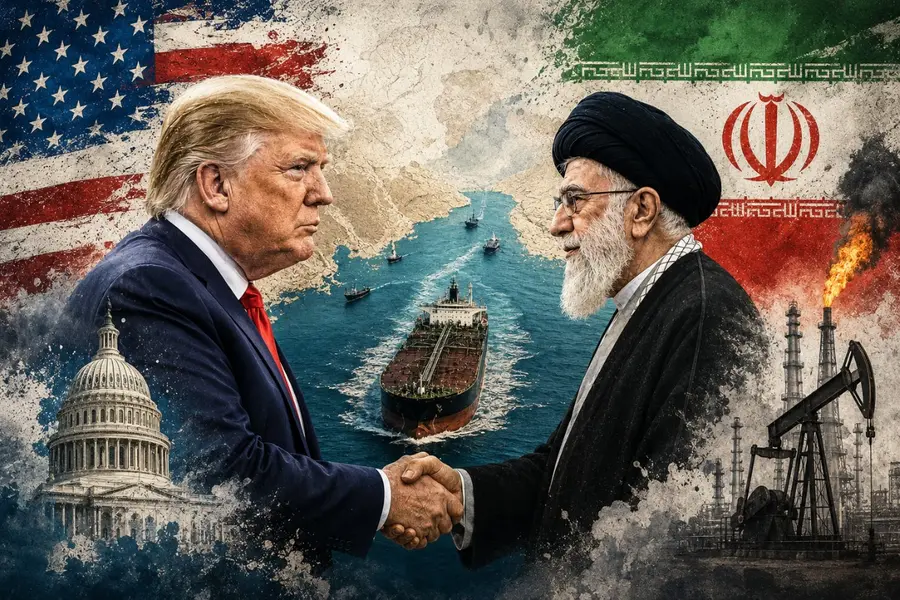
Tehran: Newly released emails show that US immigration officials directly coordinated with Iranian officials over deportation flights involving more than 100 Iranians in 2025 and early 2026, despite worsening relations and a 12-day conflict between the US, Israel and Iran.
The emails, obtained by the National Iranian American Council and made public on Tuesday, detail coordination between US Immigration and Customs Enforcement (ICE) and Iranian officials over three deportation flights in September and December 2025 and January 2026.
Also Read

The documents indicate that Iranian officials had some involvement in decisions over who would be returned. In one August 2025 email, an ICE official said several cases had been added to a deportation list following a request from the Iranian Embassy.
In another exchange, an ICE official said Iran had requested an amendment to an earlier passenger manifest and wanted the removal process expedited.
Iranian officials were reportedly still making requests to alter the list shortly before and even on the day of one flight. Some requests were rejected, while the final list of passengers is not clear from the released emails.
Deportations continued despite wartime conditions
The emails show that deportation planning remained a priority even during the June 2025 conflict involving Israel, the US and Iran.
After then-acting ICE director Todd Lyons described the repatriation of Iranian immigrants as a priority, officials discussed difficulties in carrying out removals. These included Iran's failure to issue travel documents, the closure of Iranian airspace and the movement of people fleeing the country during the conflict.
ICE officials nevertheless began preparing a plan to deport 58 Iranians in custody who had final removal orders.
The documents also indicate that some flights were organised through Qatar, with Qatari officials involved in charter arrangements.
Questions over asylum seekers and consent
The disclosures have raised concerns among human rights groups over whether Iranian asylum seekers were among those deported and whether individuals had consented to their return.
Earlier reporting cited in the material said some asylum seekers were deported, while others reportedly said they had been sent back against their will.
The released emails do not establish whether the individuals whose names were proposed by Iranian officials agreed to return.
There are also questions about the handling of confidential asylum information. Eleven Iranians in immigration detention said in sworn declarations filed in a Washington, DC, court in July that they were forced to meet Iranian government officials while in ICE custody.
A lawsuit alleges that US immigration agencies improperly shared confidential information concerning Iranian asylum seekers with Iranian authorities. US law permits cooperation with foreign governments over deportation logistics, but regulations restrict the disclosure of information that could reveal that someone had applied for asylum.
The Department of Homeland Security has denied the allegation, saying the claims that ICE shared asylum application records with Iran are false.
Emails reveal a deportation mistake
The correspondence also points to at least one apparent error in the deportation process.
One US official said an Iranian who was not included on the final passenger manifest sent to Qatari authorities had nevertheless boarded the flight. Another official responded that they did not know how the individual had ended up on the plane.
The circumstances surrounding the incident and whether the person was ultimately intended for deportation remain unclear.
Iran reacts as US announces economic pressure
The disclosures come amid renewed tensions between Washington and Tehran.
Iranian Deputy Foreign Minister for Legal and International Affairs Kazem Gharibabadi criticised the latest US pressure on Iran, describing Washington's economic campaign as an attempt to cover up what he called the failure of its previous military approach.
Iranian Foreign Minister Seyed Abbas Araghchi also criticised what he described as US "economic terrorism" after President Donald Trump announced a major new economic pressure campaign against countries providing Iran with a lifeline.
Trump described the move as an unprecedented economic operation and warned that Iran could face severe sanctions.
Analysis and explainer
The deportation emails highlight a striking contrast in US-Iran relations. While Washington and Tehran remained deeply hostile at the political and military level, their officials continued to communicate over the practical removal of Iranian nationals from the United States.
The disclosures raise three major issues: who was selected for deportation, whether individuals agreed to return and whether sensitive asylum information was adequately protected.
The timing is particularly significant because some deportation planning continued during the June 2025 conflict, when officials acknowledged that conditions inside Iran made removals more difficult and that people were fleeing the country.
The issue also intersects with the Trump administration's broader immigration policy, under which enforcement and removals have remained major priorities. Any finding that confidential asylum information was improperly disclosed could have wider implications for how US immigration agencies cooperate with governments from which people are seeking protection.
At the same time, the released correspondence does not by itself establish that every deportation was unlawful or that Iranian officials determined who was ultimately removed. Those questions remain subject to further investigation and legal proceedings.
Published: 21 Aug 2026, 06:44 am IST
ABOUT THE AUTHOR
Related Topics
Disclaimer: Kindly avoid objectionable, derogatory, unlawful and lewd comments, while responding to reports. Such comments are punishable under cyber laws. Please keep away from personal attacks. The opinions expressed here are the personal opinions of readers and not that of Mathrubhumi.